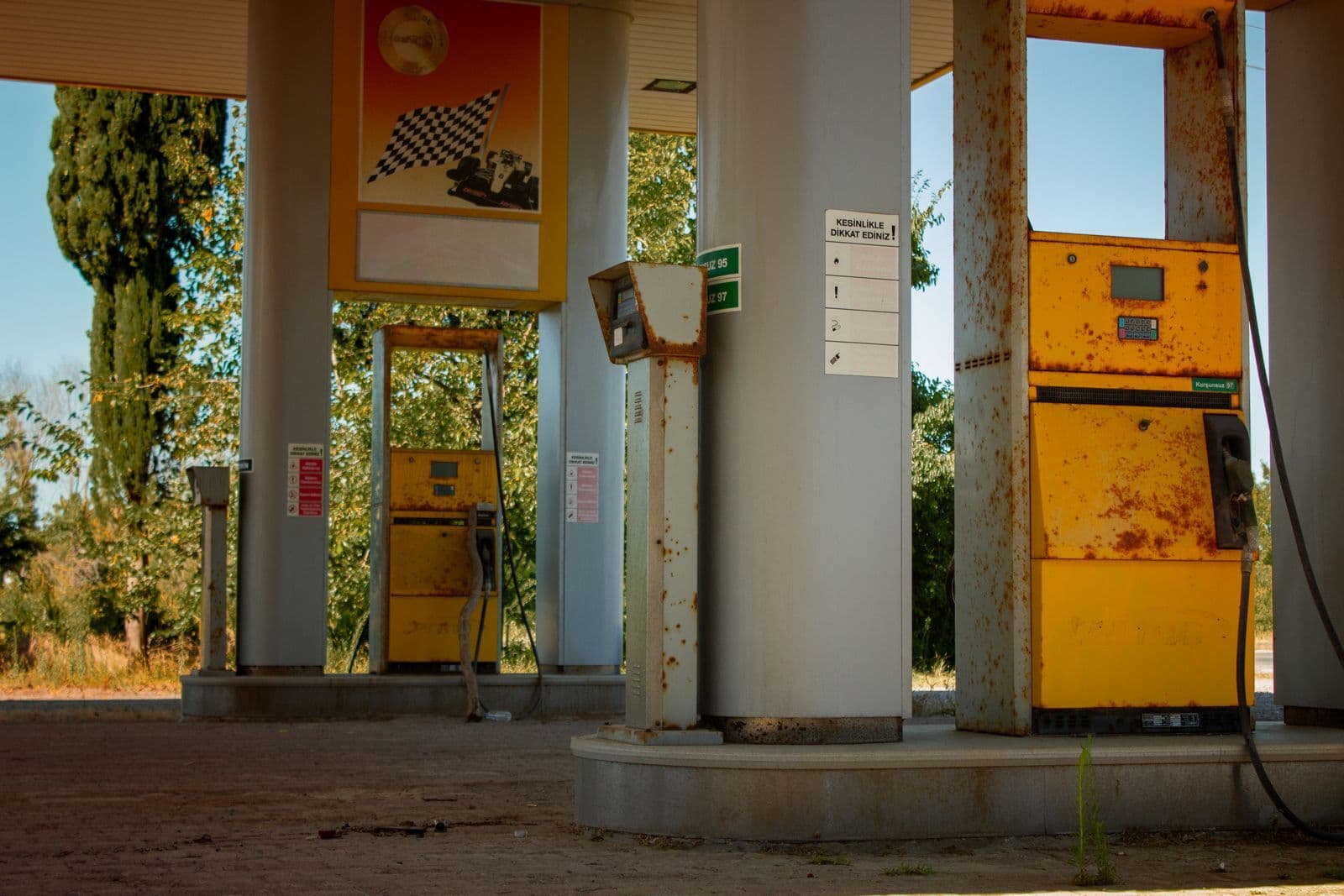
For most of the twentieth century, Australian petrol came in two grades: "standard" and "super", and both contained lead. The lead has been gone from bowsers since 1 January 2002, but it left behind a generation of engines that were built around it, and a set of questions that still matter to anyone who owns a car from before 1986.
Why lead was in petrol at all
Tetraethyl lead (TEL) was discovered in the early 1920s as a cheap way to lift a fuel's octane rating. A few grams per litre turned low-grade petrol into a fuel that resisted knock well enough to allow higher compression ratios, which meant more power and better efficiency for the same engine size. Super leaded in Australia was around 97 RON; standard was in the high 80s.
Lead had a second, accidental benefit. During combustion, lead compounds deposited a thin cushioning layer on the exhaust valves and their seats. Engines of the era used soft cast-iron valve seats machined straight into the head, and the lead layer stopped the hot exhaust valve from micro-welding to the seat and hammering it away.
The cost was enormous. Road vehicles produced about 90 per cent of airborne lead in Australia, and lead exposure was linked to reduced cognitive development in children, cardiovascular disease and a long list of other harms. Some public-health historians describe leaded petrol as one of the greatest public-health disasters of the twentieth century.
The phase-out
Japan began the switch to unleaded in 1972 and banned leaded petrol in 1986. The United States required catalytic converters, which lead destroys, from the 1975 model year, and finally outlawed automotive leaded petrol in 1996. Australia's phase-out began in 1985, and from 1 January 1986 every new petrol car sold in Australia had to run on unleaded and be fitted with a catalytic converter. The Federal Government then set 1 January 2002 as the date after which no leaded petrol could be sold.
The bridge for older cars was Lead Replacement Petrol (LRP). Shell launched it in Western Australia in August 1999, and it appeared nationally by the time of the ban. LRP was a premium-octane unleaded with a metallic anti-wear additive (typically potassium- or sodium-based) that mimicked lead's cushioning effect on valve seats. As the pre-1986 fleet shrank, oil companies found it uneconomic to keep a dedicated grade, and LRP quietly disappeared from Australian bowsers in the years after 2002. Its function passed to bottled additives.
Globally, Algeria was the last country to sell leaded petrol for road use, ending in July 2021, and the UN Environment Programme declared the global phase-out complete the following month.
What "leaded" engines need today
There are two separate issues for a car built to run on leaded fuel, and it helps to keep them apart.
Octane. A car designed for super leaded wants something in the 95 to 98 RON range. Modern 95 or 98 unleaded meets that comfortably. A car designed for standard leaded is fine on 91.
Valve seat recession. This is the mechanical problem lead used to prevent. Without the lead cushion, a soft cast-iron exhaust valve seat can wear back into the head, closing up the valve clearance until the valve no longer seals. The symptoms are a gradual loss of compression on one or more cylinders, a rough idle and eventually a burnt valve. It happens fastest under sustained high load and high temperature: towing, highway cruising at speed, or hill climbing.
Not every pre-1986 engine is at risk. Many engines from the late 1970s onward, and most engines fitted with hardened valve seat inserts from the factory, are unaffected. Engines that ran on unleaded in export markets years earlier were often built with harder seats. The owner's club for your make will usually know which castings are vulnerable.
There are three ways to deal with a vulnerable head:
- Fit hardened valve seat inserts. The soft seats are machined out and replaced with hardened steel inserts at a cylinder-head rebuild. This is the permanent fix and is routine for a machine shop. Once done, the engine is a normal unleaded engine.
- Use a lead-replacement additive. Bottled additives based on sodium, potassium, phosphorus or manganese (MMT) are dosed into each tank. Independent testing by the UK's Federation of British Historic Vehicle Clubs found that some formulations worked and others did not, so choose one with published test results, and follow the dosing exactly: too much can foul plugs and catalysts, too little does nothing.
- Drive gently. Retarding the ignition slightly and avoiding sustained high-load running slows the recession. This is a strategy for a car that does a few hundred kilometres a year, not a daily driver.
Ethanol and old cars
E10 is a separate hazard for pre-1986 cars. Ethanol swells and perishes the rubber and some plastics used in older fuel lines, carburettor diaphragms and pump seals, it loosens deposits that then block filters, and it absorbs water from the air in a vented fuel system, which leads to corrosion in steel tanks and carburettor bowls. The NSW Government and most manufacturers advise against E10 in any carburetted engine or any vehicle built before 1986. Use 91, 95 or 98 with no ethanol; in NSW and Queensland, where E10 has replaced 91 at many sites, that generally means premium.
Other things that changed
Cars built for leaded petrol were built before catalytic converters, oxygen sensors and knock sensors. They cannot adjust their ignition timing for the fuel in the tank, so if the engine pings on the grade you are using, the fix is a manual timing adjustment or a higher grade, not a wait for the computer to sort it out. Petrol itself has also changed: modern fuel is more volatile at cold temperatures, has lower aromatics, and has a shorter storage life, which is why a classic left over winter with half a tank often needs a fresh fill and a carburettor clean in spring.
FAQs
Can I still buy leaded petrol anywhere in Australia?
Not for road use. Leaded aviation fuel (avgas 100LL) is still sold at airfields, but it is illegal to use in a road vehicle and its lead content will destroy a catalytic converter.
My car was built in 1984. Does it need an additive?
Only if its cylinder head has soft valve seats and you drive it hard or often. Check with the marque club or a specialist; many 1980s engines already had hardened seats.
What octane should I use in a classic that ran on super?
95 is usually enough; 98 if the engine has been rebuilt with higher compression or if it pings on 95. Neither replaces the lead's anti-wear role.
Is lead-replacement additive the same as octane booster?
No. Octane boosters raise RON; lead-replacement additives protect valve seats. Some products do both, and the label will say so.
Will the wrong fuel destroy my classic overnight?
No. Valve seat recession is a slow process measured over thousands of kilometres of hard use, which is why many owners have run unleaded for years without a problem. The risk is real, but it rewards attention rather than panic.