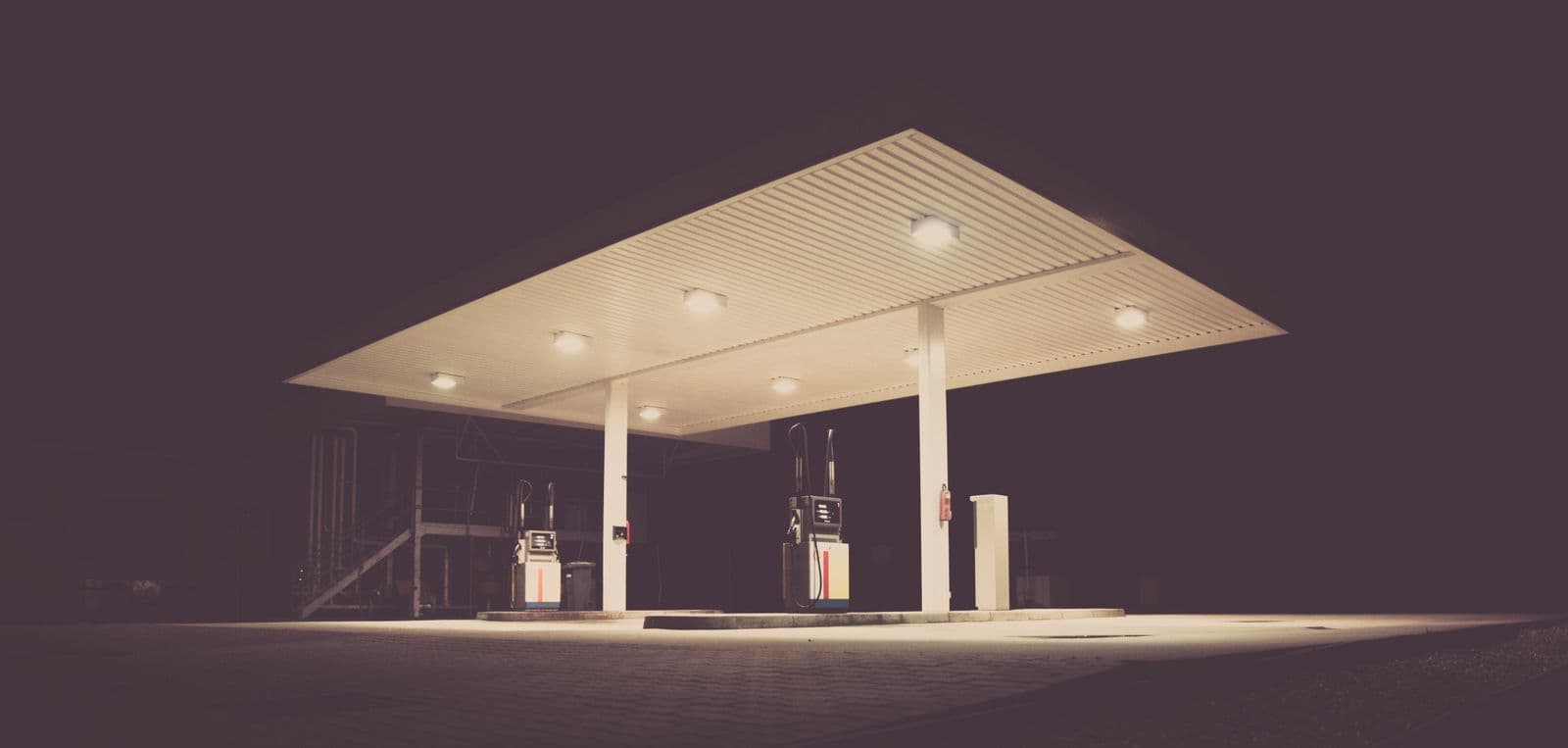
Ask ten drivers whether the fuel at a BP is different from the fuel at an independent across the road and you will get ten answers, most of them confident. The truth is well documented and a little dull: the base fuel is very often identical, the additive package is not, and the biggest practical differences have more to do with how a site is run than whose logo is on the canopy.
Where Australia's fuel comes from
Australia had eight refineries in 2005. Today it has two, Ampol's Lytton refinery in Brisbane and Viva Energy's refinery in Geelong, and between them they supply somewhere under 20 per cent of the country's liquid fuel. Everything else arrives by ship as finished product, mostly from refineries in Singapore, South Korea, Malaysia, Japan and, increasingly, India and China. Western Australia has had no refinery at all since BP converted Kwinana into an import terminal in 2021.
Those cargoes land at a small number of import terminals in each state. The terminals are shared infrastructure: a tanker truck loading for a branded site and one loading for an independent will frequently draw from the same tank. The truck driver swipes a card that tells the loading gantry which customer it is serving, and the gantry injects that customer's additive concentrate into the stream as the base fuel is pumped. That is the moment a generic 91 becomes "brand X unleaded".
What the law guarantees
All petrol and diesel sold in Australia must meet the Fuel Quality Standards Act 2000 and the determinations made under it. The petrol standard fixes minimum RON and MON for regular (91/81) and premium (95/85), and caps sulfur, aromatics, benzene, olefins, lead, phosphorus and other parameters. It applies identically to a major-brand site and to a single-pump roadhouse. The Department of Climate Change, Energy, the Environment and Water and the National Measurement Institute run a national monitoring program with inspectors who can sample any site without notice, and the NMI separately polices whether the pump delivers the litre it says it does.
So the baseline is regulated, and the baseline is what most cars are engineered around. No brand sells a legal fuel that is materially worse than the standard, and none is allowed to claim an octane it cannot demonstrate.
What actually differs
Additive packages. Every major brand blends a proprietary detergent package into its fuels, and a stronger one into its premium 98. Detergents keep fuel injectors and intake valves free of deposits, and the better ones do measurably reduce deposit formation in laboratory engine tests. Independents may buy fuel with a base-level additive package or with the supplier's standard one; they generally do not pay for the top-tier package. Whether that difference matters depends on the engine and the driver's servicing habits; a modern direct-injection engine is more sensitive to intake valve deposits than an older port-injected one, but no Australian carmaker requires a particular brand of fuel.
Ethanol. In NSW and Queensland the cheapest "unleaded" on the board is often E10. In other states it is usually straight 91. Read the label rather than the price.
Housekeeping. Underground tanks accumulate water and sediment. Well-run sites, branded or not, test tanks regularly, filter at the dispenser and turn over stock quickly. Contamination events in Australia are rare, and when they happen they are almost always a single site with a water ingress or a delivery error, not a brand-wide problem.
Turnover. Petrol degrades over months. A high-volume metro site sells its 98 in days; a remote roadhouse might sit on a 98 delivery for a long time. If you are buying premium in the bush, the busier site is the better bet.
Price. This is the real difference between brands, and it is a large one. On 26 August 2026 the ACCC recorded a 52 cent per litre spread between the cheapest and dearest regular unleaded sites in Melbourne on the same day, and 40 cents in Perth. That gap dwarfs any plausible difference in fuel quality.
Premium diesel and premium 98
The premium products are where brand marketing concentrates, and they are worth a closer look. Premium 98 is genuinely a higher-octane fuel; if your engine needs 98, it needs 98 regardless of brand. What sits on top is the additive package, which is where brands differentiate.
Premium diesel is a different proposition. RAC WA tested it and concluded that premium diesel has the same cetane rating as regular diesel, delivers no performance advantage, and that the evidence for its claimed cleaning benefits is unconvincing. The additives are real; the question is whether they do anything the engine notices.
Costco, supermarkets and independents
Costco sells fuel to members at a discount; in the ACCC's daily monitoring, membership-only sites are excluded from the averages. Coles Express is now operated by Viva Energy (Shell branding), and Woolworths' former sites are run by EG Group with Ampol fuel, so the supermarket discount dockets are attached to major-brand fuel. 7-Eleven sells Mobil-branded fuel. Independents such as United, Liberty, Metro and the regional chains buy from the same terminals as everybody else. Nothing about that supply chain makes independent fuel worse.
If you think you got a bad tank
Symptoms of contaminated fuel are hard starting, rough idling, misfiring or stalling shortly after a fill, sometimes with a check-engine light. Keep the receipt, note the pump number, and get the car looked at. Fuel quality complaints can be reported to DCCEEW's Liquid Fuels Branch, which uses reports to target its monitoring, but it cannot help with compensation. That is a matter for your state consumer affairs regulator and potentially your insurer, since some comprehensive policies cover contaminated fuel.
FAQs
Is fuel from an independent servo lower quality?
No. It must meet the same national standard and it usually comes from the same terminal as the branded fuel down the road. The typical difference is a lighter additive package.
Does the brand of 98 matter?
The octane is the same; the additive package differs. If you drive a direct-injection engine and never use a fuel system cleaner, a fuel with a strong detergent package is a reasonable choice. Otherwise, buy on price.
Is premium diesel worth it?
The cetane is the same as regular diesel and there is no manufacturer that requires it. Treat it as an optional additive you pay for at the pump.
Can I mix fuel from different brands?
Yes, freely. Everyone does it every week.
Why do some servos smell different or have cloudy fuel?
Cloudy fuel is a sign of water contamination and should not be pumped. Report it to the operator and to DCCEEW.