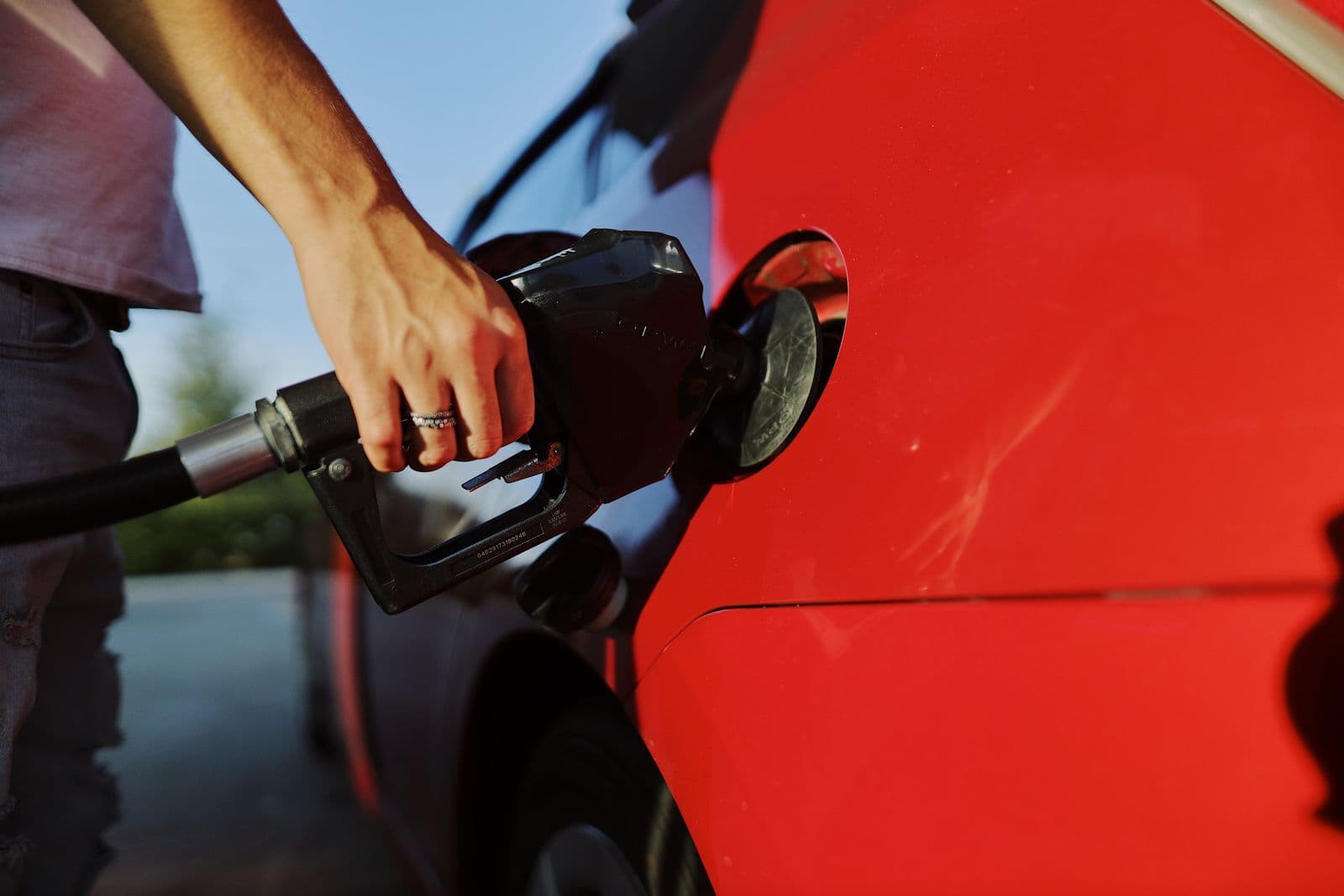
Around 7,500 Australians put the wrong fuel in their car every year, and RAA estimates the repair bill across the country at about $10 million. Most of those incidents are the same mistake, petrol into a diesel, and most of the damage happens in the thirty seconds after the driver realises. What you do in that half-minute decides whether it costs a few hundred dollars or ten thousand.
The golden rule
If you realise you have put the wrong fuel in, do not turn the key. On a modern car, switching the ignition on, even without cranking, can prime the fuel pump and push the wrong fuel out of the tank and into the lines, filter, pump and injectors. Once it is there, the job goes from "drain the tank" to "drain and flush the whole system", and if the engine has actually run, it can become "replace the fuel system". Tell the console staff, push the car out of the way if it is safe, and call your roadside assistance provider or a wrong-fuel rescue service.
Petrol in a diesel car
This is about 90 per cent of all misfuelling. It happens because the petrol nozzle is narrower than the diesel filler neck, so it fits without resistance. Diesel filler necks are 25 mm; petrol nozzles are smaller. The reverse mistake is physically harder, which is why it is rare.
Why it matters: a diesel's high-pressure fuel pump and injectors are lubricated by the diesel itself. Petrol has almost no lubricity. Run a common-rail diesel on a petrol mix and the pump's precision metal parts start to grind, shedding particles downstream into the injectors. Petrol also attacks seals designed for diesel. A pump and injector set on a modern diesel can cost more than the rest of the repair combined.
What it costs:
- Realised at the pump, not started: drain and flush, replace filter, prime and refill. Typically $400 to $1,000 including callout.
- Started or driven: towing to a diesel specialist, full system flush, filters, and inspection of the pump and injectors. If the pump is damaged, $6,000 to $10,000 or more depending on the vehicle.
A small amount of petrol in a large, mostly full diesel tank is less critical than a large amount, but there is no safe percentage worth gambling on with a common-rail engine.
Diesel in a petrol car
Harder to do because the diesel nozzle rarely fits, but it happens, especially with jerry cans. Diesel does not vaporise or ignite from a spark the way petrol does. The car will start on the petrol still in the lines, then run rough, smoke heavily and stall as the diesel reaches the injectors. The damage is usually less catastrophic than the reverse, but the tank still has to be drained and the fuel lines, injectors and possibly the catalytic converter cleaned. Do not keep driving in the hope it clears; diesel fouls spark plugs and can damage the catalytic converter.
91 in a car that needs 95 or 98
This is the most common wrong-fuel event of all, and the least dramatic. Nothing needs draining. What happens depends on what the manufacturer specified:
- "95 recommended, 91 acceptable": the engine's knock sensor detects detonation and the computer retards ignition timing. You lose some power and use a little more fuel until the tank is used up. No damage.
- "95 minimum": same mechanism, but the engine was not calibrated for 91. It will usually protect itself, but drive gently, avoid full-throttle and heavy load, and fill with the right grade as soon as you can.
- "98 required": high-boost turbo engines and some cars with petrol particulate filters can drop into limp mode on lower grades. Prolonged use risks piston and ring damage. Treat this seriously: top up with 98 at the first opportunity to dilute the tank, and do not tow or drive hard.
If you are stuck in a town with only 91 and 98, blending them gives roughly the average octane, so half and half is close to 95.
98 in a car that needs 91
Harmless. The engine cannot use the extra octane, so you have paid for nothing, but there is no downside to the car.
E10 in a car that is not E10 compatible
A single tank in a modern fuel-injected car that the manufacturer has simply not certified is unlikely to cause harm. The risk is in older vehicles, carburetted engines, and anything with rubber or plastic fuel-system components from before the mid-1980s, where ethanol can swell seals and perish hoses over time, and can loosen deposits that then block filters. If it was one tank, run it through and go back to 91. If the car is old, have the fuel filter checked.
E85 in a normal petrol car
Serious. 85 per cent ethanol will run so lean in a non-flex-fuel engine that it may not start, and the ethanol will attack the fuel pump, lines and seals. Drain it. Do not try to dilute it with petrol and drive on.
Petrol or diesel in the AdBlue tank, or AdBlue in the fuel tank
AdBlue is a urea solution that goes into its own tank, usually behind a blue cap beside the diesel filler. Fuel in the AdBlue tank damages the SCR injection system. AdBlue in the diesel tank is worse: urea crystallises in fuel lines and injectors, corrodes metal and is nearly impossible to flush fully. Specialist recovery services describe it as about as bad as misfuelling gets. Do not start the engine.
Insurance and warranty
Misfuelling is generally treated as driver error. Most Australian comprehensive policies do not cover the drain, and many exclude the consequential engine damage; check your PDS before assuming anything. Manufacturers will not warrant damage caused by the wrong fuel, and a dealer can identify it from the fuel sample. Roadside assistance memberships typically cover the tow, and some include a wrong-fuel drain service.
How to avoid it
- Put a "DIESEL" or "91" sticker inside the fuel flap or on the cap. Fleets and families with mixed vehicles are the most common victims.
- Read the nozzle label and the pump colour every time. Colours are not consistent between brands; the words are.
- If the nozzle goes in unusually easily on a diesel, stop and look.
- Do not refuel while on the phone. Most misfuelling happens to distracted drivers in a hurry.
- With a rental or a borrowed car, check the flap before you pick up the nozzle.
FAQs
I put petrol in my diesel but only a few litres. Can I just fill it up with diesel?
Not safely on a modern common-rail diesel. A small amount of petrol still reduces lubricity in a pump running at very high pressure. Drain it.
I've already driven 10 km on the wrong fuel. Is it too late?
Stop as soon as it is safe and have it towed. The further the wrong fuel travels through the system, the bigger the bill, but most vehicles are still recoverable at this point.
Does putting 91 in my 95 car void the warranty?
One tank will not, and there is nothing to find. Persistent use of a lower grade than specified could be cited if there is knock-related damage.
Can I syphon it out myself?
Modern tanks have anti-syphon valves and the fuel has to be disposed of legally. A professional drain costs a few hundred dollars and is the safer path.
Will the servo pay for my mistake?
No, unless the pump was mislabelled, which is a matter for the National Measurement Institute and your state consumer affairs regulator.