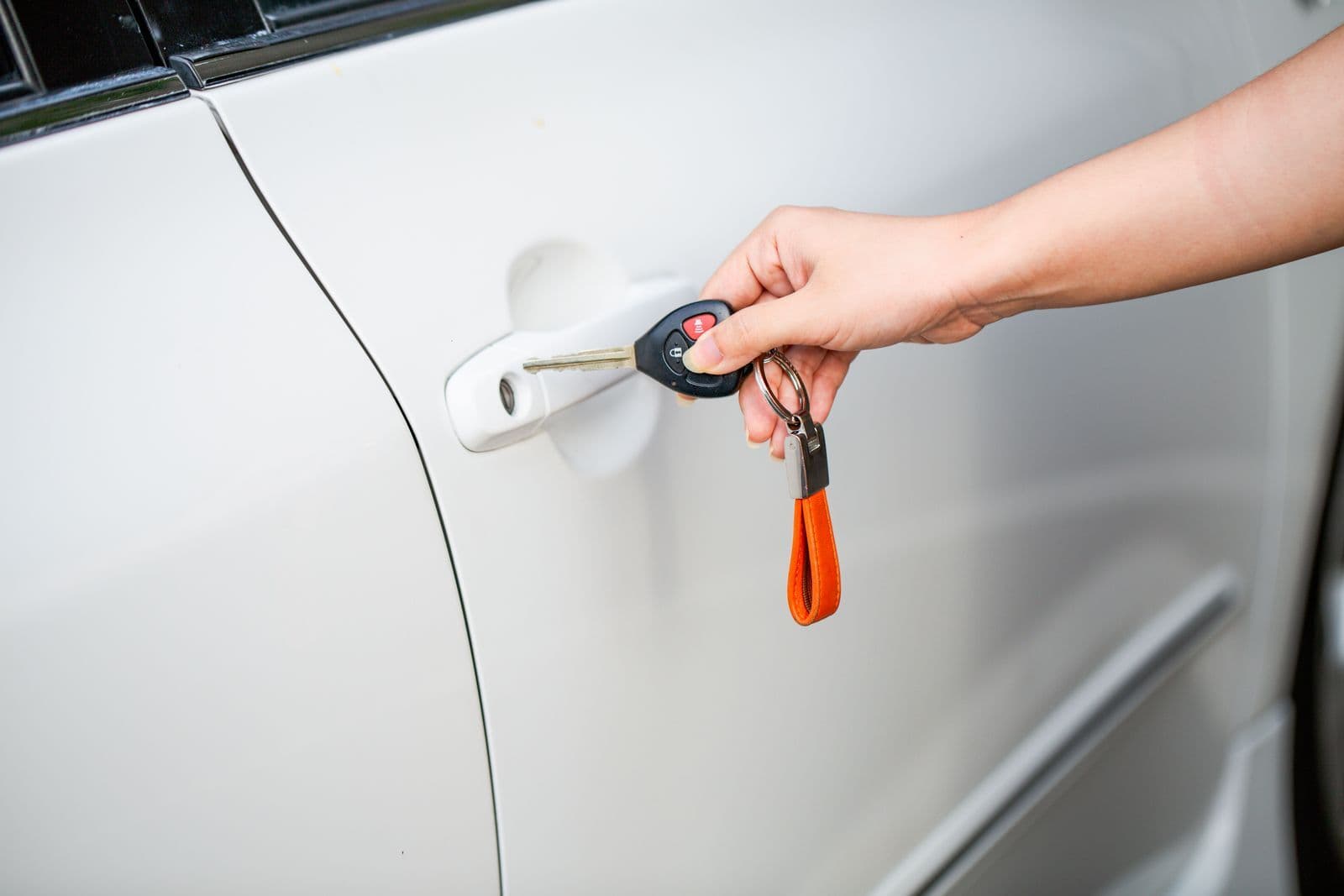
Selling your own car is mostly admin and patience. This page answers what sellers ask most: whether private is worth the effort, how long it takes, what you'll spend, the paperwork you need, and how to handle the strangers who turn up.
Where a topic has a page of its own — pricing, paperwork, state rules — there's a link. Rules and charges differ by state, so check the state-by-state guide before you commit to anything.
Don't hand over the keys, the car or the signed paperwork until the money is in your account and has cleared. A screenshot of a transfer is not payment: confirmations can be faked, transfers can be reversed, and a cheque can bounce days later. If you're meeting at a bank, let the teller confirm the funds have landed before anyone drives away.
FAQs
Is it worth selling privately instead of trading in?
A private sale usually puts more in your pocket, because a dealer has to buy below retail to make anything on the resale. What you give up is time — the photos, enquiries, test drives and paperwork are yours to handle, and the car sits in the driveway while you wait. A trade-in earns its keep when you're buying from the same dealer on the same day and want one transaction instead of two. The numbers are worked through in trade-in vs selling privately.
How do instant-offer services compare with a private sale?
They buy the car themselves, usually off an online valuation followed by a quick inspection, and they pay fast. The trade is price: an instant offer typically lands somewhere between trade-in money and what the car would fetch privately, because the buyer needs a margin to resell it. Some sellers advertise privately for a week or two and keep an instant offer in their back pocket as a fallback. If speed matters more than the last few hundred dollars that's a fair choice — just get the offer in writing and ask whether it can change after inspection.
How long does a private car sale usually take?
Price drives this more than anything else. A car advertised at or just under what comparable ones are asking tends to move in days; an ambitious price can sit for months with nothing but lowballs. Popular models sell faster than niche ones, and a listing with good photos, service history and an honest description pulls far more genuine enquiries than a three-line ad. Plan around a couple of weeks as a working assumption, and if the first week is silent, the price is usually the reason.
What does it cost to sell a car privately?
Listing on MotorLoop is free, so the costs sit around the sale rather than in the advertising: a wash and a detail if you want the photos to work, any inspection certificate your state requires before a transfer, and a PPSR search (opens in a new tab) — a couple of dollars as at mid-2026 — to confirm nothing is registered against the car. In most states the buyer pays the transfer fee and stamp duty rather than the seller, though this is negotiable between you and the detail differs, so check the state-by-state guide. There's a fuller breakdown in what it costs to sell a car privately.
Should I fix things first, or sell the car as it is?
Cheap and visible fixes usually pay for themselves — a blown globe, wipers that smear, a filthy interior, tyres that look tired. Major mechanical work rarely returns what it costs, so it's often better to price the car honestly with the fault disclosed and let the buyer decide. A private sale doesn't carry most of the consumer guarantees a dealer sale does, but that isn't a licence to hide a known problem: a buyer who finds it at inspection walks, and a seller who misrepresents a car can still face a claim. Some states also require a safety or roadworthy inspection before the car can be transferred, which is a cost you can't design around — the state guide sets out which.
What paperwork do I need to sell a car privately?
At a minimum: the registration papers, photo ID, service history if you have it, and a written receipt showing both parties' details, the price, the date and the odometer reading. If there's finance owing, sort the payout and discharge with your lender before settlement — a private seller still has to deliver clear title and a car free of undisclosed security interests, and the buyer's PPSR search will show anything registered against it. After handover, most states expect the seller to notify the road authority of the sale within a set number of days, and the forms and deadlines vary. Work through the seller's checklist alongside the state-by-state guide.
How should I handle test drives with strangers?
Ask to see a current driver licence and photograph it before anyone gets behind the wheel, then go along for the drive rather than handing over the keys. Meet somewhere public and busy in daylight, tell someone where you'll be, and don't feel obliged to give out your home address. Check your insurance beforehand — some policies cover any licensed driver and some don't, and an unlisted driver can leave you badly exposed. Keep the conversation on the car, and end the drive early if anything feels off.
How do I deal with lowball offers and time-wasters?
A specific ad screens most of them out before they ever message you: a clear price, honest photos, the faults stated plainly, and a line about what you will and won't do. A very low opening offer is usually a test rather than an insult, and a short, polite reply that the price is firm for now costs nothing and sometimes brings the buyer back. Be wary of anyone who wants to arrange their own transport agent, pay more than you asked, or buy sight-unseen from overseas — those are long-running patterns reported to Scamwatch (opens in a new tab). You don't owe anyone a reply, and you don't have to hold the car for someone who keeps rescheduling.
How many cars can I sell in a year before I need a dealer licence?
Each state sets its own threshold and it's a small number over a rolling twelve months — go past it and you may be treated as a dealer, which brings licensing, record-keeping and warranty obligations with it. Some states weigh the character of the trading rather than a bare count, so the pattern matters as much as the number: buying cars in order to resell them looks like trading even at low volumes, whereas disposing of vehicles you actually owned and used generally doesn't. If you're selling more often than the family car every few years, read how many cars you can sell a year and confirm your own state's rule before you list the next one.
What do I need to do after the car is sold?
Notify the road authority that you've sold it, within whatever window your state sets — this is what stops the new owner's fines and tolls following you. Cancel or transfer your insurance once the car has physically gone, not before, and pull out the toll tag, any parking permit and everything in the glovebox. In most states the standard plates stay with the car, so it's personalised plates you need to arrange to keep or transfer — settle that before handover rather than in the driveway afterwards. Keep the receipt and the notification confirmation for a few years — together they're the proof the car stopped being yours on a particular date.