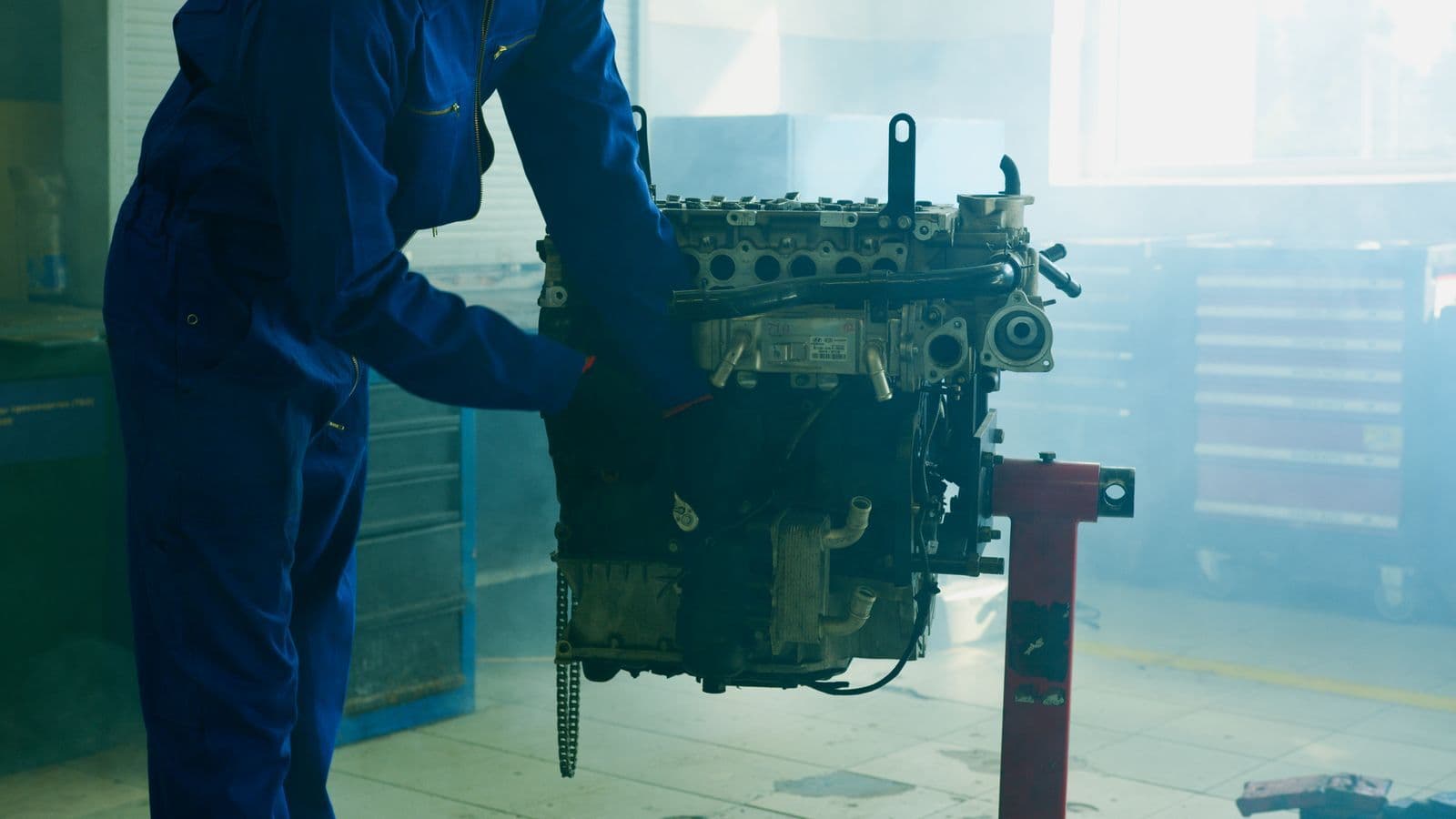
The popular version is that aluminium blocks wear out, cannot be machined, and get replaced instead of rebuilt. Part of that holds up. The rebuild half holds up least - and the reason is that in a modern alloy block, the surface the piston rings actually slide on is usually not aluminium at all. We could not find a study comparing bore wear rates by block material with everything else held equal.
- Applies to
- Aluminium-block petrol and diesel engines
- Wear surface
- A coating, a liner or a silicon phase - rarely bare aluminium
- Best evidence
- Bench tribology and SAE block-design papers
- Not established
- That alloy bores wear faster than iron ones
- Australian angle
- Ask a machine shop whether your engine's bore can be salvaged
The bore surface is a separate material from the block
Aluminium's high coefficient of thermal expansion is a recognised design problem in aluminium engine construction. A 2014 review of reciprocating-machine tribology states that without counter-measures the greater thermal expansion "would cause unacceptably high bearing clearances during engine operation", and that "these high clearances would drastically increase the oil consumption and worsen the acoustic excitation" (Milojevic et al., International Congress Motor Vehicles & Motors 2014 (opens in a new tab)). Manufacturers therefore treat the cylinder running surface with a cast-iron or hypereutectic Al-Si liner, or a plasma-sprayed coating - though that review presents these as a remedy for aluminium's poor wear resistance rather than as a way of reducing the block's expansion.
The sprayed version matters here because it is not an insert. In plasma transferred wire arc coating (PTWA), a plasma jet melts a continuously fed low-carbon steel wire and propels atomised droplets onto a roughened aluminium bore; the droplets flatten, solidify very rapidly and build a mechanically interlocked layer around 200 micrometres thick, which is then crosshatch honed (Banerjee et al., Metals 2025, 15(4), 370 (opens in a new tab)). Because the coating is thin, the aluminium block wall itself carries the structural load, and bore spacing can be reduced. That same study measured 3.7 per cent porosity in the as-produced coating and an as-honed surface of Ra 0.53 micrometres.
So when someone says an alloy block "has no cylinder wall left to machine", the honest answer depends entirely on which of those surfaces the engine has.
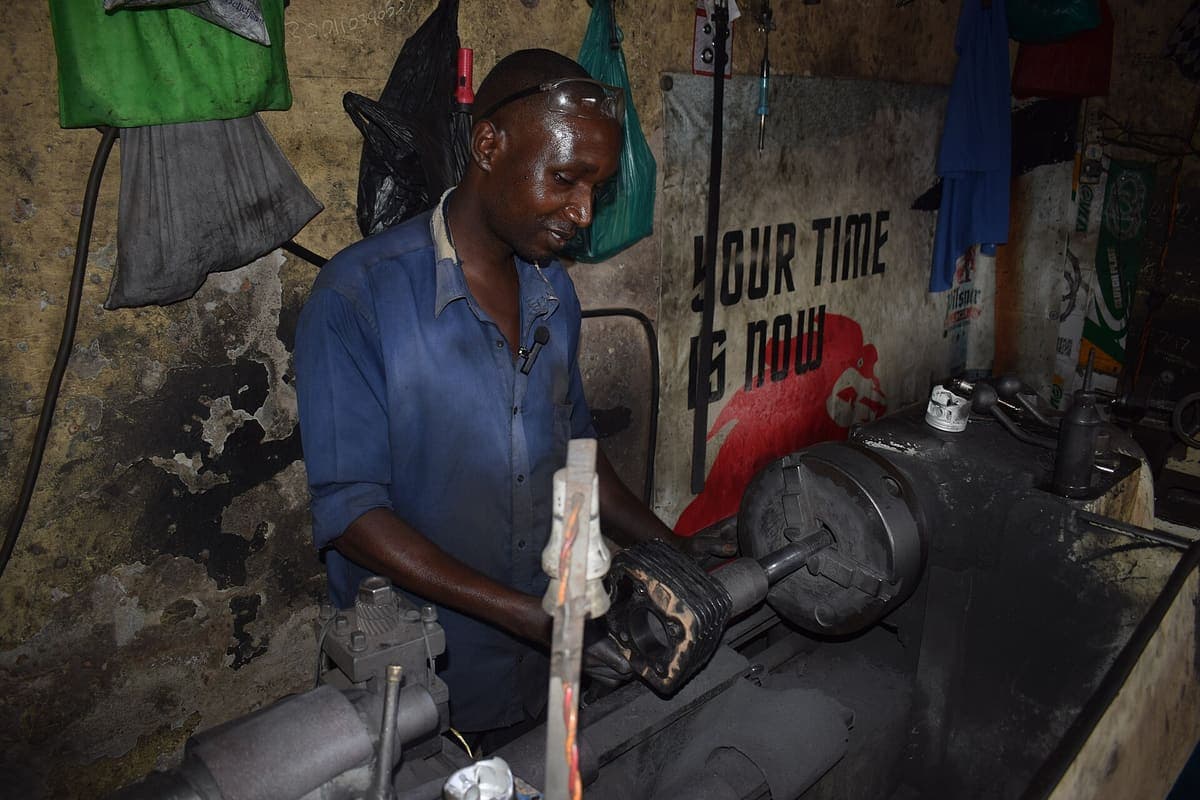
The failure mode changed shape
Bench testing of two plasma-based bore coatings gives a clearer picture than the folklore does. On a reciprocating rig running a cast-iron ring against coated coupons under simulated cold-start starved lubrication with SAE 0W30, specific wear rate fell 51 per cent for the sprayed steel coating and 54 per cent for an oxide coating (opens in a new tab) at 3,000 m of sliding compared with the 500 m figure. Early-life wear is not service-life wear.
What happened at the top of the load range is the interesting part. At 165 N (up to 13.8 MPa nominal contact pressure) the sprayed steel coating did not simply get thinner. Cracks initiated at the boundaries between solidified splats, splats pulled out leaving delamination pits, and the liberated debris became a third body abrading both bore and ring. The authors observed no adhesive material transfer at any load and described the mechanism as abrasive.
Porosity behaved in a way that cuts across the usual assumption too. In the same study the porous oxide coating beat the sprayed steel one under those starved conditions: initial surface porosity was 16 per cent versus 3.7 per cent, wear rates were 0.05 to 10.35 per cent lower across the load range, and - more tellingly - it showed no scuffing out to 3,000 m of sliding where the steel coating scuffed. The authors attribute this to the pores holding oil, working like the exposed silicon crystals in a hypereutectic Al-Si bore, though they also credit surface skewness and kurtosis and hedge the mechanism accordingly. Read that as porosity being usable rather than automatically ruinous, not as proof that every porous bore is porous on purpose - in the sprayed steel coating the same paper links pores and splat boundaries to delamination.
Those coupons were oiled and then deliberately drained under gravity for 30 minutes to emulate a restart at top dead centre, which the authors call the worst-case lubrication scenario. Under that condition the oil left on the bore falls below the film thickness at which boundary contact begins, which the same study (opens in a new tab) puts at 1.27 micrometres citing Ting and Mayer, so metal touches metal. That study used a single 0W30 oil throughout and says nothing about additive chemistry, so it cannot be cited for claims about oil formulation.
This is the series through-line in miniature. An iron bore had thickness in reserve and told you it was tiring. A 200 micrometre coating meets its specification and then, past the load it was specified for, comes off in pieces.
Distortion, not wear - and the trade it bought
A bore can measure out of round with no material lost at all. An SAE study of engine block bore distortion models it from three load cases - head-bolt clamping, engine thermal load and firing pressure (opens in a new tab). The first is an assembly variable and the other two are operating ones. Casting residual stress contributes as well: a 2024 overview of residual stress in cast Al-Si blocks (opens in a new tab) notes that differential contraction between aluminium and a dissimilar cast-in material locks stress into the cylinder web region, and that such stresses may cause distortion affecting performance and economy, or lead to premature block failure.
The consequences are documented rather than theoretical. An ASME analysis decomposes the deformed bore into Fourier orders and evaluates each order's contribution to lube oil consumption and blow-by, because a piston ring is an elastic band that can only follow low-order deviation (Journal of Tribology, 2013 (opens in a new tab)); we could not reach that paper's numerical results, so we are not quoting figures from it. The problem was taken seriously enough that manufacturers developed techniques to measure liner deformation in a fired, running engine (opens in a new tab) rather than trusting cold measurement, and that paper frames low-distortion blocks as an emissions requirement, not a durability nicety.
Here is the trade. Ring radial pre-tension is sized against the worst expected bore deviation, so a block that holds its bore rounder lets the designer use a weaker ring. SAE 2001-01-0569 (opens in a new tab) states the chain plainly: lower bore deformation "enables lower ring pre-tension, reducing engine friction and fuel consumption while minimising piston-slap noise". The corollary is that the low-tension ring has far less reserve, so distortion beyond the design assumption - a warped deck, a poorly torqued head, uneven cooling, a thermal event - converts directly into oil consumption and blow-by. The efficiency gain and the vulnerability are the same decision, not two separate faults.
Committing to a rebuild quote before the bore surface has been identified from that exact engine and model year's own service literature is how an alloy block becomes a bill for a machining process that may not exist for it.
The evidence that cuts the other way
The strongest facts here argue against this article's own premise, so they belong in it rather than in a later one.
Sprayed bores are not a cost-down substitute that got worse. A 300-hour engine endurance programme reported a 6.8 per cent reduction in fuel consumption for PTWA-coated bores against conventional cast iron liners, with reduced oil consumption as well - a figure we read as reported by the 2025 Metals paper (opens in a new tab) citing Bobzin et al., Surface and Coatings Technology 2008 (opens in a new tab), because we could not access the 2008 full text ourselves.
A sprayed bore is also, by construction, a re-surfaceable one: the process deposits steel onto a machined aluminium surface and hones it, which is the same operation whether the block is new or worn. We could not verify at any manufacturer document which engine makers use it in remanufacturing, which matters because that is the load-bearing counter-claim in this whole topic.
The largest documented modern engine actions we could reach are not block or bore failures. NHTSA's preliminary evaluation PE25-001 (opens in a new tab) into General Motors' 6.2L V8 concerns connecting rod and crankshaft bearing manufacturing defects; an open investigation makes no defect finding. The Siqueiros class action (opens in a new tab) against General Motors alleges that worn piston rings cause excessive oil consumption - an allegation about rings and oil control, not about the block material or the bore surface. Neither names the alloy as the cause.
And the Australian fleet is getting older, not dying younger. The ABS Motor Vehicle Census (opens in a new tab) recorded an average age of registered vehicles of 10.6 years at 31 January 2021, from 9.5 years in the ACT to 13.3 years in Tasmania. If modern engines had materially shorter economic lives, fleet age is the first place it would show.
What we could not substantiate
The Nikasil story is the big one. The claim that nickel silicon-carbide bores failed because high-sulphur petrol produced acid attack is repeated on enthusiast sites and Australian workshop pages alike, and we could not reach a single primary document for it - no tribology paper on sulphidic corrosion of Ni-SiC coatings, no manufacturer bulletin, no regulator finding. The sources we found were blogs, forums, parts retailers and plating vendors. We could not locate the bulletin numbers for the warranty programmes commonly said to have followed, and we could not verify Australian petrol sulphur limits or their commencement dates at primary source.
What is documented is narrower and comes from a supplier. SAE 970016 (opens in a new tab), by Sulzer Metco, which introduced the rotating plasma-spray gun for coating Al-Si bores, opens by naming its commercial drivers: "the need for lower manufacturing costs, to use less strategic materials" and growing "environmental concerns relating to the use of specific materials (e.g. nickel containing) and galvanic coatings". That is a vendor explaining why its own process was being examined, not a record of an industry-wide verdict on any one coating.
Three more we will not print as fact. That specific alloy blocks cannot be bored oversize because no oversize pistons exist - plausible engine by engine, but we reached no workshop manual or parts catalogue establishing it for any named engine. That monolithic hypereutectic bores cannot be re-honed and must be sleeved - the reference work that would settle it was not obtainable. That a particular manufacturer's bore scoring is caused by its bore process - we found no bulletin, recall or regulator action establishing cause.
Finally, "aluminium blocks wear faster than iron blocks" is close to a category error as usually stated, because the wear surface in a modern aluminium block is steel, iron or a silicon phase rather than aluminium.
What this means for an Australian owner
Every block discussed here is imported. Whether a coated or monolithic aluminium bore can be salvaged - plating, thermal spray, sleeving - depends on whether a machine shop offers that process for that specific engine. That is where the real economic-life question lives, and it is answered by ringing them, not by reading a forum.
Practically: on a high-kilometre alloy-block car, oil consumption and blow-by are as likely to be a geometry or ring-tension story as a worn-out-metal story, and the two have very different bills attached. Establish which surface the engine has, from that engine's own service documentation, before anyone quotes you for a rebuild or writes the car off as unrebuildable.