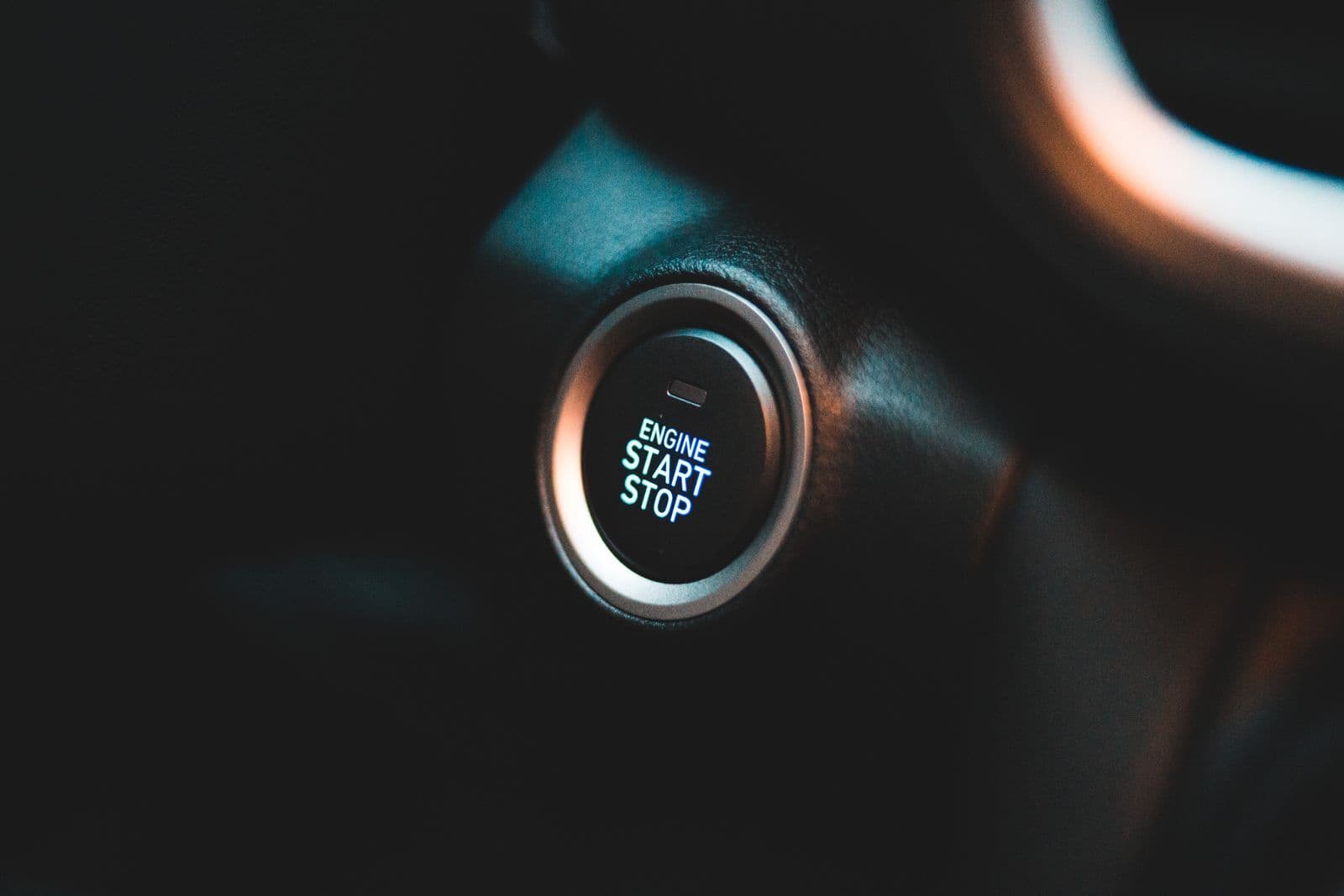
Stop-start shuts the engine off at a red light and fires it up again when you lift off the brake. The usual worry is that thousands of extra restarts are quietly grinding the engine away. The published evidence points somewhere else: at a bearing coating, at the starter motor, and most of all at the battery.
- Applies to
- Petrol and diesel cars with automatic engine stop-start
- What changed
- Journal bearing overlay material, starter, battery
- Best evidence
- Bench rigs on real bearing shells, supplier patents
- Documented mass failure
- Restart reliability, not engine damage
- Australian angle
- The consumable is the battery, not the engine
What a restart actually does to a bearing
A crankshaft rides on a film of oil that the crankshaft itself creates. Spinning, the journal drags oil into a narrowing wedge and the pressure in that wedge holds the shaft off the metal. Because that pressure depends on sliding speed, any run-up from rest has to pass through the mixed lubrication regime: once the oil film falls below a critical thickness the surface asperities begin to touch (opens in a new tab), and the load is then shared between hydrodynamic film pressure and solid contact pressure at those asperities rather than carried by the film alone. On the industrial journal-bearing rig in that 2018 study, the transition sat at roughly 220 to 300 rpm.
Read the limits of that study, because they matter. It tested industrial machinery bearings, not engine crankshaft bearings; it measured friction, not wear; and it does not address automatic stop-start at all. It also found that a shorter run-up time reduced the friction coefficient in the mixed regime, which cuts against the intuition that a snappy stop-start restart is the harsh case.
The restart is not wear-free either, and manufacturers say so in their own filings. A Cummins patent on managing stop/start frequency notes that at initial cranking, "bearing and camshaft lubrication as well as piston-ring/cylinder-wall contact are minimal or non-existent" (opens in a new tab) and that starting "can be one of the most detrimental operating modes". The oil pump is driven by the engine, so during an auto-stop it stops too and gallery pressure falls away. The oil is warm. It is not circulating.
Stop-start systems generally will not auto-stop until the engine has warmed up, and they inhibit or cancel a stop on a range of conditions. A GM patent lists ambient temperature outside a predetermined range and power-source charge below a predetermined level (opens in a new tab), alongside road grade, elevation, towed weight, traffic and driver behaviour. So the restart happens at operating temperature rather than from cold. That inhibit logic is calibrated per model, though, not guaranteed across the industry.
The fix was a coating, not a pump
The change made for this duty is a bearing overlay. Instead of a soft sacrificial lead or tin electroplate that depends on an oil film for most of its life, stop-start-era bearings use a polyamide-imide resin loaded with solid lubricants. MoS2 and graphite make up as much as 60 per cent by weight, with hard and metallic fillers up to about 5 per cent, sprayed onto a grit-blasted lining and cured at 190 to 230 degrees C (opens in a new tab), typically 8 to 16 micrometres thick. It behaves as a semi-permanent solid film keeping the shaft off the lining where there is little hydrodynamic film to speak of.
The comparison that matters was run on a tribometer using real-scale bearing shells against crankshaft-grade steel in fully formulated 10W-40 at 120 degrees C. At 18,000 stop-start ramps, three polymer-coated bearings showed under 4 micrometres of maximum wear at the highest-loaded position, while a standard lead-based trimetal reference showed "3-4 times more wear", with nearly the whole overlay thickness worn away (opens in a new tab). The best polymer bearing was still at about 4 micrometres after 50,000 ramps.
That is a sub-scale, oil-bath-lubricated rig with the specific bearing load unstated. It does not convert into microns per 100,000 km on your car. It is, however, the closest experimental answer available to "what about a bearing that was not designed for this".
MAHLE, which makes polymer-coated bearings, published a contact and wear model whose predicted wear contours and depths matched results from two test diesel engines and a bearing fatigue rig (opens in a new tab); in that model's simulations a polymer-coated bearing showed significantly lower asperity friction than an aluminium bimetal. That is a modelled friction result from the coating's own manufacturer, and the paper does not address stop-start operation.
The evidence that cuts against this article
The strongest facts on the record run against the idea that stop-start is a durability problem worth worrying about.
- The absolute numbers are small. About 4 micrometres of wear after 50,000 ramps, against an overlay 8 to 16 micrometres thick and running clearances measured in tens of microns, is not a path to a failed bearing. The alarming result in that same study (opens in a new tab) belongs to the legacy trimetal bearing, not the modern one.
- The damaging window is brief. A mixed-to-hydrodynamic transition measured at roughly 220 to 300 rpm (opens in a new tab) is a band an engine crosses in a fraction of a second.
- The industry's own revealed priority was the starter. Ford's patent states that building a starter robust enough for stop/start lifecycle requirements increases system costs substantially, and its answer is to estimate the "percentage of useful engine starter life consumed" and progressively restrict auto-stop as it accumulates (opens in a new tab). We could not find any equivalent production strategy that inhibits auto-stop to protect the crankshaft bearings.
- Polymer overlays are not a stop-start band-aid. Downsizing, higher peak cylinder pressures and ultra-low-viscosity oils push bearings toward mixed lubrication anyway (opens in a new tab), so the presence of stop-start does not reliably tell you which bearing an engine has.
- The measured upside is real. Bosch, which developed and sells the system, puts the benefit at "around 8%" lower fuel consumption and emissions, rising to "as much as 15%" where urban stopping times are longer (opens in a new tab). Treat that as a supplier figure: no test cycle or independent verification is named, and it describes Bosch's 2011 starter-based system.
There is one finding that complicates the folklore rather than confirming it. A 2025 study applying continuum damage mechanics to start-stop wear reports that stacking consecutive cycles leaves the contact less time to cool and increases predicted wear, while extending the engine-off phase reduces it (opens in a new tab). On that evidence a long wait at a level crossing is the benign case and stop-go crawling is the demanding one. It models a pin-on-disk sliding contact, not an engine, and quantifies no effect on service life.
The claims we could not stand up
Some of the most repeated statements about stop-start have no source we could reach.
- "A car does 50,000 starts in its life; with stop-start it does 500,000." This 10x figure is the numerical backbone of most stop-start wear articles. We could not trace it to any manufacturer, supplier, standard or peer-reviewed paper. It should not be repeated as fact.
- "75 per cent of engine wear happens at startup." A folk statistic with no primary source behind the number.
- "Stop-start cars have an auxiliary oil pump to pre-lubricate the engine." Every accumulator we found is transmission hardware. ZF describes its oil volume accumulator as holding hydraulic pressure in the transmission while the engine is stopped so the car can pull away smoothly (opens in a new tab), and says nothing about engine lubrication either way. We have not found documentation of a production micro-hybrid that pre-pressurises the engine's main oil gallery.
- "Stop-start kills turbochargers." Coking from hot shutdown is a real and long-understood mechanism, but it predates stop-start, and we located no measurement of turbocharger temperature or coking attributable to stop-start events specifically. An auto-stop happens after decelerating and idling, which is not the hottest point in a turbine's duty cycle.
- "Stop-start voids your engine warranty." We found no manufacturer statement, bulletin or regulator document supporting it. The one documented warranty action runs the other way, and it is in the next section.
The largest documented failure is electrical
On 26 March 2025 the US regulator's Office of Defects Investigation opened Engineering Analysis EA25004, "No Restart After Auto Start/Stop Engages" (opens in a new tab), into American Honda vehicles, upgrading a preliminary evaluation opened in June 2022. The estimated population is 2,209,466 US-market vehicles across the Honda Pilot, Odyssey, Passport and Ridgeline and the Acura TLX and MDX. The resume records 1,348 complaints, 4 crashes or fires, 2 injuries and no fatalities.
The ODI resume records (opens in a new tab) that Honda service bulletins 23-008 and 23-009 set a two-stage repair: a fuel-injection software update first, and only if that fails then, depending on model and model year, replacement of the starter assembly and starter relays plus a valve adjustment, with warranty coverage extended to 10 years and unlimited mileage for vehicles needing the second stage.
Note carefully what that does and does not say about wear. The remedy centres on software and the starter circuit rather than engine rebuild work, though it is not entirely free of engine-internal work, because the valve adjustment is inside the engine. The investigation is open, with no recall and no defect determination. It is a failure-to-restart matter, not an engine damage matter. And it is a US investigation covering US-market cars: Australian-delivered vehicles are not covered by that campaign, and owners here should ask Honda Australia what applies to their car.
In Australia, the cost lands on the battery
If the car you are looking at has stop-start, the part to plan for is not inside the engine. It is the battery.
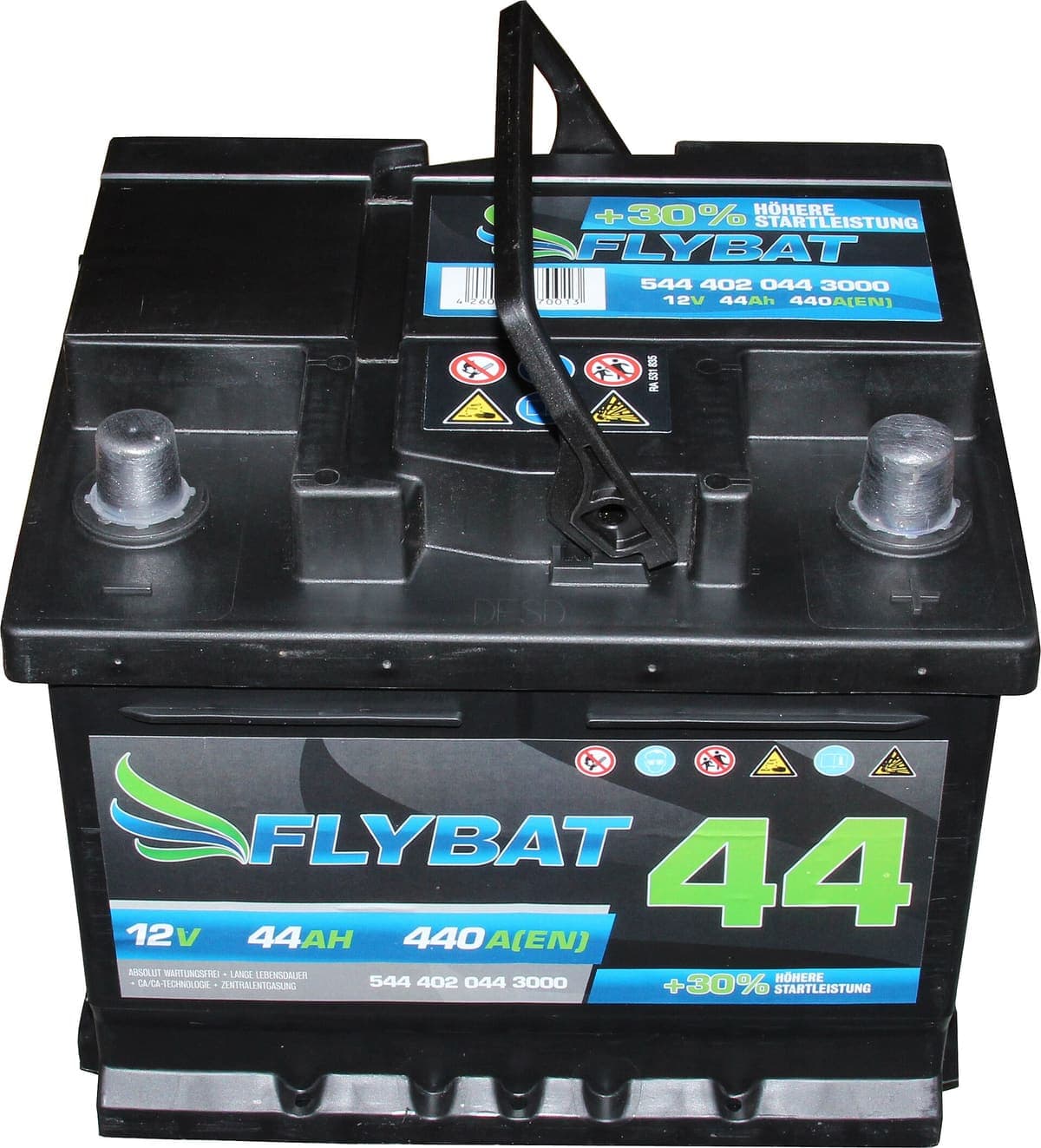
The battery is where the real consumable sits. With the engine off it carries the whole electrical load unaided, then delivers a high-current restart pulse, repeatedly, at partial state of charge. That is cyclic duty, not starting duty, and a European standard exists for it: BS EN 50342-6:2025, "Lead-acid starter batteries - Batteries for micro-cycle applications" (opens in a new tab), published in August 2025. GS Yuasa publishes the gap plainly in its own product data: conventional ranges rated up to 20,000, 30,000 and 50,000 starts, against 270,000 for its start-stop EFB range and 360,000 for its AGM range (opens in a new tab). Those are commercial specifications with the test basis unstated, but the ratio is the point.
Heat compounds it. Lead-acid service life falls with sustained temperature, and the widely used trade rule is that it roughly halves for each 10 degrees C above about 25 degrees C - a convention we could not verify against a primary standard, so treat it as a rule of thumb rather than a specification. An underbonnet battery in Darwin, Perth or a western Sydney summer is doing micro-cycle duty in conditions that already compress its calendar life.
Fitting a cheaper conventional flooded battery to a stop-start car swaps a component rated in the hundreds of thousands of starts for one rated in the tens of thousands, and the system will misbehave long before the battery dies.
Two practical notes for buyers. First, a used stop-start car that has already had a conventional battery fitted by a previous owner or a discount fitter is worth catching at inspection, because the replacement is both wrong and imminent. Second, if the system will not engage in summer heat with the air-conditioning working, that is the inhibit logic protecting the battery, not a fault.
Finally, a checked negative. A search of the ACCC Product Safety recall register and vehiclerecalls.gov.au found no Australian safety recall attributing engine damage, bearing wear or turbocharger failure to stop-start. If a starter or battery on a near-new car fails well short of a reasonable life, that is worth taking up with the seller or the manufacturer rather than accepting the first answer you are given.