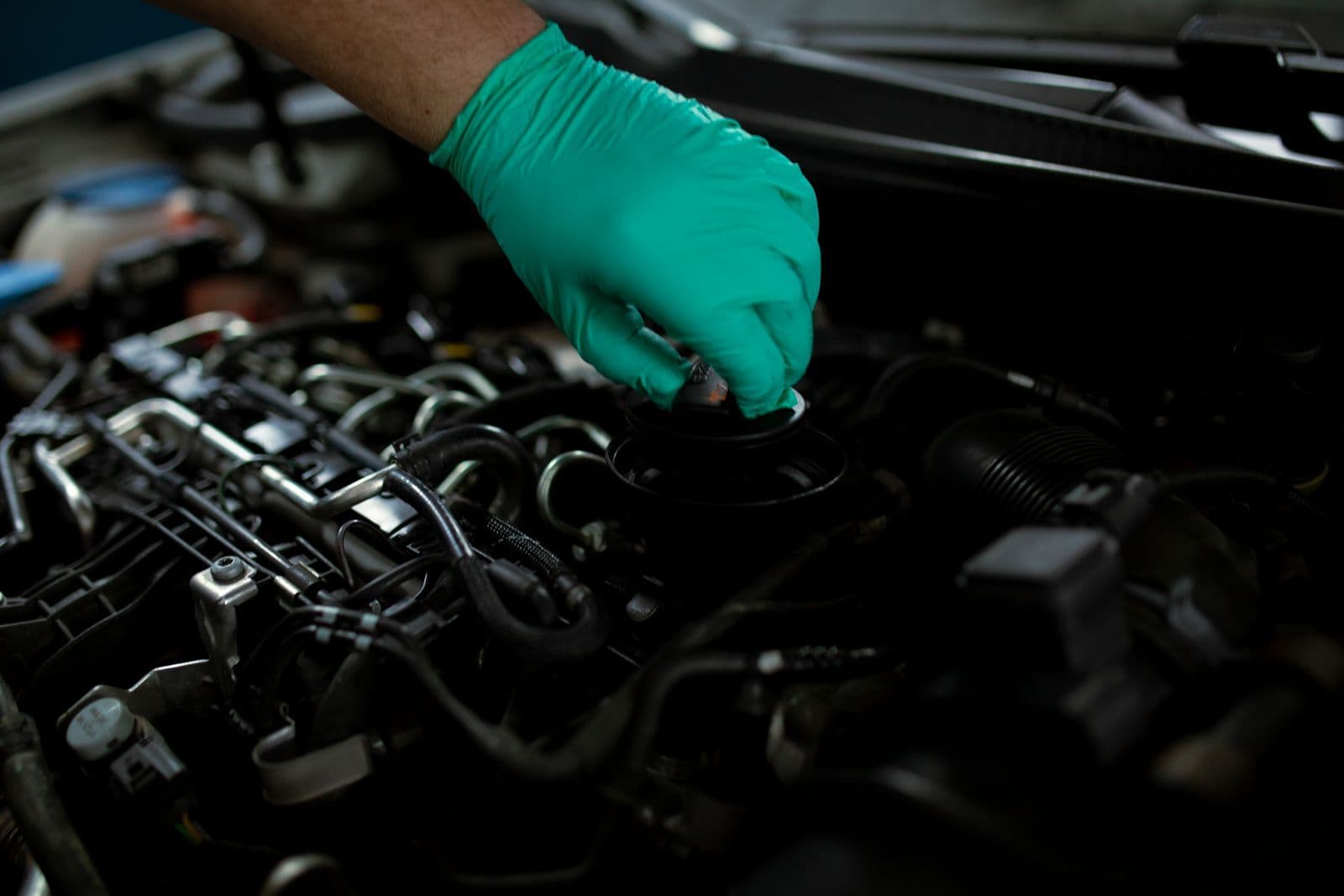
A rubber toothed belt running submerged in the engine's own oil sounds like a mistake waiting to happen. The regulatory record is narrower and more specific than that reputation. It holds one US safety recall, one open US engineering analysis, two French recall campaigns and an Australian recall notice - and almost none of it says what the internet says it says.
- Applies to
- Ford 1.0 three-cylinder, PSA/Stellantis 1.2, some VW oil pump drives
- Evidence
- US safety recall, open NHTSA engineering analysis, Australian recall
- Documented harm
- Financial and reliability. NHTSA records no crashes or injuries in 355 incidents
- Australian action
- Recall REC-005686, published 31 May 2023
- Documented accelerant
- Fuel-diluted oil from short urban trips
Two belts, two regulatory actions, one small engine
Ford's 1.0-litre three-cylinder is the engine most of this argument is about, and coverage frequently runs two different failures together. They are separate items with separate populations and separate remedies.
The first is the oil pump drive belt and its tensioner - a belt inside the oil pan, which Ford's own repair instruction reaches by removing the oil pump cover. Ford recalled it in the United States as NHTSA campaign 23V-905, filed 22 December 2023 (opens in a new tab), covering 139,730 vehicles - 26,041 Focus MY2016-2018 and 113,689 EcoSport MY2018-2022, all with 1.0L engines paired with the 6F15 automatic transmission, with the estimated percentage having the defect recorded as 100%. The filed defect description (opens in a new tab) is that the tensioner arm may fracture or separate from its backing plate, and/or the belt may degrade and lose teeth, causing loss of oil pressure; the stated safety risk is engine damage or seizure, loss of motive power, and loss of the mechanical vacuum pump that provides power braking assist.
The second is the timing belt, and it is not a recall. It is an open investigation. NHTSA opened Preliminary Evaluation PE25020 in December 2025 and upgraded it to Engineering Analysis EA26004 on 31 July 2026 (opens in a new tab), covering a combined 135,551 vehicles: MY2014-2017 Fiesta and MY2015-2018 Focus with the 1.0L manual, plus MY2018-2021 EcoSport and MY2016-2018 Focus with the 1.0L automatic. No defect finding has been made. Both actions are American, and NHTSA has no jurisdiction in Australia.
What Ford told the regulator about its own testing
The most quotable line in this entire story is Ford's, in Ford's own filing. Under "Description of the Cause", Ford states (opens in a new tab) that the tensioner arm retention caulking joint is not robust to the vibration the component experiences over time, and then that "Ford's engine design verification testing did not adequately represent the load on the oil pump tensioner system experienced in the vehicle." The redesigned part replaces the caulked joint with a bolted one and shortens the arm; the replacement belt is described as having updated material properties to stop it degrading or losing teeth. The component supplier is named as Dayco Europe SRL.
The chronology in the same filing records 2,099 warranty claims for this issue between 10 June 2016 and 6 October 2023, and that in February 2022 Ford's internal review group determined the issue did not present an unreasonable risk to motor vehicle safety. NHTSA contacted Ford in July 2023; the review was reopened the following month and a field action approved that December. That is a seven-year gap between the first recorded warranty claim and the recall, stated by the manufacturer. It is not evidence of a cover-up, and no document we read supports that word.
The remedy then took longer than the recall did. Ford's dealer bulletin dated 24 October 2024 (opens in a new tab) still told dealers that remedy parts were not currently available, with updated belt and tensioner expected from the first quarter of 2025. In the meantime the only repair authorised was replacement of the complete long block engine and turbocharger, at 10.2 to 11.8 hours of labour, and only for cars that had already failed.
The servicing excuse does not survive the data
The standard explanation for wet-belt failures is that owners skipped oil changes. For the Ford population, the US regulator found otherwise. NHTSA's analysis (opens in a new tab) puts average failure mileage at roughly 70,000 miles (about 113,000 km), states that 98% of failures occurred before the 150,000-mile belt replacement interval in the vehicles' own maintenance schedule, and says plainly that "failures have occurred despite evidence of proper and routine oil maintenance."
The mechanism is that belt material degrades and creates debris which clogs the mesh oil pump pick-up screen, progressively reducing oil pressure until the engine loses lubrication. And the screen cannot be checked: NHTSA states it "is not serviceable, so debris accumulation cannot be inspected or manually removed without removing the engine from the vehicle."
Belt maker Continental describes the chemistry driving this. Its technical bulletin on belt-in-oil systems (opens in a new tab) says soot particles in high-compression direct-injection engines can lodge in the oil bath between sprocket and belt, that fuel-diluted oil has an abrasive effect on timing belts, and that dilution is worst on short urban journeys and stop-start delivery duty. It adds that leaving such a car parked for a prolonged period "can do far more harm to the belt than driving it daily", because contact time with contaminated oil is what does the damage.
That is the shape of the whole thing. The belt is not fragile in the abstract. It performs to a specification, and the specification is about the oil around it - which the car's duty cycle, not the owner's diligence, is what breaches.
NHTSA's engineering analysis resume (opens in a new tab) records that Ford told the agency on 2 June 2026 it had cut the global belt interval from 150,000 miles to 100,000 miles or six years, and would reimburse customers who had already paid for a related engine repair. The regulator upgraded the investigation to an engineering analysis on 31 July 2026 regardless.
Do not assume a pre-purchase inspection can clear a Ford 1.0 wet-belt car - the regulator states the oil pump pick-up screen cannot be inspected without removing the engine.
Where Australia actually sits
Australia has its own registered wet-belt recall. REC-005686, published 31 May 2023 (opens in a new tab), covers 2017-2020 Peugeot 308, 208 and 2008 with a companion action for equivalent Citroen models, and the official defect wording is "The timing belt may degrade due to aged engine oil." The hazard is stated as reduction or loss of braking performance. Those are 2017-2020 cars trading as cheap used stock now, so the exposure sits with second and third owners rather than with the original buyers.
Two cautions matter more than the numbers. First, the French remedies do not travel. The French Government confirmed in March 2025 (opens in a new tab) that Stellantis ran recall campaigns in 2020 and 2022 and separately gave a public undertaking extending the commercial warranty to 10 years or 175,000 km with parts and labour covered, conditional on servicing to manufacturer recommendations and on repair inside the approved network. That is a French-market undertaking. Assume nothing about an Australian car without asking the local importer. The same reply records that investigations by two French state bodies were ongoing and publishes no finding against Stellantis.
Second, Australian Consumer Law fits this failure better than any goodwill scheme. The consumer guarantees are the place to start rather than a warranty expiry date, and what is reasonable is read against the price and age of the specific car. An engine that seizes around 113,000 km, where the regulator has found most failures happen well before the manufacturer's own belt interval and despite proper maintenance, is the case worth putting to the supplier.
One gap we could not close: we could not locate an Australian recall corresponding to Ford's US oil pump belt action, but our attempts to search the national register did not complete. Treat that as an open question for Ford Australia, not a finding.
The PSA side does at least offer something to inspect. Continental's technical bulletin (opens in a new tab) documents cracking on the back of the 1.2's belt being visible through the oil filler cap, a swollen belt as the replacement trigger checked with a control gauge, and strainers that can be cleaned rather than requiring engine removal.
The strongest evidence against this article
Wet belts have not been shown to hurt anyone. Across 355 de-duplicated incidents in the Ford timing belt investigation (opens in a new tab), NHTSA records no crashes, no fires, no injuries and no fatalities. Ford's own recall filing (opens in a new tab) records one alleged crash with two injuries potentially related across 139,730 vehicles and seven years. The safety theory is crash risk from losing motive power, not a body count.
More awkwardly for the premise: catastrophic oil-side engine failure is not a wet-belt speciality. In November 2025 Toyota recalled 126,691 vehicles (opens in a new tab) with the chain-driven V35A twin-turbo V6 - 2022-2024 Tundra, 2022-2024 Lexus LX and 2024 Lexus GX - because machining debris left in the engine can adhere to the crankshaft main bearings, causing bearing failure, knocking, no-start and stalling, with the same stated crash risk from loss of motive power at speed. That is a population of comparable size to the Ford wet-belt analysis, in an engine with no belt anywhere near the oil. Continental, an interested party, goes further (opens in a new tab) and claims soot particles in oil can destroy chains while leaving belts unharmed.
Belt-in-oil also has documented benefits rather than being a bare cost saving. Continental's bulletin (opens in a new tab) states that running the belt in oil reduces frictional losses, which it says is reflected in fuel consumption and CO2 emissions, and that a belt in oil runs "much more quietly than a chain drive". It publishes no figures for any of that, and says nothing about cost - so treat it as a stated rationale from the belt maker, not a measured comparison.
What is not established
- That the belts were sold as lifetime items. The opposite is documented for the Ford timing belt: a 150,000-mile replacement interval existed and was later shortened.
- "Up to 30% less friction than a chain." Widely repeated in trade press. We could not reach any test report or manufacturer technical document containing that figure.
- That 500,000 French engines are affected, or that 40% of compensation claims were rejected. The first is a parliamentarian's estimate that the Government's reply (opens in a new tab) does not adopt; we could not reach a primary source for the second.
- That a chain version is the fixed version. Trade reporting (opens in a new tab) says a third-generation 1.2 launched in 2023 with a chain while belt versions kept being built alongside it, but we located no Stellantis document confirming it, and we could not reach a primary or reportable source for the third-generation unit's own defect record, or for any Stellantis statement on the PureTech name. Badge and model year will not tell you which drive a car has. Check the engine code on the specific vehicle.
- That belt-in-oil is confined to these two engines. Continental's technical bulletin (opens in a new tab) also names the Ford 2.0 EcoBlue and VW 1.6 and 2.0 TDI oil pump drives. No comparable regulator action has been located for those, which is not the same as proof they are trouble-free.