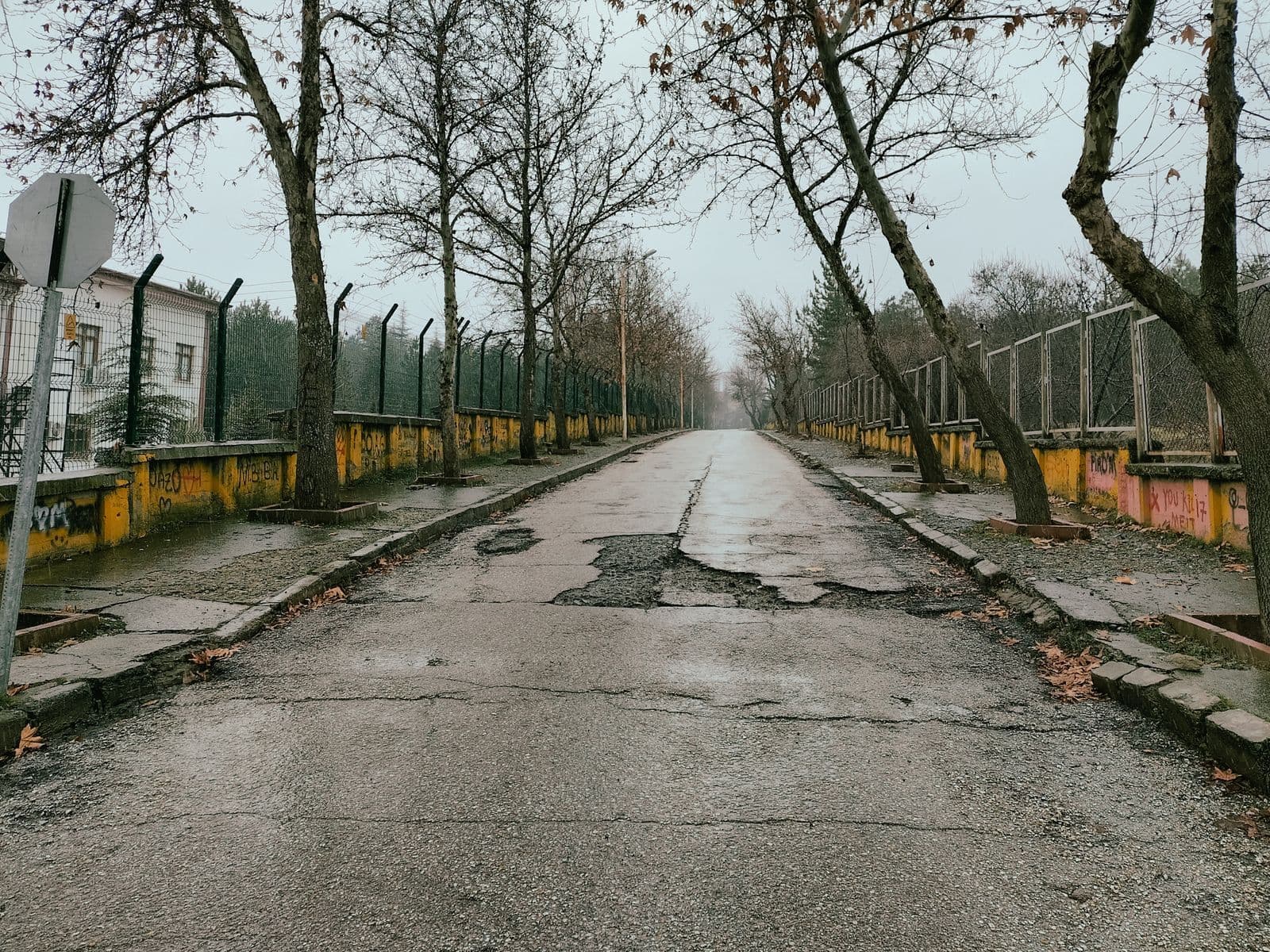
If it feels like you have been dodging more potholes than you used to, you are not imagining it. Three consecutive La Niña summers between 2021 and 2023 dumped record rain across much of the country, water worked its way into ageing road surfaces, and traffic did the rest. Road agencies have been patching at a record pace ever since — New South Wales alone reports more than half a million potholes filled on its state-managed roads since March 2023 — yet in most states the maintenance backlog behind the potholes has kept growing.
This article pulls the published numbers together: what each state and territory is dealing with, what pothole strikes are costing drivers, whether you can realistically get compensation (the rules differ sharply between states), and how Australia's roads stack up against the rest of the world. Figures come from road authorities, auditors-general, motoring clubs and published research, each attributed below — and where the data simply does not exist, we say so rather than guess.
Why potholes happen — and why Australia grew so many
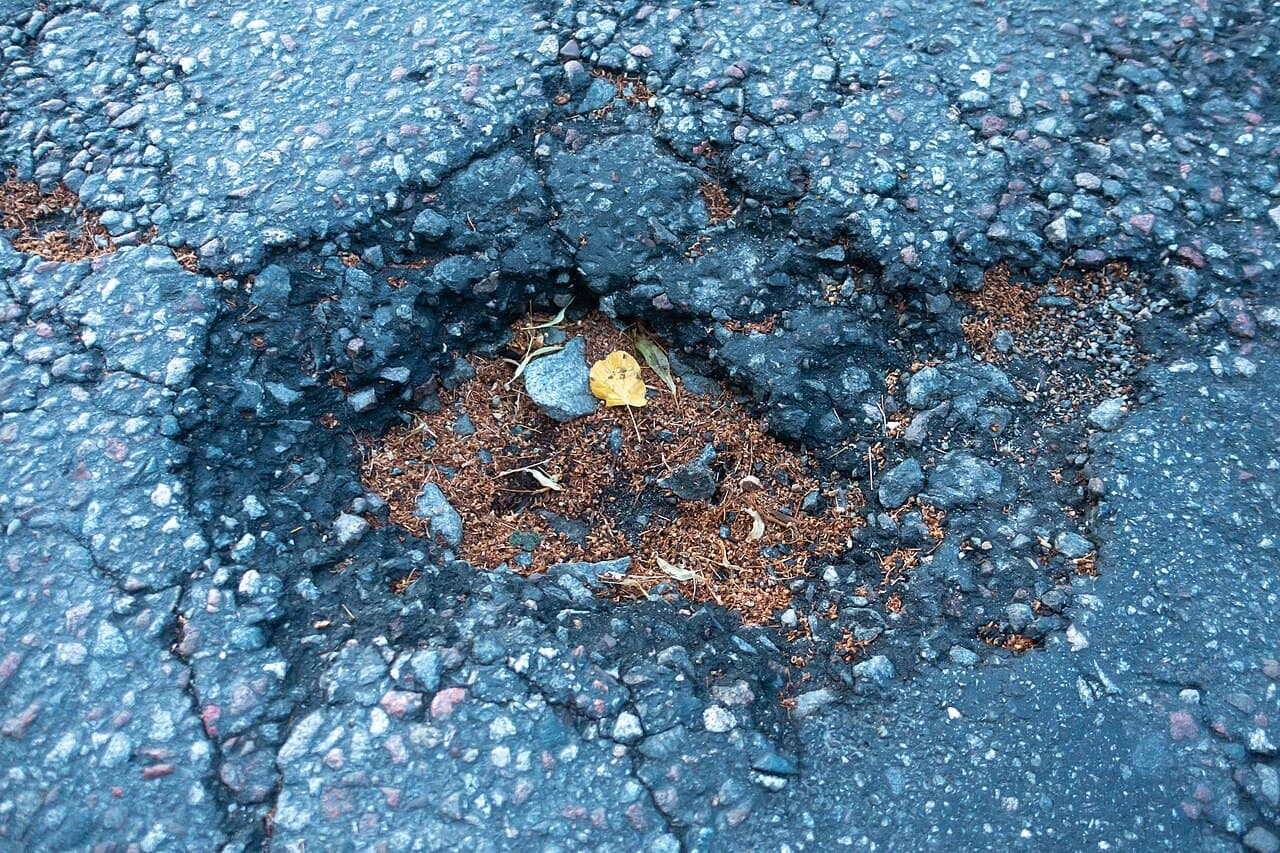
A pothole needs three ingredients: a crack, water and traffic. Tyres force rainwater into small cracks in the asphalt, repeated wheel loads break fragments loose, and water that reaches the pavement base hollows out cavities that collapse under traffic. Rain alone does not make potholes — rain plus heavy vehicles on an already-cracked surface does.
Australia had all three ingredients in abundance. The 2021–23 La Niña years brought some of the heaviest sustained rain on record to the eastern states. Austroads (opens in a new tab) — the peak body for Australasian road agencies — has found that a wetter climate accelerates pavement deterioration, that heat ages and embrittles the sprayed bitumen seals used on most of our rural network, and that the trend to longer, heavier freight vehicles has increased the loading those thin seals were never designed for.
Underneath the weather sits a money problem. Grattan Institute researchers note that transport has fallen from almost half of local-government spending in the 1960s to about 21 per cent today, while the road network those councils must maintain has kept growing.
The national scorecard
- Australia's road network runs to roughly 880,000 km, and local councils manage about 77 per cent of it — around 678,000 km — according to the Australian Local Government Association (opens in a new tab) (ALGA).
- ALGA's 2024 National State of the Assets report, drawing on data from 458 councils, found roughly 23 per cent of the council-managed network in poor condition — about $19.2 billion of sealed roads and $3.9 billion of unsealed roads, or around $23 billion of road assets in poor shape.
- The Grattan Institute's 2023 report Potholes and Pitfalls (opens in a new tab) estimated councils spend about $1 billion a year less on road maintenance than is needed just to keep local roads in their current condition. The typical regional council's shortfall exceeds 40 per cent; in remote areas it exceeds 75 per cent. A quarter of councils surveyed did not know exactly which roads and bridges they manage.
- The Commonwealth has responded in part: the Roads to Recovery program (opens in a new tab) is stepping up from $500 million to $1 billion a year by 2027–28.
- The 2022 east-coast floods left a repair bill for local roads that the local government sector put at around $3.8 billion across the affected states.
One number that does not exist: a national tally of what pothole damage costs Australian drivers. Australian insurers do not publish a pothole-claims series the way their UK counterparts do. The state-level figures below are the closest available measure.
New South Wales
The NSW Government has made potholes a headline act: more than 500,000 filled on state-managed roads since March 2023 (opens in a new tab), 184,000 across regional communities in 2024–25 alone, and $1.25 billion committed to regional road maintenance for 2025–26. By March 2026 the government was reporting 82 per cent of state-managed regional roads "pothole-free".
The catch is scope. NSW's network exceeds 180,000 km and councils — not the state — manage well over 85 per cent of it. The NRMA estimates the repair backlog on regional council roads at about $2.8 billion, and its patrols attended 12,162 wheel and tyre damage call-outs in April and May 2024 alone (opens in a new tab). Regional tyre and wheel call-outs rose about 17 per cent year-on-year into 2025–26; the NRMA's Peter Khoury has said a NSW driver is now more likely to suffer tyre damage from a pothole than from running over a nail. The scars of the 2022 floods linger: 2,111 km of state roads were damaged, and Local Government NSW estimated more than 10,000 km of council roads needed repair.
Claiming compensation: for a state road, lodge a public liability claim with Transport for NSW (opens in a new tab) (photos, licence copy, two quotes or invoices); for a council road, claim with that council. Under section 45 of the Civil Liability Act 2002 (NSW), a roads authority is generally not liable for failing to fix a road unless it had actual knowledge of the particular risk — in practice, whether that specific pothole had already been reported and unreasonably left unfixed.
Report a pothole: Transport for NSW's online form (opens in a new tab) or 131 700.
Victoria
Victoria repaired more than 211,000 potholes in the 2024–25 maintenance season (opens in a new tab) under a $964 million program, about 70 per cent of it in regional Victoria. The RACV's regional survey found 64 per cent of country members now rank potholes as their top road concern, up from 46 per cent in 2021 — and the club has warned that only around 2 per cent of the state's roads are resurfaced each year against a historical benchmark of 7–8 per cent, with planned patching volumes falling again in the 2026–27 budget.
Victoria is also where compensation maths gets bleakest. Claims for damage on freeways and arterial roads go to the Department of Transport and Planning under the Road Management Act 2004, but a threshold — $1,681 as at August 2026, per the official claims page (opens in a new tab) — is deducted from any property-damage payout. A $1,500 tyre-and-rim bill recovers nothing; a $2,500 claim recovers about $800. Freedom-of-information documents reported by the ABC in late 2025 showed the department received 1,709 damage claims between January 2023 and December 2024 and made just 23 settlement offers — roughly 1 per cent — totalling $223,834. In August 2026 the state government ordered a review of the scheme after those figures were publicised.
Claiming compensation: lodge a Notice of Incident and Claim (opens in a new tab) with DTP for freeways and arterials; local streets are the council's responsibility (DTP publishes a map of who manages what).
Report a pothole: 13 11 70 for urgent hazards on state roads, or Transport Victoria's online form (opens in a new tab); council roads to the council.
Queensland
Queensland's problem is measured in backlog: $8.63 billion of outstanding renewal and maintenance work on state-controlled roads (opens in a new tab) at the end of 2023–24, up 10.6 per cent in a year and spanning about 10,040 km — a figure that counts resurfacing and rehabilitation but excludes routine pothole patching. Disasters drive much of it: TMR reports spending $670.4 million in 2024–25 repairing state roads after natural disasters, and ex-Tropical Cyclone Jasper alone (December 2023) triggered more than 30 landslips on one 11.5 km stretch of the Kuranda Range Road.
The RACQ's 2024 Unroadworthy Roads Survey found rough surfaces such as potholes were members' most common complaint, with the Bruce Highway again the most criticised road (opens in a new tab) — as it has been, first or second, in the club's surveys for more than two decades. The club has called for an extra $1 billion over four years for maintenance. Queensland does not publish a pothole call-out series equivalent to the NRMA's.
Claiming compensation: for state-controlled roads, lodge TMR's property damage claim form F5110 (opens in a new tab) with photos and receipts. Claims are assessed under the Civil Liability Act 2003 (Qld): you need to show the department knew or should have known about the hazard and failed to take reasonable steps, with allowance made for funding limits and prioritisation. There is no administrative appeal — an unsuccessful claimant's remaining route is court. Council roads go to the council.
Report a pothole: 13 19 40 (24/7) or the online reporting form (opens in a new tab).
Western Australia
Main Roads WA estimated in 2023 that clearing the regional maintenance backlog on state roads would cost more than $350 million and could take up to a decade. The bigger story is the roads nobody measures: WA's Auditor General reported in November 2025 that the condition of the state's 113,000-plus kilometres of regional council-managed roads — about 88 per cent of WA's network — "is not known as it is not measured or reported" (opens in a new tab), that 63 per cent of surveyed regional road users rated conditions poor to very poor, and that councils faced a $338 million asset-preservation gap in 2023–24. Road condition and potholes were the issues most frequently raised with local governments.
Weather extremes hit differently here: the January 2023 Kimberley floods — the largest known flood on the Fitzroy River — washed away sections of the Great Northern Highway and destroyed the Fitzroy River Bridge outright, prompting a $104.9 million flood-resilience rebuild program.
Claiming compensation: Main Roads accepts written claims (opens in a new tab) for state roads, assessed under the Civil Liability Act 2002 (WA), which protects a road authority unless it had actual knowledge of the hazard at the time; the claimant carries the onus of proof. Council roads go to the council.
Report a pothole: 138 138 (24 hours) or Main Roads' online Report a Fault form.
South Australia
The RAA revealed in November 2025 a record $2.1 billion maintenance backlog on SA's state-managed network (opens in a new tab) — 13,000 km of sealed and 10,000 km of unsealed roads. Over five years the network deteriorated by $1.6 billion in value while $892 million was spent on maintenance, a 45 per cent shortfall. Road surface faults — cracks, potholes, sunken pit covers — are SA drivers' top complaint, nominated by 51 per cent of regional respondents in the RAA's survey, and pothole reports through the Snap Send Solve app more than doubled between 2022 and 2023. The 2022–23 River Murray flood, the state's biggest since 1956, added washed-out sections and widespread surface damage.
SA is also the hardest place in the country to be compensated. Section 42 of the Civil Liability Act 1936 (SA) provides that a road authority cannot be held negligent for a failure to maintain, repair or renew a road (opens in a new tab) — an immunity that bars most pothole-damage claims outright, with narrow exceptions such as misleading signage. Drivers can still lodge a claim with the Department for Infrastructure and Transport or a council, but in practice comprehensive insurance is usually the realistic route, and anyone pursuing a claim should get legal advice.
Report a pothole: DIT Traffic Management Centre on 1800 018 313 (24 hours) or the sa.gov.au hazard form (opens in a new tab); the RAA also runs a member Report a Road channel.
Tasmania
After storms battered the state in September 2024, the Premier announced a "pothole blitz", with contractor crews deployed to the Bass Highway, West Coast roads, the Lyell and Murchison highways and Highland Lakes Road; news reports at the time put the statewide count at around 3,000 potholes, including 270 identified on the Murchison Highway in a fortnight. The 2024–25 state budget carried $117 million for road and bridge maintenance. Beyond that, published data is thin: the RACT says members contact it about road conditions daily, but neither the club nor the government publishes a pothole damage-claims series.
Claiming compensation: the Department of State Growth runs a formal claims process for state roads (opens in a new tab): you must show it failed to take reasonable steps against a foreseeable risk, and where a maintenance contractor holds the contract for that road, the claim is referred to the contractor. Refused claimants can pursue the Magistrates Court. Council roads go to the council.
Report a pothole: 1300 139 933 (24/7) or the online road hazard form (opens in a new tab).
Northern Territory
The Territory's pothole story is really a wet-season story, and 2025–26 was severe. After Cyclone Fina and record flooding — Katherine's worst in about three decades — the NT Road Report peaked in March 2026 at 76 roads closed, 26 impassable and 66 carrying surface hazards (opens in a new tab); the Infrastructure Minister called it the highest level of road issues in the Territory's history, and nearly 350 km of highway remained closed at the end of July 2026. Darwin's city council completed more than 900 pothole repair jobs in the months after November 2025. The government responded with a $30.5 million roads repair package on top of a $100 million Flood Recovery Fund; the NT Road Transport Association says some flood-damaged roads cost $1.5–1.8 million per kilometre to rebuild.
There is no published NT scheme for claiming pothole vehicle damage — the Territory's MAC scheme covers personal injury only — so comprehensive insurance is, in practice, the main protection.
Report a pothole: the nt.gov.au road fault form (opens in a new tab); live conditions at roadreport.nt.gov.au (opens in a new tab).
Australian Capital Territory
Canberra publishes the country's most complete pothole-claims picture. Transport Canberra repaired more than 12,000 potholes in 2022–23 — around four times a typical year — after successive La Niña seasons, and the government received 877 vehicle damage claims over 2022 and 2023, paying out more than $518,000 (opens in a new tab) at a few hundred dollars per typical claim for tyres, rims, suspension and bodywork. Uniquely among the jurisdictions covered here, the ACT demonstrably pays a meaningful share of the claims it receives, though it stresses it is not automatically liable (opens in a new tab) for pothole damage.
Report a pothole: Fix My Street (opens in a new tab) or 13 22 81. The service standard is repair within 10 working days, or 48 hours for an immediate safety risk.
How Australia compares with the world
Potholes are a global condition, and the comparison is oddly comforting — or alarming, depending on how you read it.
- United Kingdom. The Asphalt Industry Alliance's ALARM survey (opens in a new tab) put the backlog to fix local roads in England and Wales at a record £18.6 billion (roughly A$36 billion) in 2026 — a 12-year job. The RAC attended 26,048 pothole-related breakdowns in 2025 (opens in a new tab), up 15 per cent on 2024 — about 71 a day — and Kwik Fit's Pothole Impact Tracker put UK drivers' pothole repair bills at £1.7 billion in its 2025 edition, with the 2026 edition reported higher still at around £1.8 billion. A typical UK repair beyond a simple puncture can reach £590 (about A$1,150).
- United States. AAA's most recent national study found pothole damage cost US drivers US$26.5 billion in 2021 (opens in a new tab), averaging almost US$600 per repair. The American Society of Civil Engineers' 2025 Infrastructure Report Card grades US roads D+, with 39 per cent of major roads in poor or mediocre condition, costing the average driver over US$1,400 a year in operating costs and lost time.
- New Zealand. More than 62,000 potholes needed repair on NZ's state highways in 2023 — a ten-year high after Cyclone Gabrielle — prompting a dedicated NZ$500 million Pothole Prevention Fund (opens in a new tab) and a 41 per cent boost to maintenance funding.
- Canada. A CAA study put the cost of poor roads to Canadian drivers at C$3 billion a year — about C$126 per vehicle in extra operating costs.
- India. Potholes there are lethal, not just expensive: Ministry of Road Transport and Highways data records 2,161 deaths in pothole-related crashes in 2023, and more than 9,400 over 2020–2024.
On the last credible cross-country measure — the World Economic Forum's road-quality index, a perception survey last published in 2019 and now dated — Australia scored 4.9 out of 7, identical to the UK, behind the US on 5.5 and ahead of New Zealand on 4.5. Mid-pack for a rich country, with pothole economics that look a lot like Britain's: a repair backlog measured in decades of current spending, and drivers wearing the difference in tyres, rims and suspension.
What drivers can do about it
- Report potholes — it matters more than you might think. In NSW and WA in particular, a road authority's liability generally turns on whether it had actual knowledge of the specific hazard. Every report creates the record that a later claim — yours or the next driver's — may depend on. The numbers and forms for each state are listed above.
- If you hit one: stop safely, photograph the pothole, its location and the damage, and keep every receipt. NSW asks for two repair quotes; most schemes want photos and invoices.
- Know your state's rules before counting on compensation. Victoria deducts $1,681 from any payout and has offered settlements on about 1 per cent of recent claims; South Australia's law bars most maintenance-failure claims entirely; the ACT actually pays a meaningful share. Nothing here is legal advice — check the official claim pages linked above, and get advice for anything substantial.
- Comprehensive insurance is often the practical route. Pothole damage to tyres, wheels and suspension is typically claimable — weigh the repair cost against your excess and any premium impact.
- Drive for the conditions. Leave following distance so you can see the road surface, slow down in the wet, and never swerve blindly around a pothole — a puddle can hide one, and an abrupt lane change is more dangerous than most impacts.
- Buying a used car? Cars from flood-affected or pothole-heavy regions deserve a close look at tyre wear patterns (uneven wear can signal bent suspension), rim dents and suspension condition. A pre-purchase inspection is cheap next to a new set of struts.
Figures are as at August 2026 and attributed to the sources below. Claim processes, thresholds and phone numbers change — check the linked official pages before relying on them.
Sources
- NSW Government — State-wide fight against potholes (Mar 2026) (opens in a new tab) and regional road maintenance funding (Aug 2025) (opens in a new tab)
- NRMA — Potholes pain NSW motorists (Jun 2024) (opens in a new tab); regional call-out and backlog figures via The Land (Jun 2026) (opens in a new tab)
- Service NSW — TfNSW public liability claims (opens in a new tab)
- Premier of Victoria — Road maintenance season wrap (Jul 2025) (opens in a new tab); vic.gov.au — Notice of Incident and Claim (opens in a new tab); Victorian claims outcomes via ABC News (Oct 2025) (opens in a new tab) and ABC News budget analysis (May 2026) (opens in a new tab)
- Queensland backlog via ABC News reporting TMR data (Jun 2025) (opens in a new tab); Queensland Government — property damage claims (opens in a new tab); RACQ — Unroadworthy Roads Survey (Sep 2024) (opens in a new tab)
- WA Auditor General — Maintaining Regional Local Roads (Nov 2025) (opens in a new tab); Main Roads WA — Claims (opens in a new tab); Main Roads WA Annual Report 2023 — Kimberley floods (opens in a new tab)
- RAA — SA's $2.1 billion road maintenance backlog (Nov 2025) (opens in a new tab); Law Handbook SA — civil liability of road authorities (opens in a new tab); SA.GOV.AU — reporting road hazards (opens in a new tab)
- Transport Tasmania — claims for damage on a state road (opens in a new tab); Tasmanian pothole blitz via Pulse Tasmania (Sep 2024) (opens in a new tab)
- NT wet-season road damage via ABC News (Mar 2026) (opens in a new tab) and ABC News (Apr 2026) (opens in a new tab); NT Government — report a road fault (opens in a new tab)
- ACT City Services — making a claim (opens in a new tab); Access Canberra — Fix My Street (opens in a new tab); ACT claims payouts via The Canberra Times (Apr 2024) (opens in a new tab)
- Grattan Institute — Potholes and Pitfalls: how to fix local roads (2023) (opens in a new tab); ALGA — 2024 National State of the Assets (opens in a new tab); Dept of Infrastructure — Roads to Recovery (opens in a new tab); Austroads — Road Deterioration Model Update (2023) (opens in a new tab)
- Asphalt Industry Alliance — ALARM survey (opens in a new tab); RAC (UK) — pothole breakdowns (Mar 2026) (opens in a new tab); Kwik Fit — Pothole Impact Tracker (opens in a new tab)
- AAA (US) — $26.5 billion pothole damage study (Mar 2022) (opens in a new tab); ASCE 2025 Infrastructure Report Card — Roads (opens in a new tab)
- NZ Government — Pothole Prevention Fund (Mar 2024) (opens in a new tab); CAA — Cost of Poor Roads in Canada (2021) (opens in a new tab); India pothole fatality data via MoRTH reporting, Outlook India (opens in a new tab); WEF road quality index (2019) via TheGlobalEconomy.com (opens in a new tab)