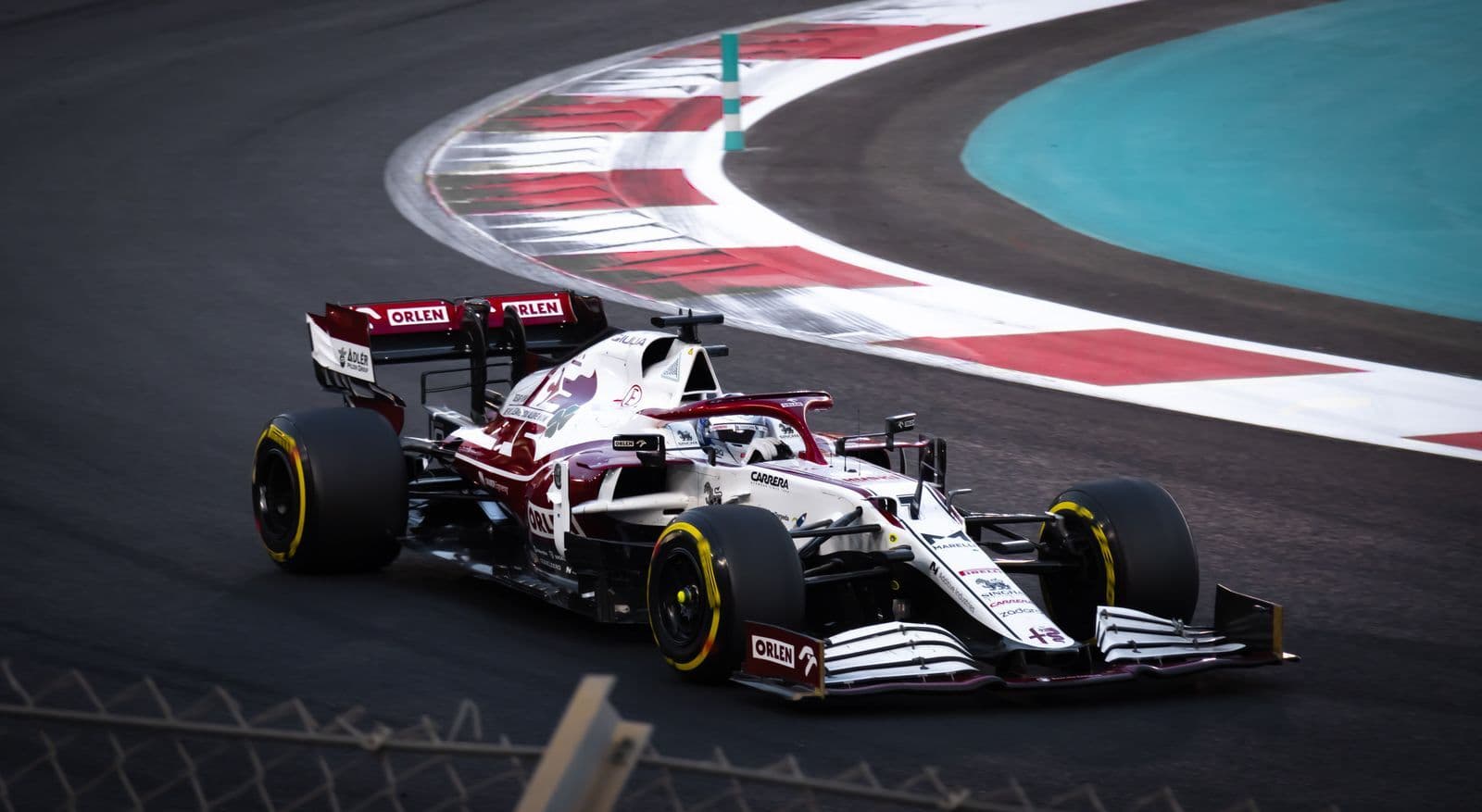
Before lithium made batteries the default answer, engineers kept returning to a beautifully direct way of storing energy: spin something heavy, very fast, and take the energy back out when you need it. No chemistry, no charge cycles to degrade, near-instant charge and discharge, and a lifespan measured in decades. Flywheels have powered Swiss buses, won Le Mans, and lapped Formula One circuits — and the reasons they still lost the car to the battery say a lot about what really decides automotive technology races.
A flywheel is a mechanical battery: energy in equals spin-up, energy out equals spin-down. Its genius is power — soaking up or releasing huge bursts instantly. Its curse is storage — holding onto energy for hours is exactly what it can't do.
The Gyrobus: a city bus powered by a spinning wheel
The purest expression came early. In 1950s Switzerland, the Gyrobus carried a flywheel of around 1.5 tonnes beneath its floor; at stops, roof-mounted arms drew grid electricity to spin it toward 3,000 rpm, and between stops the flywheel drove a generator feeding the traction motors. No overhead wires, no exhaust, routes in Switzerland and beyond (a system ran in the Belgian Congo). It worked — and it retired within a decade, because range between spin-ups was short, the energy-laden wheel consumed payload, and gyroscopic effects and bearing losses were constant taxes. The Gyrobus remains the textbook demonstration of both halves of the flywheel bargain.
Motorsport: where the flywheel found its calling
Braking a race car from 300 km/h releases a flood of energy in seconds — a duty cycle flywheels are built for and batteries hate. When Formula One introduced KERS (kinetic energy recovery) in 2009, most teams chose batteries, but Williams developed a carbon-fibre flywheel spinning in vacuum at extraordinary speeds — technology that found its real home in endurance racing and beyond:
- Porsche's 911 GT3 R Hybrid (2010) used a Williams-derived flywheel spinning to around 40,000 rpm to feed front-axle motors — a rolling laboratory that nearly won the Nürburgring 24 Hours on debut.
- Audi's R18 e-tron quattro paired its diesel V6 with a flywheel hybrid system and won Le Mans outright three years running (2012–2014) — the flywheel's greatest competitive résumé.
- Volvo's Flywheel KERS trials (2013) put a 20 cm carbon flywheel spinning to 60,000 rpm in an S60 test car, claiming meaningful fuel savings and a useful power boost from an assembly far lighter and cheaper than a hybrid battery of equal power.
- GKN's Gyrodrive, descended from the Williams technology, went into service recovering braking energy on city buses — the Gyrobus idea reborn as a helper rather than the sole power source.
Why batteries won the car anyway
Every flywheel system above shares a shape: brilliant at power, poor at energy. Four practical walls kept them out of your driveway:
- Self-discharge. Even in vacuum on magnetic or precision bearings, a flywheel bleeds energy continuously. Park overnight and it's flat — useless for the park-and-drive pattern of private cars.
- Containment. A carbon rotor at 60,000 rpm stores its energy like a spring; failure must be contained by a burst-proof housing, adding weight and cost and complicating crash engineering.
- Gyroscopic behaviour. A fast rotor resists changes to its axis — manageable with counter-rotating pairs and gimbals, but every fix adds hardware.
- The competition improved faster. Lithium batteries and supercapacitors kept getting cheaper and more power-dense; by the mid-2010s the flywheel's power advantage no longer justified its packaging, and programs like Volvo's quietly ended.
The pattern matches our other roads-not-taken stories — the turbine (opens in a new tab) and compressed air (opens in a new tab) among them: a technology's physics grants it a niche, and the market decides whether that niche is a car. Flywheels today thrive where their physics rules — grid frequency regulation, uninterruptible power supplies, port cranes — and in every petrol car's engine bay, where the humble steel flywheel has smoothed combustion pulses for over a century. The exotic version lost; the boring version never left.
What this means if you're buying or selling on MotorLoop
Hybrid systems you can actually buy — from mild 48-volt setups to full hybrids — all descend from the same braking-energy insight KERS chased. Understanding which kind a listing carries is genuinely useful when comparing fuel-economy claims; our mild hybrid explainer (opens in a new tab) covers the distinctions. And when you're ready, browse used cars — hybrids included.
Related
- Mild hybrids explained: what a 48-volt system actually does for you (opens in a new tab)
- Turbine cars: when Chrysler put a jet engine in the family sedan (opens in a new tab)
- Vehicle-to-grid and V2L in Australia: what actually works today (opens in a new tab)
FAQs
Did any production car ever use a flywheel hybrid?
No mass-production road car shipped one. The closest approaches were motorsport (Porsche's 911 GT3 R Hybrid, Audi's Le Mans-winning R18 e-tron quattro) and serious trials like Volvo's 2013 Flywheel KERS S60, which claimed useful fuel savings but ended as batteries got cheaper. Flywheel systems did reach service in city buses.
What happened to KERS in Formula One?
It evolved rather than died. The 2009-era KERS — where Williams developed its flywheel — grew into the far more powerful hybrid energy-recovery systems (MGU-K) of the current turbo-hybrid regulations, which use battery storage. The flywheel branch of the technology migrated to endurance racing, buses and industrial storage.
Why does my ordinary petrol car have a flywheel?
Every piston engine carries a simple steel flywheel to smooth the pulses between combustion strokes and give the starter motor something to engage. It stores energy for a fraction of a second rather than minutes — same physics as the exotic carbon rotors, doing a much humbler job, continuously, for over a century.