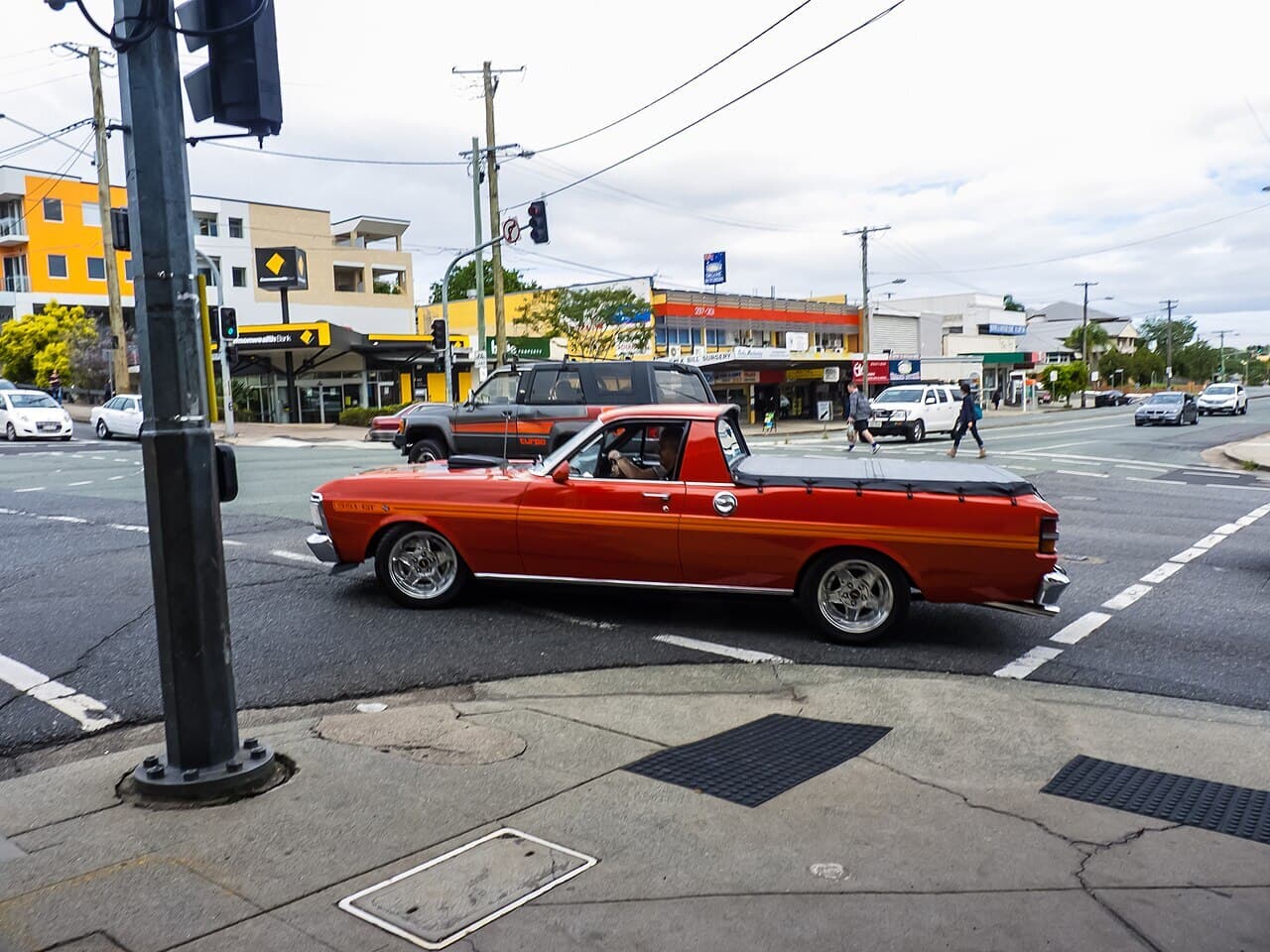
Should you buy a classic car to drive or as an investment? Our view is simple: buy it to drive. The 2026 numbers back that up more than the auction headlines suggest. Hagerty's price data shows many mainstream classics losing value this year, while Australian auction results from winter 2026 show buyers paying good money for cars from the 1980s to the 2000s that people actually want to use. A classic that gets driven, maintained and enjoyed is a happy car. A classic bought as a share certificate is a gamble with a fuel tank.
The classic market in 2026
- Hagerty Market Rating, January
- 58.28, lowest in nearly 15 years
- Biggest Q2 2026 faller tracked
- Jeep CJ-7, down 22%
- Subaru Impreza 22B, RR Auctions, June
- $290,000 hammer
- Peugeot 205 GTi 1.9, RR Auctions
- $22,000 plus premium
- NSW classic log book
- Up to 60 days of use a year
What the market is doing in 2026
Start with the biggest data set. Hagerty, the collector-car insurer, publishes a market rating built from auction results, private sales and insurance data. In January Motorious reported (opens in a new tab) that the Hagerty Market Rating had fallen to 58.28, its lowest level in nearly 15 years, and had declined in 37 of the previous 43 months. Average and median values for cars in "good" condition were down 0.5 per cent on the previous October, and only 35.2 per cent of privately sold cars fetched more than their insured value.
The mid-year update was sharper for some favourites. Citing Hagerty's price guide, Carscoops reported in July (opens in a new tab) that the 1976 to 1986 Jeep CJ-7 fell 22 per cent in the second quarter of 2026, with the 1968 to 1972 Buick GS down 18 per cent, the split-window Volkswagen Type 2 bus down 16 per cent, the 1970 to 1972 Corvette LT1 down 15 per cent and the first-generation Ford Bronco down 12 per cent. The report described a market splitting in two: blue-chip cars still finding strong buyers while mainstream enthusiast cars soften.
- 58.28
- Hagerty Market Rating, January 2026
- -22%
- Jeep CJ-7, Q2 2026
- 35.2%
- Private sales above insured value
These are mostly American figures, and the American market is not ours. But the direction matters, because it shows what happens when cars bought on hype run out of new buyers.
What Australian buyers paid this winter
Closer to home, Retro Rides' recap of RR Auctions' winter 2026 sales (opens in a new tab), published on 7 September, gives a useful snapshot of what Australian bidders went for. These are hammer prices unless noted:
- 1998 Subaru Impreza WRX STI 22B: $290,000, in June
- 2012 Ferrari F12berlinetta: $390,000
- 2024 Ford Mustang Dark Horse: $100,000
- 2014 Aston Martin V8 Vantage S: $95,000
- 2008 BMW M5 (E60): $45,000, in August
- 1990 Peugeot 205 GTi 1.9: $22,000 plus buyer's premium
The same report says the market for 1950s and 1960s cars cooled, with those cars selling below book value and being outperformed by cars from the 1980s to the early 2000s. It says RR Auctions' bidders focused on driver's cars.
We'd read that as good news for enthusiasts. The cars doing well are the ones people want to drive: a rally-bred Subaru, a hot hatch, a fast saloon. The money is following the experience.
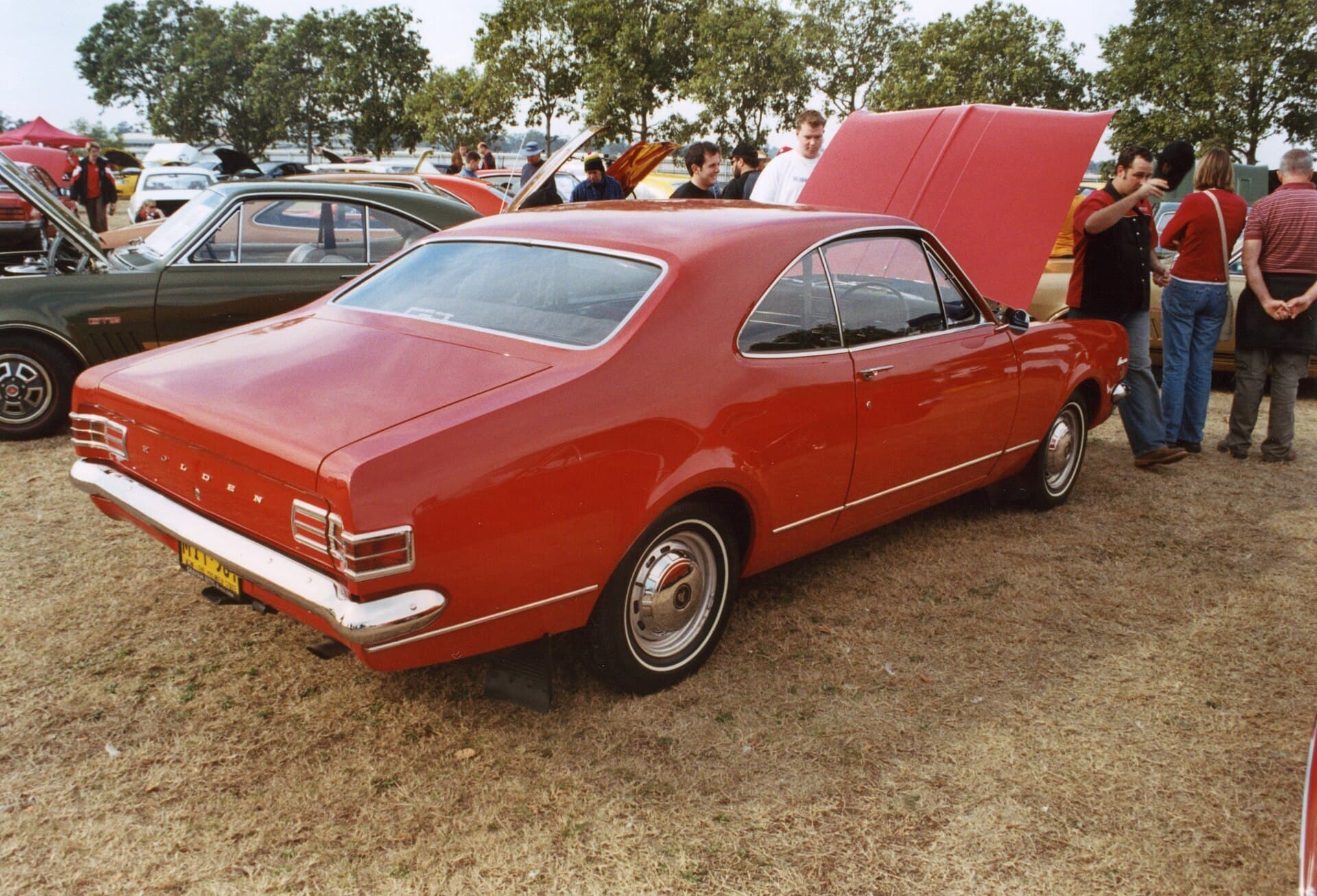
The expensive ones are often the ones nobody drives
At the top of the Australian market, the record prices tend to go to cars with almost no kilometres on them. We covered the HSV W1 Maloo that fetched $1.2 million with 26 km on the odometer in our piece on what Australia's last home-built cars are worth (opens in a new tab). That's an investment object. It's also a car that will never be driven in anger, because every kilometre costs its owner money.
Our view: a classic is for driving
Here's where we land. We think buying a classic car mainly as an investment is a mistake for most people, for three reasons.
The returns aren't guaranteed. The Hagerty data above shows values can go backwards for years at a time. A car isn't a term deposit, and storage, insurance, registration and maintenance cost money whether its value rises or not.
An unused car deteriorates. Seals dry out, fuel goes stale, brakes seize and tyres flat-spot. In our experience a classic that's driven regularly, gently and properly maintained stays healthier than one sealed in a shed.
Simple cars survive. The classics most likely to still be running in 30 years are, in our view, the simple ones: carburettors or basic injection, mechanical gearboxes, no software. As we argued in our piece on the 1919 Australian Six (opens in a new tab), the cars that reach 100 are the ones an owner can understand and fix. A Falcon, a Monaro, an MX-5 or a 205 GTi is a car you can learn to maintain yourself.
The fair counterpoint is that some classics have made their owners real money, and the top of the market is still strong. Retro Rides' recap notes a 1964 Shelby Cobra Daytona Coupe at Monterey that made US$42,905,000. That's true. But that's one car, with a racing history and a famous name, and most of us aren't buying in that league. For everyone else, we think the honest return on a classic is measured in Sunday drives, club runs and the skills you learn keeping it going.
A classic bought as a share certificate is a gamble with a fuel tank.
The world view: the United States, where values are cooling
The United States is where most of the Hagerty data comes from, and it shows a market correcting. The cars that fell hardest in the second quarter, the CJ-7, Bronco, Buick GS and VW bus, are well-loved nostalgic favourites. Carscoops described the falls as a likely correction after years of rapid appreciation, and said buyers may be regaining bargaining power.
At the same time, the very top keeps setting records, as the Cobra Daytona result shows. That split is the lesson for Australia, in our view. A handful of rare cars with provenance may keep climbing. The ordinary, well-loved classics, the ones most of us can afford, behave more like used cars with a fan club: their value follows how many people want to drive them.
| Feature | Buy to drive | Buy to invest |
|---|---|---|
| What you're paying for | The experience, the club, the skills | Hoped-for price growth |
| Mileage | Driven regularly | Kept as low as possible |
| Risk if the market falls | You still have a car you enjoy | You've lost money and not driven it |
| Best fit | Simple, repairable cars with good parts supply | Rare, documented cars with provenance |
What it means if you're buying or selling
Buying privately.
- Get a pre-purchase inspection from someone who knows that model. Ask a car club for a recommendation.
- Run a PPSR check for money owing and write-off history, and make sure the VIN and engine numbers match the paperwork.
- Look for rust before anything else. Paint and trim can be fixed; rot in the structure is expensive.
- Ask for receipts, photos of any restoration work and the history of ownership. A documented car is easier to insure and easier to sell later.
- Budget for the first year: tyres, fluids, belts, hoses and brakes on a car that has sat around.
Registering it. In NSW, members of participating clubs with conditional registration can join the historic and classic vehicle log book scheme (opens in a new tab), which lets you use the car for up to 60 days a year for maintenance and personal use outside club events. Other states run their own schemes, so check yours.
Join the owners' club before you buy. Members know which cars are honest, which are dressed up, and who in your area can fix them. It's also the usual way into conditional registration.
Selling privately. Be honest about condition, modifications and history, because classic buyers check. Photograph the paperwork as well as the car, and price it against recent sales of comparable cars rather than the highest asking price you can find. You can buy, sell & show cars on MotorLoop, and it's free.
Our take
We think the 2026 market is telling enthusiasts something useful. The speculative heat has gone out of a lot of mainstream classics, and the cars that are selling well are the ones people want to drive. That suits us. A classic car is a machine for enjoying the journey from A to B, and the best way to look after one is to use it.
So buy the simple car you'll actually drive. Join a club, learn to do the basic work yourself and keep the paperwork. If its value goes up, that's a bonus. If it doesn't, you'll still have had the drives, and no market report can take those away.
Header photo: John Robert McPherson (opens in a new tab) via Wikimedia Commons, CC0 (opens in a new tab).
Related
- Ten years since the last Falcon: what Australia's last home-built cars are worth now (opens in a new tab)
- A 1919 Australian Six goes under the hammer this week. The cars that make it to 100 are the simple ones (opens in a new tab)
- Australian car culture is alive, and a club is the way in (opens in a new tab)
- The 25-year import rule: Australia rolls its clock too, and the R34 GT-R is coming of age (opens in a new tab)