E-fuels are petrol made from electricity, water and captured carbon dioxide rather than from crude oil, and in late 2026 they are a real product made in real plants. They are also tiny in volume and far dearer than fossil petrol. Our view is simple: the combustion engine was never the problem. The carbon in the fuel is. Fix the fuel and the cars, the servos and the tankers Australia already owns could keep working.
E-fuels at a glance, November 2026
- Porsche/HIF Haru Oni pilot plant, Chile
- Up to 130,000 litres a year
- Haru Oni EU certification
- Renewed 6 July 2026
- F1 from 2026
- 100% sustainable fuel mandated by the FIA
- EU 2035 proposal
- 90% CO2 cut, rest offset partly with e-fuels and biofuels
- HIF Tasmania (South Burnie)
- Under development, operations as soon as 2030
What an e-fuel actually is
An e-fuel starts with renewable electricity. That power splits water into hydrogen in an electrolyser, the hydrogen is combined with carbon dioxide pulled from the air or from industry, and the result is processed into methanol and then into petrol-like fuel. Burn it and you release the carbon you captured, so the claim is that the loop is close to carbon neutral over its life.
The appeal for anyone who loves cars is obvious. The FIA, motorsport's governing body, says its sustainable racing fuels are designed to work with the existing fleet of more than a billion combustion engines, according to its December 2024 announcement (opens in a new tab). No new car required.
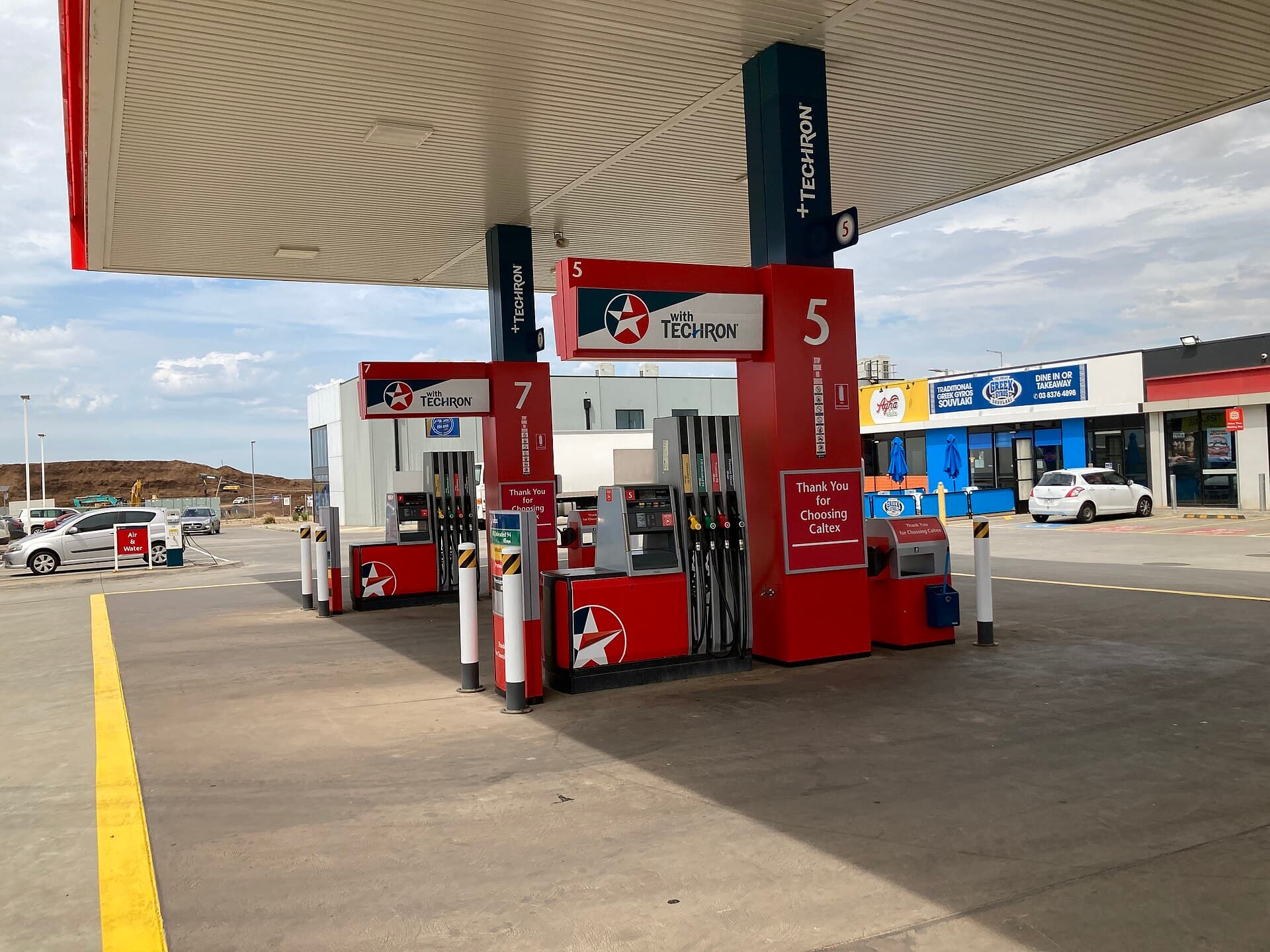
Australia: 43 million litres of petrol a day, and the servos are already there
Start with what Australia has. The federal government's fuel-security page shows 1,758 megalitres of petrol in stock as at 3 November 2026, equal to 41 days of normal consumption (opens in a new tab). Divide one by the other and the country uses roughly 43 million litres of petrol a day. That's our arithmetic, but it is the scale any replacement fuel has to meet.
Every litre of that is delivered through a network that already exists: terminals, tankers, underground tanks and thousands of bowsers, many of them in towns where a fast charger is still a long drive away. We've argued before that the servo isn't the weak link (opens in a new tab) in Australian fuel security. In our view, an e-fuel that meets the fuel standard would flow through that same network, into the same cars, with no new plugs and no new grid.
The closest Australian project is in Tasmania. CSIRO's hydrogen project register lists HIF Tasmania at the former Burnie paper mill site in South Burnie (opens in a new tab), planned for up to 208,000 tonnes a year of e-methanol from an electrolyser of up to 280 megawatts. It is still under development: a notice of intent went to the Tasmanian EPA in September 2025, ARENA shortlisted it for Hydrogen Headstart funding in May 2026, and HIF has said operations "could commence as soon as 2030". It isn't making fuel yet.
The world view: racing and Brussels
Formula 1. The 2026 season is the first in which the FIA requires F1 to run on 100% sustainable fuel made from what it calls advanced sustainable components: non-food biomass, renewable non-biological feedstock (the e-fuel route) or municipal waste, verified by a third-party assurance scheme (opens in a new tab). The FIA says its long-term aim is to get these fuels into the wider road-transport market. In our view that's exactly what motorsport is for: proving a technology at the limit so it can come to the road.
The European Union. In December 2025 the European Commission proposed replacing its 2035 zero-emission requirement for new cars with a 90% CO2 cut on 2021 levels, with the remaining 10% to be compensated through EU low-carbon steel or through e-fuels and biofuels, as DieselNet summarised the package (opens in a new tab). It still needs member states and the Parliament to agree. We covered what that means here in Europe backs away from its 2035 engine ban (opens in a new tab). The point for this story is that fuel, not just the powertrain, is back in the rulebook.
Chile: where the first litres come from
The one country with a working, carmaker-backed e-fuel plant is Chile. Porsche and HIF opened the Haru Oni pilot plant in December 2022, and Porsche said it was designed for a maximum of 130,000 litres of fuel a year (opens in a new tab), first for showcase uses such as the Porsche Mobil 1 Supercup. In July 2026 HIF said the plant's production of e-methanol, e-gasoline and e-LG had been recertified under the EU's ISCC scheme for renewable fuels of non-biological origin (opens in a new tab), the second time it has received that recognition.
So the chemistry works and the paperwork satisfies European regulators. What Chile hasn't shown yet is scale. HIF's own FAQ says it expects mass production to begin by 2030 (opens in a new tab), and that is the honest status of the whole industry.
The honest problem: cost and scale
Here is the case against, and it is a strong one. On volume, 130,000 litres a year is about four or five minutes of Australia's petrol use at 43 million litres a day, again on our arithmetic. On price, a study commissioned by the campaign group Transport & Environment and published in April 2026 estimated e-petrol would cost about €4 a litre to produce in 2030, or roughly €7 a litre at the pump, against less than €2 for fossil petrol (opens in a new tab). HIF itself says on its FAQ that fuel costs remain relatively high today (opens in a new tab). Making a litre also takes a great deal of renewable electricity, which a battery car could use more directly.
Our answer is that this is a reason to aim e-fuels carefully, not to write them off. Nobody needs synthetic petrol to fill every commuter car next year. The places where it makes sense first, in our view, are the ones where the alternative is scrapping something that works: the classic car, the sports car you'll keep for 30 years, the regional ute, the race series. HIF is betting that cost falls with scale, as it has for most energy technologies. And a fuel that keeps an existing car running avoids the carbon of building a new one, which is the point we made in Electric cars aren't as green as the brochure says (opens in a new tab).
The combustion engine was never the problem. The carbon in the fuel is.
What it means if you're buying or selling
- Don't buy a car because of e-fuels. There is no e-fuel at Australian bowsers in 2026, and the Tasmanian project's own timeline is "as soon as 2030". Buy the car you want for the next five to ten years on today's fuel.
- Don't sell a good petrol car out of fear. The policy direction in Europe now has room for combustion engines running on cleaner fuel after 2035, and F1 has built its new rules around sustainable fuel. In our view a well-kept, simple petrol car is not a stranded asset.
- Enthusiast cars have the most to gain. If e-fuels arrive at a premium price, the first buyers will be people who drive a few thousand kilometres a year in something they love. That's a small fuel bill even at a high price per litre.
- Watch the fuel standard, not the hype. Any e-fuel sold here would have to meet Australian petrol quality rules. Our piece on cleaner petrol and the 10 ppm timetable (opens in a new tab) explains where that stands.
You can buy, sell & show cars on MotorLoop, and it's free.
Our take
We think e-fuels are the most important idea in motoring that nobody can buy yet. They answer the real complaint against petrol cars, which is the carbon from the tailpipe, without throwing away the engine, the network or the enormous fleet already on the road. They don't answer it cheaply, and they won't answer it quickly. But the direction of travel in late 2026, with a certified plant running in Chile, F1 on sustainable fuel and Brussels writing fuels back into its 2035 proposal, says to us that the combustion engine's critics aimed at the wrong target. Clean up what goes in the tank and the car can stay.
Header photo: Marcnut1996 (opens in a new tab) via Wikimedia Commons, CC BY-SA 4.0 (opens in a new tab).
Related
- Australia holds weeks of fuel, Japan holds months. The servo isn't the weak link (opens in a new tab)
- Europe backs away from its 2035 engine ban. What it means for petrol and hybrid buyers here (opens in a new tab)
- Hydrogen cars explained: fuel cells, hydrogen combustion and the refuelling problem (opens in a new tab)
- Porsche's 992 Cup car runs its last Bathurst this weekend. The flat-six is the point (opens in a new tab)