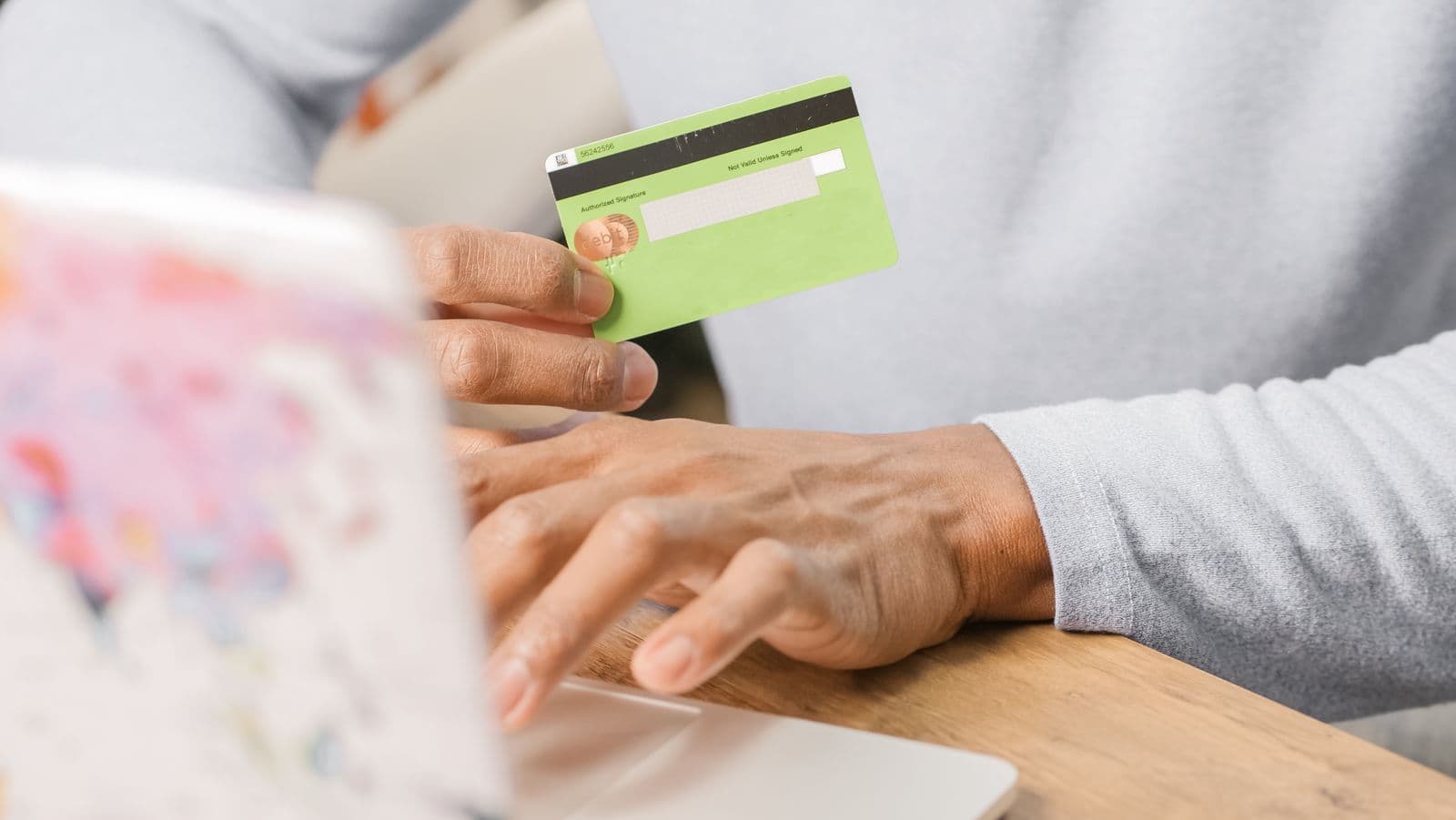
A buyer (or a seller) offers to "protect you both" with escrow. They send a link to a professional-looking site. An email arrives saying the funds are held securely, and you just need to release the car — or send the money.
That sentence is how a lot of private-sale vehicle scams start. It is also, in a different setting, a real legal idea: a stakeholder holding money until a condition is met.
The two things are easy to confuse, which is the point of the scam. This page separates them. It does not change how we already tell you to take payment.
Treat any escrow or "buyer protection" arrangement the other party introduces — a link, a portal, a confirmation email — as fraudulent until you have proved otherwise on an official register. A screenshot that says "funds held" is not funds in your account. Keys don't move until the money has cleared in your banking app.
What this means for a private sale
- What escrow is
- A third party holds money and only releases it when an agreed condition is met. In Australia that is usually a solicitor's trust account, not a website a stranger emails you.
- No car-escrow licence
- There is no dedicated private car-sale escrow licence. An AFSL for non-cash payment products is not a car inspection, a title guarantee, or MotorLoop holding the money.
- The scam pattern
- ACCC/Scamwatch have warned that vehicle scammers ask for payment via escrow agents and other third-party sites.
- You don't need one
- You do not need an intermediary for a private car sale. A transfer that lands in your own account, that you can see, is the protection.
- MotorLoop
- MotorLoop does not hold the vehicle payment, sit in the middle of it, or guarantee it.
What escrow actually is
In ordinary English, escrow is a holding pattern: the buyer pays, a third party holds the money, the seller performs, then the holder pays the seller — or pays the buyer back if the deal fails.
Australian lawyers more often say stakeholder. The Law Society of NSW describes a stakeholder as someone who holds money independently of two or more claimants, to be applied in a particular way when a particular event occurs. Until that event is known, they do not hold it as agent for one side only. The textbook example is a deposit on a house, sitting in a solicitor's or agent's trust account until settlement or a court order.
There is no Australian "Escrow Act" and no motor-vehicle-specific consumer escrow licence. The idea lives in contract and trust law. When a law practice holds the money in the course of legal work, it is trust money under the Legal Profession Uniform Law (in force in NSW, Victoria and Western Australia). The practice must put it in a general trust account, hold it for the person it was received for, and generally only pay it out on that person's direction — or a court order. If both buyer and seller are entitled, one of them texting "release it" is not enough.
That is real. It is also slow, documented in writing, and done by a person whose practising certificate you can look up. It is not a new .com.au that emailed you this afternoon.
Fake escrow is the version you will actually meet
In a private car sale, "escrow" almost always arrives as a story.
The ACCC's Scamwatch reporting on vehicle ads is blunt about the method: scammers post fake listings, often at a bargain price, often with a reason you cannot inspect the car (deployed, interstate, travelling). They then ask for payment through a third-party website. A large number of those reports mentioned escrow agents — a third party who is supposed to hold the buyer's money until the goods arrive, then release it to the seller. Other asks in the same cluster: eBay-style "protection" emails, direct transfer, international money transfer.
WA ScamNet describes the buyer-side version in the same terms: victims are tricked into believing they are sending money through an independent third party or secure payment system. Fake transport sites and fake eBay Buyer Protection emails are part of the kit. The car never exists. Because the payment went as an ordinary transfer, it is hard to get back.
Scamwatch's current buying-and-selling guidance still matches the pattern even where it does not repeat the word "escrow": inspect big-ticket items in person; unusual payment methods are a warning; check the payee name matches the person you think you are paying; do not assume the first search result is the real website; scammers can register Australian domains and display a stolen ABN.
Two shapes, same trap:
- You are selling. A "buyer" will not view the car. They introduce an escrow or shipping portal. You get a polished email that the funds are held. You hand over the car. There was no money.
- You are buying. A "seller" will not meet. They introduce an escrow, logistics, or protection site so you feel safe paying first. You pay. There was no car.
In both cases the website is controlled by the scammer, or it is a lookalike of a brand you have heard of. The confirmation email is stationery. It is not a bank.
This is why MotorLoop's selling guide already says: treat any escrow or payment-protection arrangement the buyer introduces as fraudulent until proven otherwise. You do not need an intermediary. The buying guide says the same from the other side: legitimate escrow is not something a stranger sets up for you by email. Neither sentence is being walked back here.
Is there a real, licensed escrow product for private car sales?
Short answer: there can be a licensed payment product. It is not how ordinary private car sales complete, and it is never a link the other party sends you.
Under the Corporations Act, a facility through which you make a payment other than by handing over notes and coins is generally a non-cash payment facility — a financial product. A business that carries on a financial services business in Australia in relation to that product generally needs an Australian financial services licence (AFSL), unless an exemption applies. ASIC has explained this in Regulatory Guide 185 since 2005.
A simple "pay this seller's account" is not that product. The Act carves out a facility that can pay only one person. Multi-party escrow — money in, then out to the seller or back to the buyer, depending on instructions — is the kind of arrangement that looks like an NCP facility.
What that licence is not:
- It is not a car-sale licence.
- It does not inspect the vehicle, check the PPSR, or guarantee title.
- It does not make MotorLoop, ASIC, or AFCA a party to your driveway deal.
- It does not mean a US brand that works "like escrow.com" is licensed here. Different country, different company, different regulator. An Australian AFSL, if there is one, will be in a specific Australian company's name, with a number you can search.
A small number of businesses market online escrow to Australians and claim an AFSL for non-cash payment products. Some US-branded sites say an Australian company is the local issuer. Those are claims. The test is not the logo on the tab the other party opened for you. The test is whether you typed the legal name into ASIC's professional registers search (opens in a new tab) and found a current licence, for the right kind of financial product, whose listed website matches the one you are actually on — and whether that firm is on AFCA's financial-firm search (opens in a new tab).
Even then, it is optional, it costs a fee, it will run identity checks, and it still does not replace seeing the car. MotorLoop is not recommending it for a private sale. We are telling you how to notice that a stranger's portal is not it.
What Australians actually use instead
1. Money into your own account
A bank transfer or PayID into your account, that you can see as cleared, remains the standard private-sale payment. Scamwatch's instruction is to check the payee name matches the person you think you are paying. PayID shows the registered name before you send. For BSB and account number, banks have been rolling out Confirmation of Payee since July 2025: match, close match, or no match, before you hit send. It will not stop you paying after a no-match. It will never email you. Messages that claim to be from Confirmation of Payee or from "PayID support" are a scam.
"Sent" on their phone is not "cleared" on yours. Daily limits and new-payee holds are real bank controls; deal with them before handover, not in a car park. Detail on that, including meeting at the buyer's branch, is on the safe-payment guide.
2. Meet at a bank
Still the single most useful piece of practical advice: complete the transfer at the buyer's own branch, in front of a teller, then watch your balance. Public, cameras, a bank that can flag an irregular transaction.
3. Bank cheque — only if the issuing bank verifies it
Bank cheques can be forged well enough to survive a driveway glance. If a buyer insists, go with them to the issuing bank and have it verified there, or ask for a transfer instead. Personal cheques: no.
4. A solicitor as stakeholder (rare for a car, real as a structure)
If both sides genuinely want a stakeholder — high-value car, delayed handover, a written contract with conditions — the Australian institution for that is a law practice authorised to receive trust money, with the terms in writing before anything is paid. The solicitor is not your mate's cousin with a trust-looking BSB. You find them the way you find any lawyer: the relevant law society or legal services regulator, a practising certificate, an office, a costs agreement. They will not release the money because one side is in a hurry.
A licensed conveyancer also operates a statutory trust account in NSW (and equivalent regimes elsewhere), but that framework is built for land. Do not assume a conveyancer will, or should, hold a car price.
This path costs money and takes time. That is why it is uncommon for a private car sale. Uncommon is not the same as "so use this website instead."
5. Buying or selling through a licensed motor dealer
If you are dealing with a licensed dealer, deposits and consignment proceeds are a different legal bucket.
In NSW, dealers who sell on consignment must keep a trust account at an Australian bank in the state for that money, bank the sale price by the next business day, and pay it out under the consignment agreement (with an annual audit). Online dealers are capped at a 10% deposit before the buyer takes possession. NSW Fair Trading also warns that a private seller asking for a deposit before inspection is a scam flag, and that private sales are not covered by dealer rules or ACL dealer guarantees.
In Queensland, a motor dealer who sells used vehicles on consignment must use a trust account: bank trust money by the end of the first business day, and only withdraw a deposit or purchase price when the transaction is finalised, paying the seller first.
That is dealer law, not a private-sale escrow app. Confirm the licence with the state regulator. Someone "holding the deposit" without a dealer licence is not in this regime.
Who is allowed to hold other people's money
The useful question is not "does Australia have escrow?" It is "what licence does this person have, and can I see it without using their link?"
Australian financial services licence. Required to carry on a financial services business here, unless an exemption applies. Holding cash is not, by itself, the trigger. Offering a payment facility that is a financial product generally is. AFS licensees who hold client money then have extra rules: a separate client-money account, and, above a threshold, surplus liquid funds. Licensees who serve retail clients must belong to AFCA. AFCA membership is a complaints path, not a quality stamp — AFCA says so itself.
Legal profession trust account. Solicitors in Uniform Law states need a practising certificate that authorises them to receive trust money. The money is audited. Paying it to the wrong person is a breach of trust, not a customer-service issue.
AUSTRAC. Businesses that provide remittance services — accepting instructions to send value to a recipient — must be on AUSTRAC's Remittance Sector Register. Operating without registration is unlawful. Transfers that are reasonably incidental to another service (a lawyer completing a transaction they are already acting in) are treated differently; the AML/CTF Act even has a scoped exemption so that certain lawyer/accountant escrow services are not also counted as remittance. A random website taking a car price is not "incidental legal work."
State dealer trust accounts. As above: consignment and, depending on the state, deposits — for licensees.
If none of those registers show the person, they are not a stakeholder. They are someone with a domain name.
How to tell a real stakeholder from a fake website
Do this yourself. Do not let the other party "help."
- Stop using their link. Search the organisation's name in a browser. Scamwatch: the first result can be the scam. Add the word "scam" and read what comes up.
- Look at the domain coldly. Extra dashes, a near-miss brand (
escrow-au-secure.com), a brand-new registration, no street address, no complaints policy. For.com.au, auDA's lookup shows who registered it. ICANN Lookup shows when any domain was born. A holding company for a six-figure car payment that was registered last Tuesday is not a coincidence. - ABN Lookup on ABN Lookup (opens in a new tab). An ABN on a website can be stolen. Match the legal name to ASIC and to the account you are asked to pay.
- ASIC professional registers. Search the legal name, ACN or AFSL number. Check the licence is current, that it actually authorises non-cash payment products (or whatever they claim), and that the website ASIC lists is the one in your address bar.
- AFCA financial-firm search. If they sell a financial service to retail clients and they are not a member, that is an answer.
- Law society / legal regulator for anyone calling themselves a solicitor. Fake solicitor websites exist. Ask whether they are authorised to receive trust money. Get the stakeholder terms in writing before anyone pays.
- State Fair Trading / Office of Fair Trading licence search for anyone calling themselves a dealer.
- Expect identity checks. A real reporting entity has to know who you are. A site that will take the full price with no ID is not behaving like one.
- Expect a Financial Services Guide (and, for many retail products, a PDS) from an AFSL issuer — not an HTML email that says "funds secured."
- The money test is still yours. Open your banking app. If the balance has not moved, nothing has happened. Confirmation emails, courier dockets, and "release codes" are props.
If any of that is hard because the other party is in a hurry, unavailable, or offended that you checked — you already have the answer. Walk away. There is always another car, and the usual used-car scams use the same urgency.
What MotorLoop still does — and does not do
The money for the car moves between you and the other party. MotorLoop does not hold it, clear it, or guarantee it. That is deliberate. A marketplace that sat in the middle of the vehicle payment would look exactly like the fake-escrow pattern this page is about.
What we change is earlier: buyers message you in the app, so listing a car does not mean publishing your phone number to everyone who scrolls past.
The rule at handover is the same as it was on the safe-payment page: the keys don't move until the funds have cleared in your account. Not sent. Not pending. Not held by a website you were introduced to in the last hour. Cleared, visible, in your balance.
If you have lost money or spotted the pattern, contact your bank immediately, then report it to Scamwatch (opens in a new tab) and, for online crime, ReportCyber (opens in a new tab). Identity theft support: IDCARE, 1800 595 160.
Related
- The safest way to accept payment when selling a car privately
- How to avoid used-car scams in Australia
About this guide
The MotorLoop team — These guides are researched and maintained by the MotorLoop team, and every claim links to the source that publishes it so you can check it yourself.
General information only — not legal advice. Requirements for selling a vehicle, holding trust money, and offering payment facilities differ across Australian regulators and change. Everything here links to the ACCC/Scamwatch, ASIC, AUSTRAC, AFCA, Legal Profession Uniform Law, or state Fair Trading / transport department that publishes it, current at the date shown. Before you act, check that source, because it is the only one that binds you.
If your situation is unusual — a written contract with a solicitor stakeholder, a consignment through a licensed dealer, a dispute over a deposit, an interstate sale — get advice specific to it. MotorLoop operates a marketplace; we are not a government agency, a lawyer, a licensed motor dealer, or a holder of the vehicle payment.
Last updated 19 August 2026.
Sources
- ACCC, "Losses to car ad scams climbing," 27 April 2021, https://www.accc.gov.au/media-release/losses-to-car-ad-scams-climbing
- Scamwatch, "Buying and selling scams," https://www.scamwatch.gov.au/types-of-scams/buying-and-selling-scams
- WA ScamNet, "Online car sales scam (fake seller)," https://www.scamnet.wa.gov.au/scamnet/Scam_types-Buying_or_selling-Classified_scams-Online_car_sales_scam_fake_seller.htm
- ASIC, Professional registers search, https://www.asic.gov.au/online-services/search-asic-registers/professional-registers-search/
- ASIC, Regulatory Guide 185 Non-cash payment facilities, 15 November 2005
- Corporations Act 2001 (Cth) ss 763A, 763D, 911A, 912A, Part 7.8
- AFCA, Make a complaint / financial firm search, https://www.afca.org.au/make-a-complaint and https://my.afca.org.au/ff-search/
- AUSTRAC, Remittance service providers overview; AML/CTF Act 2006 s 67A, s 74, compilation 1 July 2026
- Legal Services Council, Legal Profession Uniform Law (NSW, Victoria, Western Australia), https://legalservicescouncil.org.au/for-legal-practitioners.html
- Law Society of NSW, "Holding deposit money in conveyancing transactions," 2 May 2023
- Legal Practitioners' Liability Committee, "Trust money: handle with care"
- NSW Government, "Working as a motor dealer"; Motor Dealers and Repairers Act 2013 s 90
- NSW Government, Conveyancer trust accounts (Conveyancers Licensing Act 2003)
- Queensland Government, Handling trust money in the motor industry
- Australian Payments Plus, Confirmation of Payee, https://www.auspayplus.com.au/solutions/confirmation-payee