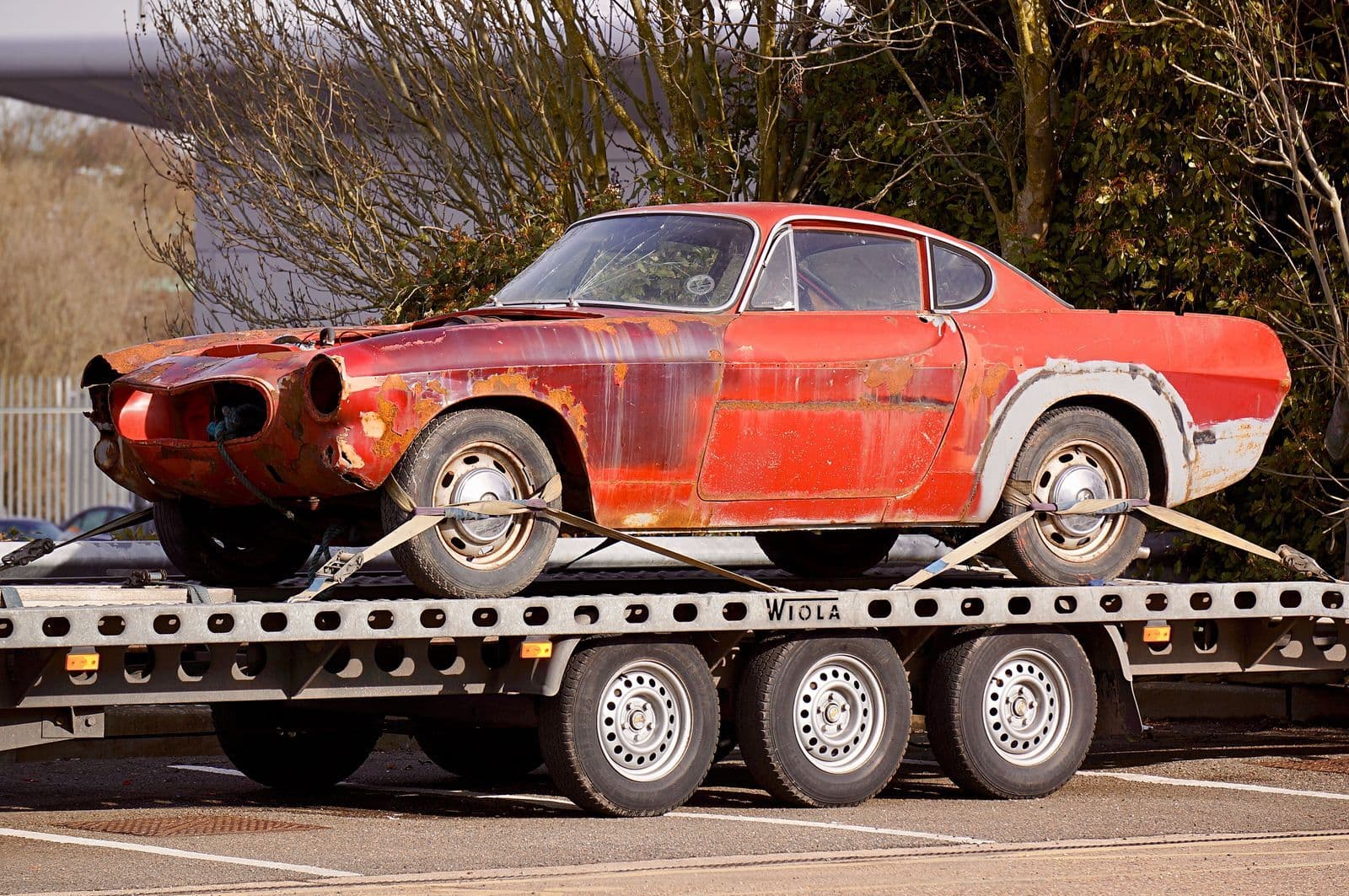
Yes. Selling a car with expired registration is normal and legal. What changes is the logistics and the price.
Two practical problems follow: the buyer can't drive it away, and you can't offer a test drive on the road. Both are solvable, and both need thinking about before you advertise rather than after a buyer arrives.
Decide before you list: re-register it and sell at a higher price, or sell it unregistered and price for the buyer's inconvenience. Drifting between the two loses you money.
The two real problems
The buyer can't legally drive it home. An unregistered vehicle can't be driven on a road. Their options are a tow, a car trailer, or an unregistered vehicle permit from your state's transport department — a short-term authorisation to move a vehicle for a specific purpose, which every jurisdiction issues under some name.
Worth being upfront about this in the ad. A buyer who turns up with a licence and no plan is a wasted afternoon for both of you.
You can't offer a road test drive. This costs you more than people expect, because a used car buyer who can't drive it discounts harder. You can start it, let them hear the engine, let them sit in it, and move it on private property. That's not the same as a drive, and the price reflects it.
Re-register, or sell as-is?
The calculation is straightforward once you write it down.
Re-registering costs whatever registration costs in your state, plus — in the states that require it — an inspection, plus any repairs needed to pass. In Victoria (opens in a new tab) or Queensland (opens in a new tab) that inspection is part of selling anyway. In NSW, WA, SA and Tasmania, no inspection is needed to sell a registered car — but registering an unregistered one is a different process with its own requirements.
Re-registering gains you a wider buyer pool, a test drive, and remaining registration as part of what the buyer is paying for.
Rough rule: if the car is worth a few thousand and the registration and inspection would cost a meaningful fraction of that, sell it unregistered and price accordingly. If it's a good car that simply lapsed while you were away, re-registering usually pays for itself.
The exception: if you suspect it won't pass inspection, find out before you spend money on it. A failed inspection tells you something you needed to know, but paying for one twice doesn't.
What doesn't change
Your obligations as a seller are the same:
- Lodge your state's notice of disposal. The deadline still applies — 7 days in WA and Tasmania, 14 in most of the rest. An unregistered car can still generate a record you don't want in your name.
- Write a receipt. Both names, date, price, VIN, odometer, both signatures.
- Disclose what you know. "Unregistered since [date]" belongs in the ad, alongside why — lapsed while overseas reads very differently from lapsed because it wouldn't pass.
If registration has been cancelled, not just expired
There's a difference between registration that lapsed and registration that was cancelled — after a write-off, for instance, or a defect notice. Cancelled registration usually means additional steps before the vehicle can return to the road, and sometimes it can't.
Check your vehicle's actual status with your transport department rather than assuming it's a straightforward lapse. If it's written off, that's a different conversation with the buyer.
Number plates
An unregistered vehicle's plates may need to be returned, or may need to stay with the car, depending on your state and whether registration lapsed or was cancelled. Sort this out with your transport department before the sale — see what happens to plates when you sell.
Writing the ad
Say it plainly and early: "Unregistered", the date it lapsed, and whether you have any recent inspection. Then add the thing buyers actually want to know — can it be driven onto a trailer, or does it need winching?
Photographs matter more than usual here, because the buyer can't drive it. Cold-start video, if you can, does a lot of work.
What this means if you're selling on MotorLoop
Listing a car on MotorLoop is free, which helps with an unregistered car: the buyer pool is smaller and the right buyer is more specific, so a listing that can sit patiently is worth having.