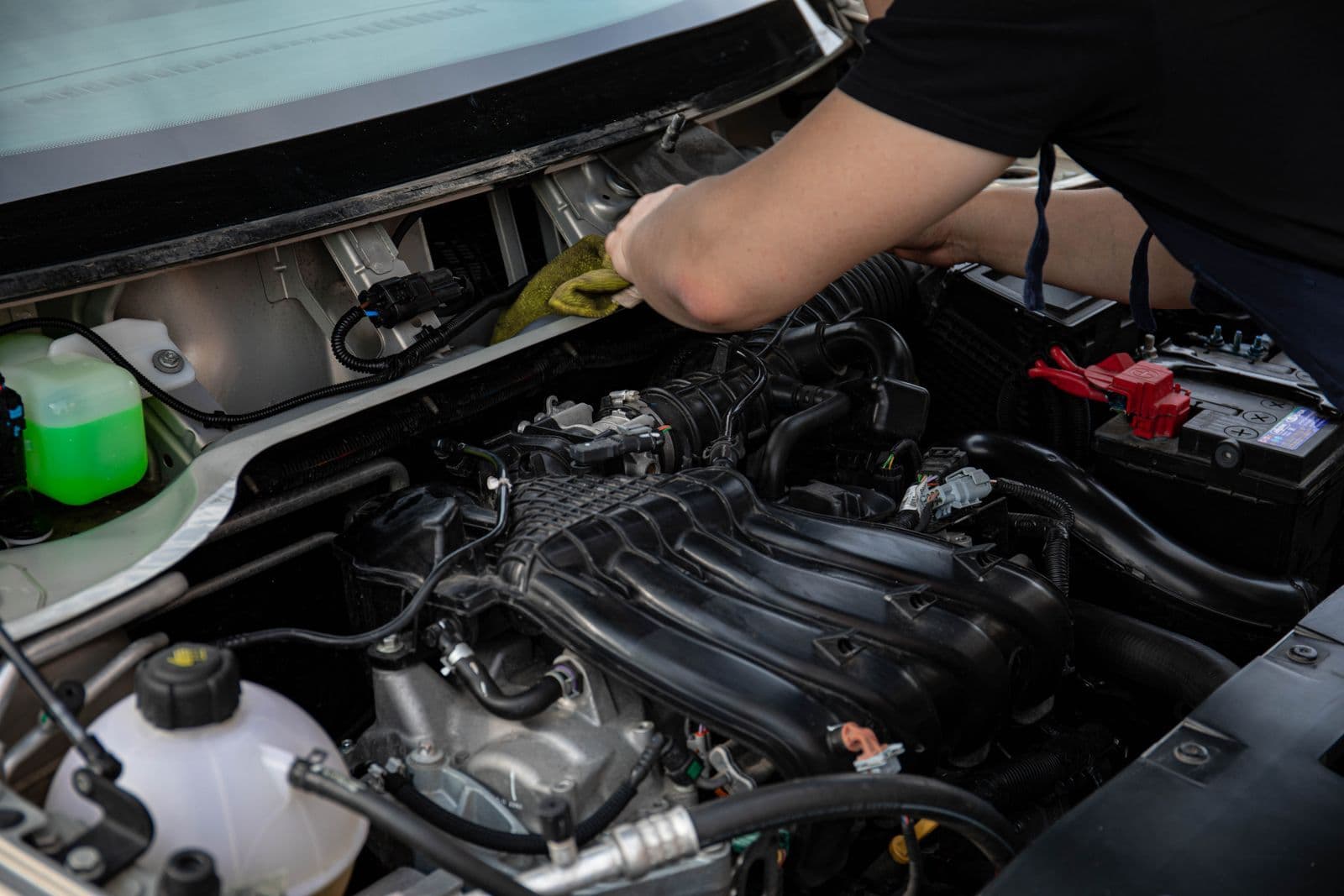
Some repairs pay for themselves when you sell. Most don't. And a few are decided for you by which state you're in.
The rough test: fix what stops the car being sellable, and what's cheap enough to remove a negotiating point. Don't fix what a buyer would rather discount for.
Before you spend anything, find out whether your state makes you supply an inspection certificate. In Victoria it does, and that changes the whole calculation.
First: does your state force your hand?
This is the question that determines everything else, and half the country answers it differently.
Victoria (opens in a new tab) requires the seller to supply a roadworthy certificate less than 30 days old. So in Victoria, anything needed to pass is not optional — it's the cost of selling a registered car.
Queensland (opens in a new tab) requires a safety certificate to complete the sale. Same practical effect.
The ACT (opens in a new tab) requires an inspection for vehicles over six years old, and the Northern Territory (opens in a new tab) for light vehicles seven years and older — though in the NT either party can obtain it, so who pays is negotiable.
In New South Wales (opens in a new tab), Western Australia (opens in a new tab), South Australia (opens in a new tab) and Tasmania (opens in a new tab), no inspection is required to sell a registered light vehicle — so every repair below is genuinely your choice.
Full detail: what every state requires.
Usually worth doing
Anything required to pass a mandatory inspection, in the states above. Not a judgement call.
A service, if one is due or just overdue. Cheap relative to the value it signals, and it lets you hand over a service book with a recent entry — which per what drives resale value is one of the few things you can still influence.
Tyres, if they're genuinely low. Visible, safety-related, easy for a buyer to price, and a common inspection failure. A buyer will discount more for worn tyres than the tyres cost.
Small cosmetic irritations. A blown globe, a missing wheel nut cap, a wiper that judders, a warning light for something trivial. Individually meaningless; collectively they make a car feel neglected, and every one is a free negotiating point you've handed over.
A proper clean. The highest return per dollar in the entire process. Not a professional detail necessarily — a thorough wash, vacuum and interior wipe-down.
Usually not worth doing
Major mechanical work on a low-value car. If the repair is a meaningful fraction of the car's value, you will not get it back. A buyer who wants a cheap car with a known fault is a real buyer; price for them instead.
Paint and panel. Body repair is expensive and almost never returns its cost on a used private sale. Photograph the damage honestly, describe it plainly, and price accordingly.
Upgrades. New wheels, a stereo, accessories. These are for you, not the buyer, and they narrow the buyer pool as often as they widen it.
Anything you can't verify. Paying for work you can't document is the worst of both worlds: you've spent the money and you can't prove it. If you do have work done, keep the invoice and hand it over.
The uncomfortable middle: a car that won't pass
If you're in a state that requires a certificate and the car won't pass without significant work, you have three options and they're all legitimate:
Do the work and sell it registered. Highest price, highest outlay, and a risk if the inspection uncovers more.
Sell it unregistered. Legal everywhere, and honest. Smaller buyer pool, lower price, no test drive — see selling a car with expired registration.
Sell it to a buyer who wants it as-is. Wreckers, project buyers, and people who repair cars for a living. Less money, far less friction.
Get a quote before you decide. The choice between these is arithmetic, and you can't do it without a number.
Get the inspection before you commit money
If your state requires a certificate, book the inspection first, before doing any discretionary work. It tells you what's actually mandatory rather than what you assumed.
Watch the validity window while you're at it, because it's short and it differs: 30 days in Victoria, 2 months or 2,000 km in Queensland, one month in the ACT, six weeks in the NT. Book it when you're genuinely ready to sell, or you'll pay for two.
A note on disclosure
Fixing something is fine. Concealing something isn't.
If the car has a known fault you're not repairing, say so. If it has written-off history, disclose it — a buyer will find it on a PPSR check (opens in a new tab) anyway, and finding it after paying you is what turns a completed sale into a dispute.
A described fault is a price adjustment. A discovered one is a broken deal.
What this means if you're selling on MotorLoop
Listing a car on MotorLoop is free, and the description is yours to write properly — which matters for the "known fault, honestly described, priced for it" listing, because that sale is won or lost on how clearly you explain it.