The folklore is confident: buy older, buy simpler, avoid turbos, run a recall check and you are safe. We went to the public record - government recall registers, the crash-rating bodies and the oil industry's own specifications - to see how much of that survives. Some of it does. The part that survives is not the part most people repeat.
- Applies to
- Used cars bought in Australia
- Evidence used
- Government recall registers, ANCAP, MUARC, IIHS, API
- Australian fleet
- 20.1m vehicles, average age 10.6 years (ABS, 31 Jan 2021)
- Register to check
- vehiclerecalls.gov.au, by VIN
- Not established here
- ADR mandate dates, brand reliability rankings
A recall search answers a different question than you think
A recall is a response to a safety defect or a standards non-compliance. It is not a record of whether a car wears out. A component can fail expensively, repeatedly and famously without ever reaching a register, because it does not create a crash, fire or injury risk.
Here is what that looks like. A search of the United States NHTSA recall register on 13 August 2026 returned 12 campaigns for the 2014 Ford Focus (opens in a new tab) - 14V495000, 14V514000, 14V525000, 15V005000, 15V813000, 16V643000, 16V698000, 18V735000, 19V515000, 20V331000, 26V011000 and 26V369000 - covering the fuel system, engine wiring harness splices to the MAP sensor, door latches, the hatchback lock, the fuel delivery module, steering gears, the fuel pump, an engine block heater and the canister purge valve. None concerns the transmission or the clutch.
Two caveats before anyone draws a conclusion from that. NHTSA covers US-market vehicles, so for an Australian-delivered car it is the wrong register. And a clear result is not a clean bill of health: recall coverage tracks specific builds and specific defects, not the condition of the car in front of you. A register that says nothing about the clutch has not told you the clutch is sound.
The Australian register is vehiclerecalls.gov.au (opens in a new tab), where the Department of Infrastructure, Transport, Regional Development, Communications, Sport and the Arts regulates and enforces recalls of road vehicles and approved road vehicle components under the Road Vehicle Standards Act 2018, and publishes every recall notice. Recall action is the responsibility of whoever supplied the vehicle to the Australian market (opens in a new tab) - which may be the local distributor, or a concessional importer or Registered Automotive Workshop that, on the department's own account, "may have no relationship to the manufacturer". So an overseas recall record is not a substitute for checking the Australian one. Some vehicle-related recalls sit with the ACCC instead and are listed at productsafety.gov.au (opens in a new tab): vehicles that are consumer goods rather than road vehicles, after-market accessories such as child restraints, caravan and camper items relating to human occupation, and the compulsory Takata airbag recall.
Treating a clear recall search as a clean bill of health - a recall covers a named safety defect on specific build dates, and says nothing about clutch wear, transmission condition, or anything else the car is about to cost you.
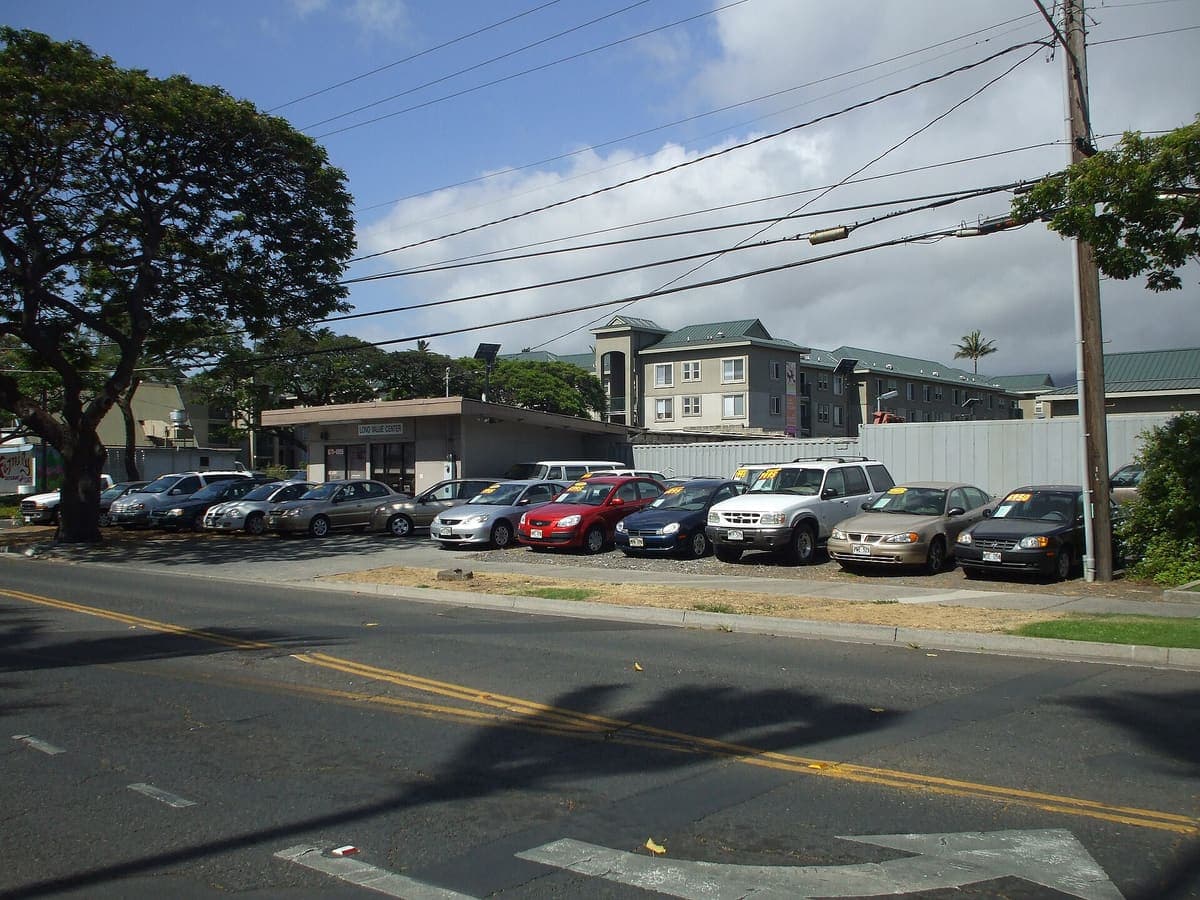
At 31 January 2021 Australia had 20.1 million registered motor vehicles at an average age of 10.6 years (opens in a new tab), ranging from 9.5 years in the ACT to 13.3 in Tasmania. That was the final ABS Motor Vehicle Census - collection moved to BITRE and Austroads, so do not assume the trend simply continued. The practical question is which decade of technology a budget reaches.
Read the campaign, not the count
Do not rank cars by how many recalls they carry. Counts track regulatory scrutiny, production volume, reporting practice and how long a model has been exposed. What repays reading is what each campaign actually says, because the wording tells you what was found and what the manufacturer thought would fix it.
In NHTSA campaign 17V226000 (opens in a new tab) (March 2017), Hyundai Motor America recalled about 572,000 certain 2013-2014 Sonata and Santa Fe Sport vehicles because "machining errors during the engine manufacturing process may cause premature bearing wear within the engine", with the consequence that "bearing wear may result in the engine seizing, increasing the risk of a crash". The remedy was inspection and replacement of the engine short block where necessary, free of charge. Two things follow. A short-block remedy tells you the fault was in the block and was not serviceable. And the follow-on campaign 18V934000 covered only cars already repaired under the earlier campaigns, where the high-pressure fuel pipe "may have been damaged, misaligned, or improperly torqued during the engine replacement procedure" - so where a car has had a major warranty engine replacement, the quality of that work is its own thing to check.
The second example is about heat. NHTSA records three overlapping campaigns (opens in a new tab) on 2013 Ford Escape vehicles fitted with the 1.6L engine, all relating to cooling-system and cylinder-head faults that can lead to fire. 12V431000 (built 5 Oct 2011 - 31 Aug 2012) states the cylinder head cup plug "may become dislodged resulting in significant loss of engine coolant", with evaporating coolant that "may ignite causing an engine compartment fire". 12V551000 (built to 26 Nov 2012) states "coolant system leaks may cause the engines to overheat and leak flammable engine fluids", with the consequence that "a vehicle fire could occur". 13V583000 (built to 2 Jun 2013) states the vehicles "may experience localized overheating of the engine cylinder head which may cause cracks that could allow oil to leak". The remedies were a secondary plug cover, powertrain control module and instrument cluster reprogramming, and modified engine shielding, cooling and control systems. NHTSA notes 13V583000 is in addition to 12V-551, and that cars already repaired under the earlier campaign still require the later remedy.
Read those remedies again. Recalibration, shielding and cooling changes - not a redesign away from the concept. On this engine family, in these three campaigns, the fix was a specification change rather than a different design.
Two boundaries on that example. These are US-market campaigns. Whether an Australian-delivered car of that era is affected at all is a question for the Australian register, by VIN, not for this list. And three campaigns on one engine family in one market are evidence about that engine family. They are not evidence about downsized turbocharged engines as a class, and we are not going to write as though they were.
Two safety ratings answering two different questions
ANCAP raises its tests on a cycle. ANCAP states the tests and criteria "become harder to meet" (opens in a new tab) every three years, that "checking the 'TESTED' datestamp that sits alongside the star rating ensures you are comparing vehicles rated to similar test criteria", and recommends choosing a vehicle "with the highest safety rating possible, with a datestamp of no older than six years". A rating "remains valid for the life of that vehicle" - but that is not the same as a star meaning the same thing across eras. Comparing a 2012 five-star car with a 2024 five-star car on stars alone is not a comparison at all.
The Used Car Safety Ratings are a different instrument. They are developed by the Monash University Accident Research Centre (opens in a new tab) from real-world crash statistics - police-reported crashes in which someone was killed or injured - and are designed to help buyers identify safer second-hand cars, combining driver protection, protection for other road users, and crash-avoidance technology. Because the estimate needs accumulated crash data, some models carry no UCSR at all. Where one exists, weigh it alongside the ANCAP result rather than instead of it; How Safe Is Your Car publishes both.
The crash-avoidance gear that separates those eras has measured effects in real crashes rather than laboratory tests. IIHS reports (opens in a new tab) that forward collision warning combined with automatic braking "cut rear-end crashes in half" (Cicchino, 2017), that forward collision warning alone reduces rear-end crashes by 27%, that pedestrian-capable automatic braking "cut pedestrian crashes by 27%" (Cicchino, 2022), and that blind spot detection reduces lane-change crashes by 14% (Cicchino, 2018). That is a strong argument against choosing an older, simpler car on general principle.
What a service book can tell you about a modern engine
The oil industry wrote a standard against the failure modes of downsized boosted engines, and said so in plain terms. API describes its SP category as "designed to provide protection against low-speed pre-ignition (LSPI), timing chain wear protection, improved high temperature deposit protection for pistons and turbochargers, and more stringent sludge and varnish control" (opens in a new tab). What that tells you is what API says it targeted: LSPI protection is written into the category, so the oil a boosted engine runs is treated as part of the answer. We did not reach a primary source for the mechanism, so we do not describe one here.
API SP and ILSAC GF-6A and GF-6B were all introduced in May 2020 (opens in a new tab), with GF-6B applying "only to oils having an SAE viscosity grade of 0W-16". Older categories were not withdrawn: the same page lists SN as current for 2020-and-older engines, SM for 2010-and-older, SL for 2004-and-older and SJ for 2001-and-older.
So on a turbocharged direct-injection petrol car, a service record showing oil that meets the manufacturer's stated specification is a real signal - the risk is maintenance-dependent rather than an inherent property of the design. One important qualification for Australia: many Australian-delivered European cars call for an ACEA sequence or a manufacturer approval number rather than an API or ILSAC mark, and we did not verify those specification families at primary source. Check the invoice against your own owner's manual, not against a single named standard.
The counter-evidence: the durability half of the folklore holds up
The archetype of the simple, durable choice is a 2007 Toyota Camry, and its safety record does not support the folklore. NHTSA lists ten campaigns (opens in a new tab) whose model-year range includes 2007, each covering only "certain" vehicles. 09V388000 states the accelerator pedal "can get stuck in the wide open position due to its being trapped by an unsecured or incompatible driver's floor mat", with a consequence of very high speeds, difficulty stopping and possible crash, serious injury or death; the remedy modifies the pedal and floor surface to prevent mat entrapment. 10V017000 covers a pedal friction lever whose sliding surface can become smooth, so that with condensation on a cold pedal assembly the pedal may be harder to depress, slow to return, or at worst mechanically stuck partially depressed. 06V096000 states some side, curtain-shield and knee airbag inflators "were produced with an insufficient amount of the heating agents necessary for proper air bag deployment" - a 2006 Toyota assembly defect, not the Takata recall, which does not appear in this dataset for the model. Four campaigns carry a fire consequence, covering power-window master-switch lubrication and seat-heater wiring, two of them filed by a US regional distributor and one applying only to cars fitted with aftermarket accessory seat heaters.
Now the part that cuts against this article. None of the ten is an engine campaign. The safety half of "old is better" does not survive contact with that list. The durability half comes through this particular test intact.
Weigh it honestly, though. A recall register does not record durability in the first place - that is the argument this piece opened with - so an absence of engine campaigns is suggestive, not proof. And on the other side, IIHS notes that pedestrian-capable systems "can struggle to detect pedestrians in the dark", with improvement in vehicles tested since 2022. Newer is safer on the measured evidence. It is not uniformly safer in every condition.
What we could not verify, and why it is not here
Several of the most-repeated claims in Australian used-car advice could not be read at primary source in this pass, so they are absent rather than hedged.
- ADR mandate dates for electronic stability control, curtain airbags, pole side impact protection and autonomous emergency braking. These are the backbone of every "buy nothing older than year X" rule, and they are also among the most-misquoted dates in the field. We could not reach the determinations, so we print no year.
- Timing chains versus belts. We could not find a manufacturer schedule, technical bulletin or tribology paper supporting either direction. All that is established is that API SP itself names "timing chain wear protection" as a design target (opens in a new tab), which makes chain wear a recognised oil-dependent mechanism - not a verdict against chains.
- Wet, oil-immersed timing belts failing early and contaminating oil pickups. Widely repeated about several small modern engines sold here. We could not reach a manufacturer bulletin, extended-coverage notice or recall.
- Direct-injection intake-valve deposits, and dual injection as the fix. Mechanistically plausible and very widely stated, but we reached no study at source, so we do not present the dual-injection recommendation as established.
- PPSR search scope, fee and buyer protection. Running the check is sound advice; what it protects is something to read off the register's own material.
- Takata figures for Australia, and the two well-known Australian court proceedings about a dual-clutch transmission and about diesel particulate filters. We could not reach the judgments or the product-safety detail pages, so no figure from any of them appears here.
- Any "most reliable brand" or "bulletproof engine" ranking. We could not find a dataset that would support one at primary source, and it is among the highest-liability sentences available to write.
What survives is a method rather than a shortlist: check the Australian register against the VIN, read what each campaign says instead of counting them, check the ANCAP datestamp and any UCSR result, check the service record against the manufacturer's own specification, and have the car physically inspected. That last one is the only instrument here that reports on the actual car.