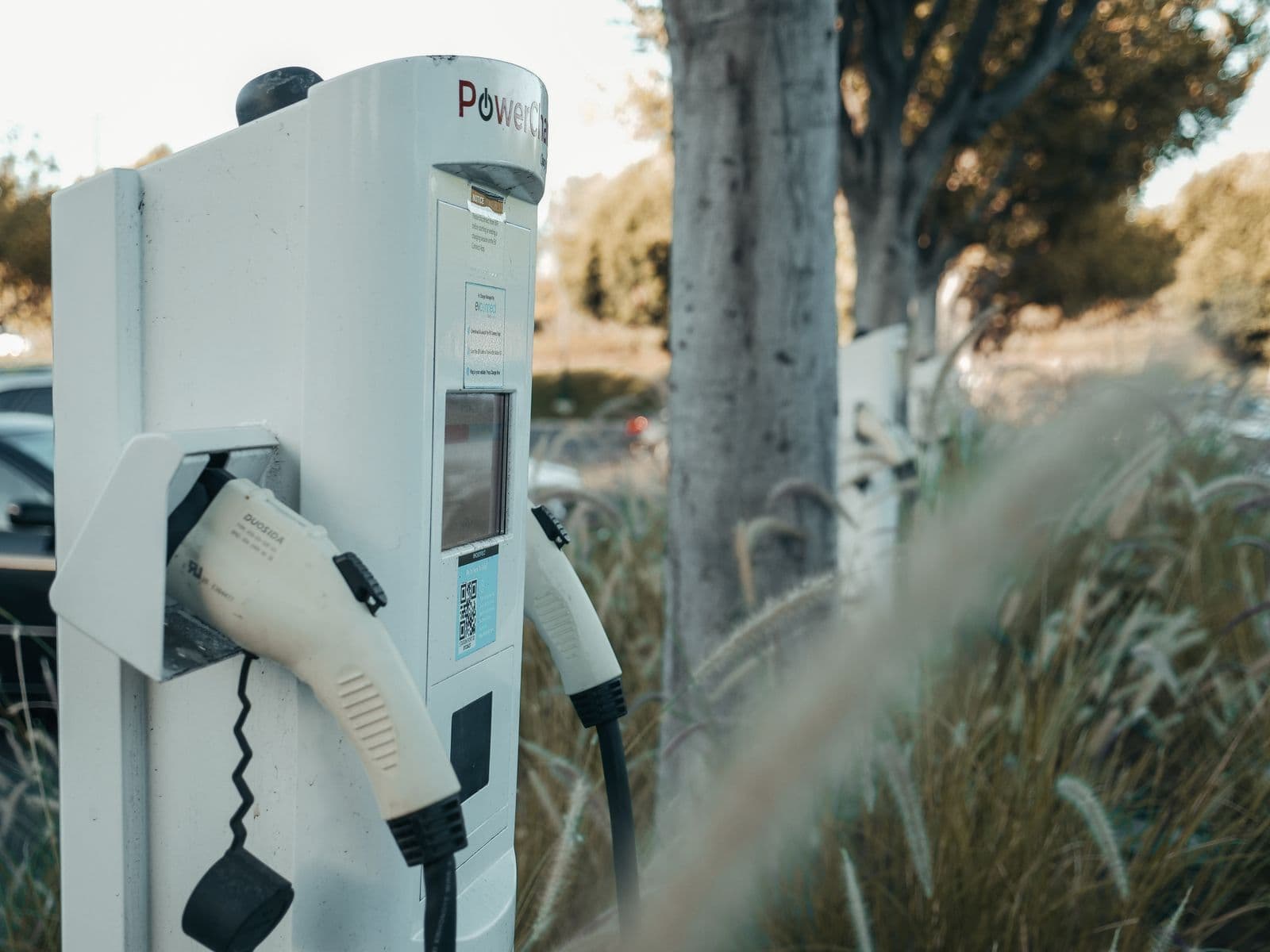
Australia's public charging network is now good enough for most journeys and genuinely thin in specific places. Both halves of that sentence matter if you are deciding whether an EV works for you.
How big the network is
The Electric Vehicle Council's State of EVs report, released October 2025, counted 1,272 fast-charging locations — 20% growth on June 2024 — and at least 4,192 high-power public charging plugs of 24 kW DC or more, up 22%.
For context, the fleet those chargers serve passed 500,000 EVs on Australian roads as of April 2026, up from more than 410,000 in September 2025.
Distribution is uneven. On mid-2025 figures, NSW had 357 fast-charging locations and Victoria 311 — together about 53% of the national total — against 16 in the Northern Territory.
The main networks are Chargefox, Evie, NRMA Electric, Tesla Supercharger, Ampol AmpCharge, bp pulse, Jolt, Exploren, Everty and EVX. Tesla passed 150 Australian Supercharger sites in April 2026, and the majority of them now accept non-Tesla cars via CCS2, generally at a higher per-kWh rate.
The three plugs, and one that is going away
- Type 2 — AC charging. Public AC chargers usually have no cable attached, so you need to carry your own Type 2 lead. At least five metres is recommended.
- CCS2 — DC fast charging. These always have the cable attached.
- CHAdeMO — an older DC standard, still found at some sites, used by a limited set of cars.
CHAdeMO is the one to watch. In May 2026 the NRMA announced it is phasing CHAdeMO out of its network, converting units to dual CCS2, because the plugs are severely under-utilised and on many older dual-plug chargers a CHAdeMO session blocks the paired CCS2 plug. The cars affected are the older Nissan Leaf and Mitsubishi i-MiEV, plus the Outlander PHEV, Eclipse Cross PHEV and Lexus UX 300e. Adapters exist but compatibility varies by vehicle, charger and adapter.
If you are shopping used, that is a real consideration — see buying a used electric car.
What actually determines charging speed
People assume a bigger charger means a faster charge. It is more complicated, and understanding it saves a lot of frustration.
1. The car's ceiling, not the charger's. The rate is the lower of what the charger can supply and what the car will accept. A car that maxes out at 50 kW charges at 50 kW on a 350 kW unit. Older Leafs are capped at 50 kW by CHAdeMO; a base MG ZS EV is around 50 kW; a Kona Electric around 100 kW.
2. The charge curve. Charging is fastest roughly between 20% and 80%. The Government’s guidance is blunt: charging from 80% to 100% may take as long as charging from 10% to 80% did. This is why 10–80% is the standard benchmark and why you are advised to stop at 80% on a road trip rather than waiting for a full battery.
3. Battery temperature. A cold pack charges much more slowly. Cars that precondition — warming the battery en route, usually triggered by setting the charger as a navigation destination — reach much higher peak rates than the same car arriving cold.
4. Architecture. 800V cars such as the Ioniq 5, Ioniq 6 and EV6 hold high rates and can approach 18 minutes for 10–80% on a suitable charger. Most 400V cars are capped lower.
As a rule of thumb from the Government: a 50 kW charger adds around 50 km of range in 10 minutes; a 200 kW charger up to 200 km in 10 minutes.
Is long-distance travel practical?
On the main corridors, yes. Fast chargers are available along most major roads and highways, and federal and state programs continue to build out — the Driving the Nation Fund committed $39.3 million for 117 chargers on key highway routes, Queensland’s Electric Super Highway is complete at 54 fast-charging locations, spanning the coast from Coolangatta north and inland to Mount Isa, Cunnamulla and Longreach, and Western Australia completed a network of 110 charging points across 49 locations from Mundrabilla to Kununurra in January 2025.
Where the gaps genuinely are
This is the part that road-trip enthusiasm tends to skip.
- The Stuart Highway between Katherine and Tennant Creek — around 625 km with no public fast charger, the largest gap in the country. The NRMA’s NT town chargers (opened 2024) are already counted in that figure and are spaced too widely to close it — Ti Tree, Warumungu and Devils Marbles all sit south of Tennant Creek. Treat this leg as needing a hybrid or diesel, and check the My NRMA app for current coverage before assuming otherwise.
- The Nullarbor — the largest gap is now around 175 km, but with documented reliability problems: sites capped at 30 kW, and at least one charger reported to black out the roadhouse it is attached to.
- Single-network concentration. Chargefox operates about 83% of Tasmania's public chargers. In WA and SA, 68% and 62% of chargers respectively are AC only, which is not useful for a road-trip top-up.
- Still needs real planning, or a different tool: Cape York and the Gibb River Road, which are unsealed 4WD routes with no charging at all. The Red Centre is now served — the NRMA runs two 80 kW chargers at Erldunda Roadhouse, for example — but sites are far apart and dearer, so check the route charger by charger before committing.
None of that makes an EV a bad car. It makes a hybrid or a diesel the better tool for those specific trips, which is the point of electric, hybrid or petrol.
What to carry
The NRMA's recommended EV travel kit: your own charging cable with adjustable rate, a Type 2 to Type 2 cable for untethered AC chargers, a heavy-duty 15A extension lead, a spare tyre or repair kit, and a phone charging cable.
Plan with A Better Route Planner, PlugShare or the state charger maps, and check a site's recent status reports before relying on it — on a thin route, one broken charger is the whole plan.