Selling a car is a project with about ten steps, and most of them are quick. The two that decide how fast it sells — and how close to your asking price you land — are the two most sellers rush: the photos and the description. A clean car photographed in good light, with a listing that answers a buyer's questions before they ask them, gets clicked, gets messaged, and gets fewer lowball offers. A dark phone snap in a driveway gets scrolled past, whatever the car underneath is like.
The short version: sort the paperwork before you advertise, price against real comparable listings, spend a weekend on preparation and photography, write a description a stranger could buy from, and don't hand over the keys until the money has cleared.
Selling at a glance
- Time to prepare
- About a weekend
- Photos to take
- 15–25
- Best light
- Early morning or late afternoon
- Keys move
- After funds have cleared
The checklist
Work top to bottom. Each item is covered in depth further down this page, or links to a dedicated guide.
Before you advertise
- Find the registration papers, service history and proof of your identity — what documents you need
- Check whether your state requires an inspection certificate before or at the sale — what your state requires
- If there's money owing on the car, get a payout figure from the lender — selling with finance owing
- Decide how you're selling: privately, trade-in, or an instant-offer service
- Research the price against comparable listings, not against what you paid
Preparation and the listing
- Fix the cheap, visible irritations; skip the big repairs — what's worth fixing
- Clean the car properly, inside and out — or pay for a professional detail
- Photograph it in good light: 15–25 shots covering exterior, interior, engine bay, and the flaws
- Write a detailed, honest description with the service history up front
- Publish, then answer enquiries the day they arrive
The sale
- Screen buyers and choose a safe meeting spot — meeting a buyer safely
- Sight a current licence before a test drive, and go along for it
- Accept payment in a way you can verify before the keys move — the safest ways to be paid
- Complete the transfer and lodge your notice of disposal on time — how transfer works, the notice of disposal
- Sort out the plates, insurance and CTP — plates, insurance and CTP
That's the whole job. The rest of this page is the depth — read the steps you're unsure about and skip the ones you're not.
Step 1: Sort the paperwork before you advertise
Nothing kills a sale like finding a buyer and then discovering you can't complete it. Before the car goes online, pull together:
- The registration certificate and photo ID matching the registered operator.
- The service history — logbooks, invoices, receipts. This is evidence, and it's worth money: a stamped history is one of the strongest signals a private buyer gets. If it's a shoebox of receipts, sort them into date order now.
- Both keys, the owner's manuals, and any accessories you're including.
- A payout letter, if the car is financed. The car has a security interest registered against it on the PPSR, buyers will check, and you'll need the lender paid out at settlement — here's how that works.
Inspection rules differ sharply by state. In Victoria the seller must supply a roadworthy certificate, and Queensland requires a safety certificate to complete the sale — while several states require nothing at all for a registered car. Check what your state requires before you advertise, not after you've found a buyer.
Step 2: Decide how you're selling
There are three broad routes, and they trade money for time:
- Private sale usually returns the most money and takes the most effort — it's what the rest of this guide covers.
- Trade-in is the fastest and typically returns the least; the dealer's margin is the price of the convenience.
- Instant-offer services sit in between: quicker than private, usually below private-sale money.
What it really costs to sell privately breaks down the trade in detail, and our comparison of the places to sell covers where to list.
Step 3: Price against the market, not your memory
What you paid is irrelevant, and so is what the car is worth to you. What matters is what the same car is asking today:
- Search live listings for your make, model, variant, year and a similar odometer reading, in your region. That band is your market.
- Adjust honestly for what makes yours better or worse: service history, condition, tyres, remaining registration, options buyers actually value.
- Leave a small negotiation margin — most buyers will want to feel they moved you — but don't pad the price and plan to "come down". An overpriced car goes stale, and you end up chasing the market downward from behind.
- Understand where your car is on its depreciation curve before you anchor on a number — how depreciation works in Australia.
Asking prices are not sale prices. If three identical cars are asking $19,990 and sitting unsold for months, that's not the market — that's three other sellers making the same mistake.
Step 4: Prepare the car
Presentation is the cheapest value you can add, and it happens before the camera comes out:
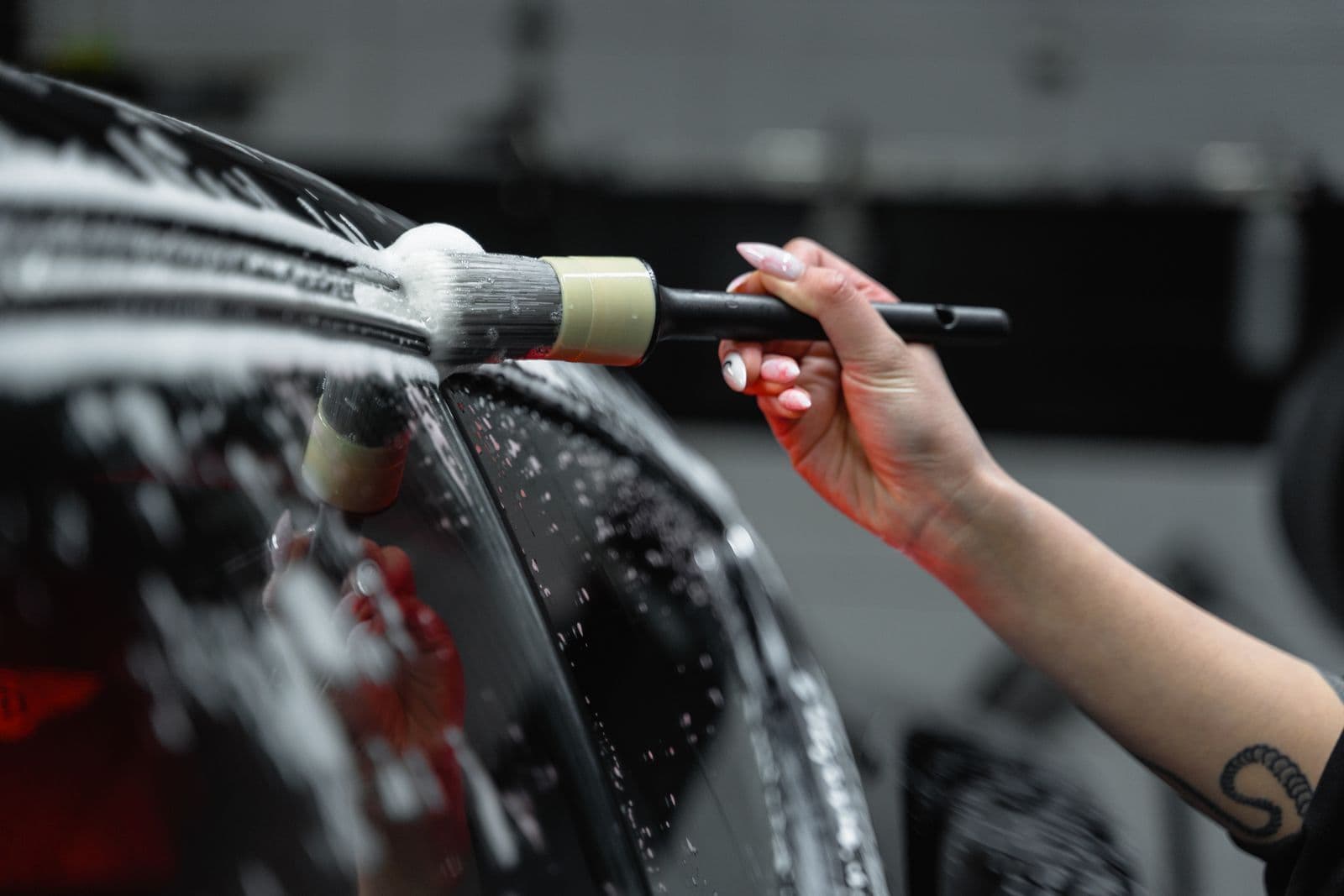
- Clean it properly. A full wash, wheels and door jambs included, then the interior: vacuum, wipe every surface, glass inside and out. If that's not your idea of a weekend, a professional detail is one of the few pre-sale spends that reliably earns its keep on an otherwise-tidy car.
- Kill the smells. Smoke, dogs, gym bags — a buyer notices in the first three seconds and it colours the whole inspection.
- Take your life out of the car. Sunglasses, chargers, child seats, the boot full of sports gear. Buyers need to picture the car as theirs, and your clutter is in the way. It also makes the car photograph larger and cleaner.
- Fix the small irritations, not the big problems. A blown globe, a juddering wiper, a missing wheel-nut cap — cheap, and each one removed is a negotiating point removed. Major repairs rarely return what they cost; here's how to decide what's worth doing.
- Top up the basics — washer fluid, tyre pressures. An inspection that starts with a warning light is an inspection that starts badly.
Step 5: Photograph it like you mean it
The photos are the listing. Buyers scan a results page in seconds, and the cover photo decides whether yours gets opened. Great photos don't need a professional camera — a modern phone is plenty — but they do need deliberate light, a deliberate location, and a deliberate shot list. If the budget stretches to a professional shoot, that works too; the point is that the photos look considered, because buyers read the care in the photos as care in the ownership.
Where and when
- Shoot in soft light: the hour after sunrise or before sunset is ideal, and an overcast day works well. Harsh midday sun blows out the paint and buries half the car in shadow; night shots and flash make even a good car look suspicious.
- Find a plain, open background — an empty car park, a quiet side street, a plain wall. No bins, no clothesline, no other cars, no clutter. The car should be the frame's obvious subject.
- Wash the car the same day. Yesterday's wash plus this morning's dust reads as "average condition" on camera.
The shot list
Aim for 15–25 photos. More coverage means fewer questions and more trust:
- Exterior: front three-quarter from both sides (your cover photo lives here), rear three-quarter, dead-on front and rear, and a full side profile from each side.
- Wheels and tyres: one wheel close enough to judge the tyre tread and any gutter rash.
- Interior: driver's seat and dash, the odometer showing the actual reading, the infotainment screen turned on, front seats, rear seats, and the boot — empty.
- Under the bonnet: one clear engine-bay shot. It says "nothing to hide" even to buyers who couldn't name a part in it.
- The evidence: the service books or stack of invoices, and both keys together.
- The flaws: photograph every scratch, dent, chip and worn bolster you'd mention in person. A defect the buyer discovered in your photos is a price already agreed; a defect they discover in your driveway is a renegotiation.
Technique
- Shoot landscape, clean the lens first, and step back — fill the frame with car, not sky and bitumen.
- Drop to bumper height for the exterior shots. Photos taken from standing height, looking down, make a car look small and slabby; bumper-height is how cars are photographed in every ad you've ever admired.
- Walk around the car rather than zooming from one spot, and keep the whole car in frame with a little breathing room — heavy wide-angle up close bends the bodywork.
- Don't over-edit. Brightness and straightening are fine. Filters, blurred plates done badly, or colours that don't match reality cost you trust at the inspection, exactly when you need it.
- Keep people, pets and your reflection out of the shots — check the panels and glass before you press the shutter.
Step 6: Write a description a stranger could buy from
The description's job is to answer the buyer's questions before they're asked. A detailed, honest description filters out the tyre-kickers, pre-empts the negotiation, and tells the buyer they're dealing with a careful owner. Structure it like this:
- Open with the facts: year, make, model, the exact variant and engine, transmission, fuel type, odometer. Buyers search by these terms, so spell the variant out properly — "SR5 dual cab auto", not "great ute".
- Service history, early and specifically. "Full logbook history, last serviced March at 92,000 km, next due at 100,000 km" is worth a paragraph of adjectives.
- The ownership story. How long you've had it, what it's been used for, garaged or street-parked. Ordinary honesty here reads as credibility.
- The features that matter — the options a buyer would pay for or search for: tow bar, Apple CarPlay, heated seats, a recent set of tyres. Skip the standard-equipment list.
- The condition, including the flaws. Name every defect you photographed and any known issues. Disclosing a fault and pricing for it turns a deal-breaker into a line item — and depending on the fault and your state, staying silent can be more than just bad tactics.
- The practical details: registration expiry, whether an inspection certificate comes with it, your suburb, and when you're available for inspections.
Write in plain sentences. No ALL CAPS, no "FIRST TO SEE WILL BUY", no wall of exclamation marks — buyers have learned to read those as compensating for something.
Step 7: Manage enquiries like a seller
The first days after publishing are when your listing gets its most attention, so be available:
- Reply the same day. A serious buyer is usually messaging several sellers; the one who answers first and properly is the one who gets the inspection.
- Answer the question they asked, then offer the inspection. "Yes, it's available — I'm free Saturday morning if you'd like to look" moves things forward.
- Keep early contact in the platform's messages rather than handing out your number to everyone who asks. It keeps a record and keeps your phone quiet.
- Learn the scam shapes before the scammers find you: overpayment "refunds", fake payment-service emails, buyers who want it shipped sight-unseen. The payment guide covers what each one looks like.
Step 8: Inspections and test drives
- Meet somewhere sensible. Daylight, a public spot or your driveway with someone else home — the full safety checklist is short and worth the two minutes.
- Sight a current driver's licence before any test drive, and go along for the drive.
- Check what your insurance covers while someone else is driving your car — what happens with insurance and CTP when you sell.
- Expect a serious buyer to do their homework. A PPSR check (opens in a new tab) and an independent inspection are normal, reasonable requests from a genuine buyer — welcome them. The buyer who wants neither is either careless or not really buying.
Step 9: Negotiate, then get paid properly
If you've disclosed the flaws and priced against the market, the negotiation is usually short — there's nothing left to "discover". Know your walk-away number before the buyer arrives, and remember that the first offer is an opening position, not an insult.
The keys and the signed transfer papers do not move until the money has actually cleared in your account — cleared, not "transferred", and confirmed in your banking app, not on the buyer's phone screen. Here's how to take payment safely, including why a real-time transfer you watched happen can still be fake.
A modest holding deposit is reasonable if the buyer needs a day or two to arrange money — agree in writing what happens to it if either side pulls out.
Step 10: The handover paperwork
The sale isn't finished when the money lands. On the day:
- Complete the transfer with the buyer — how registration transfer works in each state.
- Lodge your notice of disposal promptly. This is the step that ends your liability for the car's tolls, fines and camera offences, and the deadline differs by state — what it is and what happens if you skip it.
- Deal with the plates — in some states they go with the car, in others they can stay with you: plates when you sell.
- Cancel or transfer your insurance and check where CTP lands — insurance and CTP when selling.
- Hand over everything you promised: both keys, books, accessories, and a signed receipt each.
Then the car is genuinely someone else's problem — which, by this point, is exactly how you'll want it to feel.
What this means if you're selling on MotorLoop
Listing a car on MotorLoop is free, and the listing format is built for the approach on this page: a full photo gallery for the 15–25 shots, a structured spec section so the facts buyers search for are filled in properly, and a description that's yours to write at whatever length the car deserves. Buyers contact you through the site's messages, so your details stay yours until you choose to share them.