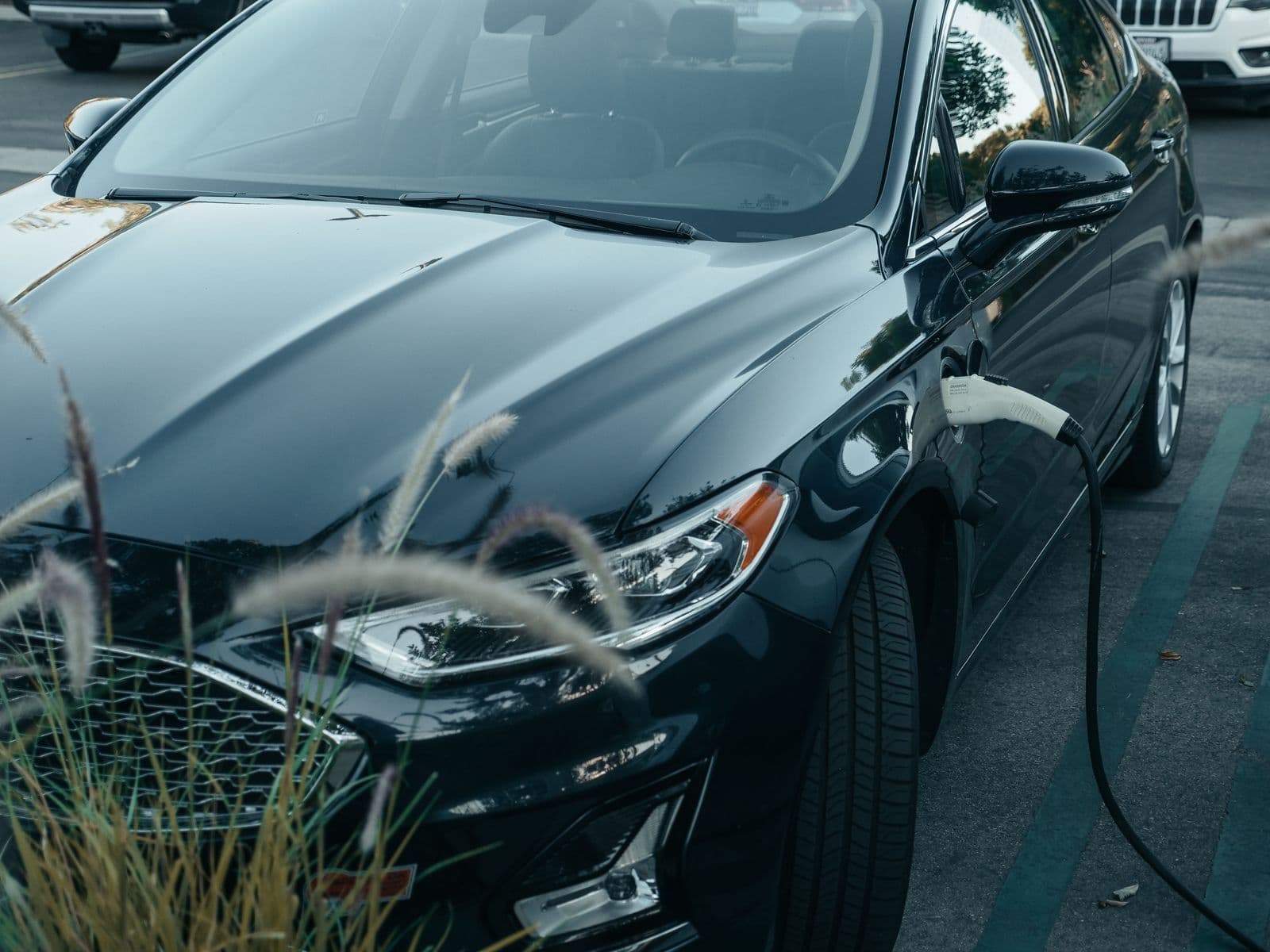
A plug-in hybrid is a genuinely good answer to a fairly narrow question. Bought by the wrong person it is the worst of the three drivetrains, and the used market now has plenty of them.
A PHEV delivers its advertised economy only if it is plugged in regularly. The ICCT found in June 2026 that European plug-in hybrids emit on average around five times their official CO2 figures, with the gap widening from 265% in 2021 to 400% in 2023. A separate February 2026 study by Fraunhofer ISI, the Öko-Institut and IFEU, reading on-board fuel meters from about a million PHEVs, put real-world consumption at 5.9 L/100 km against the 1.6–1.7 L/100 km used in WLTP testing — because those cars covered only about a quarter of their kilometres on battery, where the test in force at the time assumed over 80%. The EU has since cut that assumption to about 54%, falling again to about 34% for 2027/28.
What a PHEV is
A plug-in hybrid has both a petrol engine and a battery you charge from a socket. The Green Vehicle Guide notes that all PHEV models sold in Australia travel around 50 km on battery power, and many around 100 km.
That is different from a conventional hybrid, which cannot be charged externally and recharges from regenerative braking and the engine. If you are unsure which you are looking at, that is the distinction that matters.
When a PHEV is the right call
All three of these need to be true together:
- You can and will plug in at home most nights. Not "could in principle" — will, routinely.
- Your regular daily driving fits inside the electric range. For most PHEVs that means a commute comfortably under about 50 km.
- You also do occasional long or remote trips where charging infrastructure is thin.
That is a real profile: a suburban commuter with a driveway who tows a van to the Red Centre once a year, or someone whose weekdays are 30 km and whose holidays are 3,000. For that person a PHEV genuinely beats both a petrol car and a battery EV.
When it is the wrong call
If you will not plug it in. An unplugged PHEV carries two powertrains' worth of weight and runs on petrol. It is heavier and thirstier than the equivalent conventional hybrid, and it costs more to buy. The ICCT found the gap between official and real-world figures widened between 2021 and 2023, which suggests this is getting worse rather than better as PHEVs sell to more mainstream buyers.
The Green Vehicle Guide states the mechanism in Australian terms: fuel consumption is higher when the battery is low, and it is more expensive to run a plug-in hybrid on petrol when the battery is flat.
If you have no way to charge. A PHEV without charging is a bad conventional hybrid. Buy the conventional hybrid.
If you were counting on the tax break. See below.
The tax advantage has gone
This is the change most people have not caught up with. From 1 April 2025 a plug-in hybrid is no longer a zero or low emissions vehicle for fringe benefits tax, so it is no longer eligible for the electric car FBT exemption.
There is a transitional for arrangements already running before that date with a financially binding commitment — but it breaks on an optional extension, a change of employer, a change to lease payments or residual, or a break in the novation. And critically for a used buyer: a new lease on a used PHEV is a new commitment, so there is nothing for the transitional to protect.
The detail, including what the ATO says breaks the transitional, is in plug-in hybrids lost the FBT exemption.
Battery electric and hydrogen fuel cell cars are unaffected and remain eligible — see the FBT guide.
Two states still favour PHEVs. The Northern Territory includes them in its registration and stamp duty concessions, which run to 30 June 2027 and expressly cover vehicles of any age. Queensland charges its lowest registration duty rate — $2 per $100 of value, against $3 to $4 for petrol and diesel — to hybrids and EVs alike, plug-in hybrids included. The ACT’s emissions-based registration also rewards a low-CO2 PHEV. What PHEVs were shut out of were the up-front purchase rebates. The state-by-state position is here.
The used-buying checks specific to a PHEV
- Ask whether the previous owner actually charged it. A service history, a charging cable in good condition and a worn charge port flap all tell you something. A pristine, never-used cable tells you a lot.
- Check the connector. Several PHEVs sold here — the Mitsubishi Outlander PHEV and Eclipse Cross PHEV among them — use CHAdeMO for DC charging, and the NRMA announced in May 2026 that it is phasing CHAdeMO out of its network. AC charging is unaffected, which matters less for a PHEV than for a battery EV, but factor it in.
- The battery still degrades. PHEV packs are small, so a given percentage loss costs less absolute range than on an EV — but it also means less margin before the car is running on petrol most of the time. Get a state-of-health reading where the model supports it.
- Everything on the ordinary list still applies — see buying a used electric car, most of which applies to PHEVs too.
The honest summary
Buy a PHEV if your driving pattern genuinely matches the profile above and you will charge it. If you want lower running costs and you can charge at home, a battery EV does it better. If you cannot charge at all, a conventional hybrid does it better and costs less. The middle ground is real but narrow — electric, hybrid or petrol works through the whole decision.