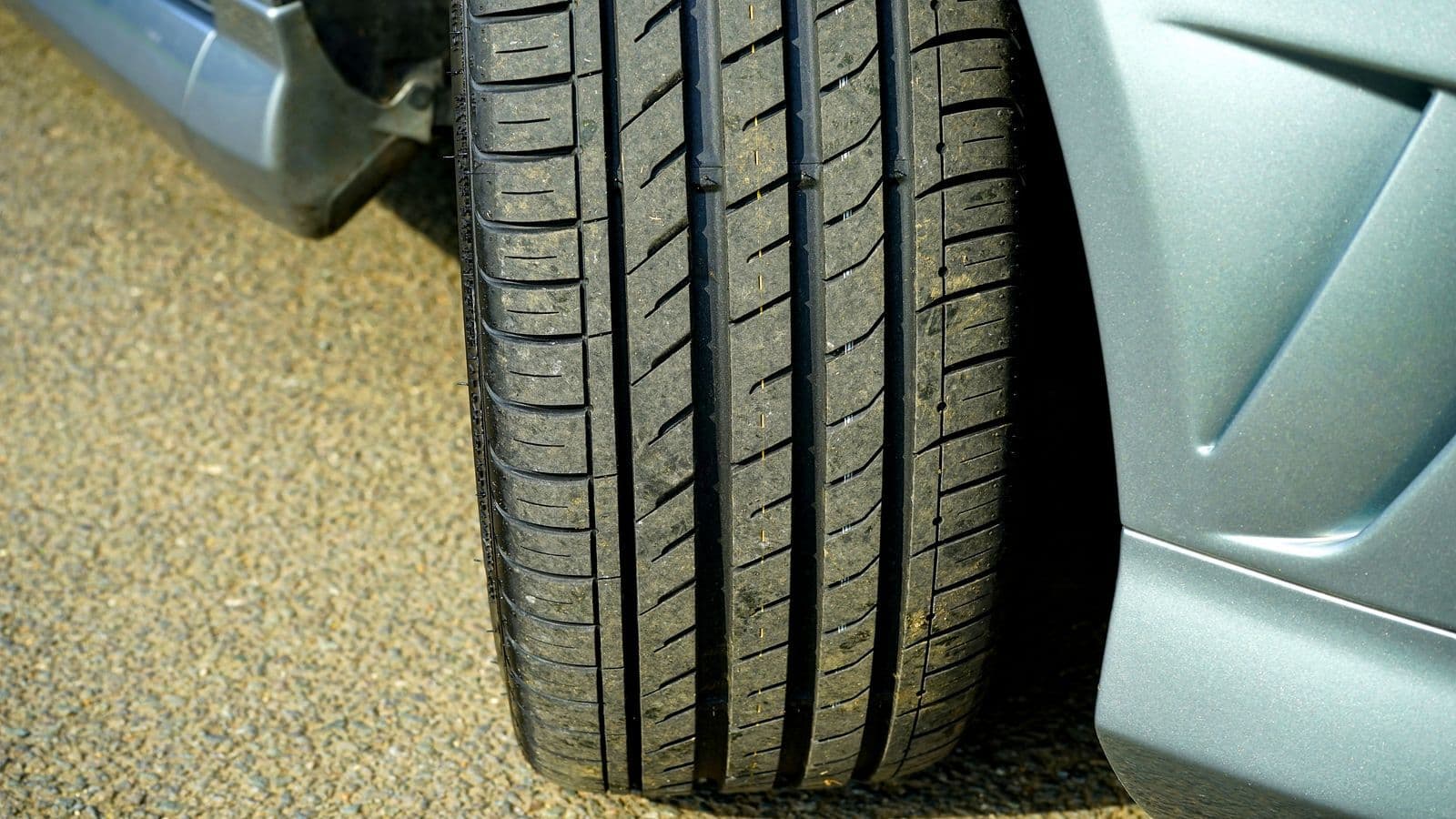
Tyres are not rigid. Every rotation, the section of the tyre entering the contact patch squashes flat and then springs back out again, thousands of times a minute. Rubber is not a perfect spring, so a portion of the energy that goes into deforming it does not come back — it turns into heat. That loss is rolling resistance, and you pay for it in fuel or in range at every moment the car is moving.
The US Department of Energy has estimated that around a third of the energy delivered to a vehicle's wheels is consumed by rolling resistance. That is not a rounding error in the efficiency budget.
Why the loss happens
The technical term for the effect is hysteresis: the energy absorbed by deforming the rubber exceeds the energy released when it springs back. The gap is heat, which is also why tyres get warm on a long drive.
Most of that loss happens in the tread, so tread compound and tread depth both matter. A deeper, chunkier, more heavily grooved tread has more rubber flexing more, which is one reason a brand-new tyre has slightly higher rolling resistance than the same tyre half worn, and why aggressive off-road treads cost fuel compared with highway patterns.
The practical scale: published industry figures put a 30% increase in rolling resistance at roughly 3 to 5% more fuel used. So the difference between an efficiency-focused tyre and an indifferent one is real but not enormous — noticeable over a year, not over a trip.
The trade-off, and how silica changed it
Lowering rolling resistance is easy in isolation: make the compound harder and the tread shallower. Both cost you wet grip, which is exactly the wrong thing to trade away.
That is the magic triangle again — grip, rolling resistance and wear pulling against one another. The reason modern efficient tyres are not simply hard and slippery is a change in filler chemistry. Replacing much of the carbon black with precipitated silica, bonded into the rubber with a silane coupling agent, lets a compound behave differently at different frequencies: still energy-absorbing at the high frequencies that generate wet grip, less lossy at the low frequencies that generate rolling resistance.
Published figures in the rubber industry literature credit silica compounding with roughly a fifth off rolling resistance alongside a double-digit percentage improvement in wet skid performance. That is why a good modern efficiency tyre is not a safety compromise in the way a hard, cheap tyre is.
What you control for free
Before buying anything, the cheapest rolling resistance improvement available is pressure.
An under-inflated tyre flexes more on every rotation, which raises rolling resistance directly, generates more heat, and wears the shoulders of the tread prematurely. It costs you fuel, tyre life and safety margin simultaneously, and it is extremely common.
- Use the placard figure, from the sticker on the door pillar, in the glove box or in the engine bay. It is set for your car's weight and handling balance.
- Do not use the maximum pressure moulded on the tyre sidewall. That is a structural limit for the casing, not a recommendation.
- Check them cold, before driving, because pressure rises as the tyres warm up.
- Check monthly. Tyres lose pressure gradually through the rubber itself, without any puncture involved.
Electric vehicles change the arithmetic
Rolling resistance matters more on an EV, and EVs are harder on tyres. Both are true for the same underlying reasons.
Weight. A battery pack is heavy, and an EV commonly weighs significantly more than a comparable combustion car. More weight means more load through each tyre, more deformation per rotation, and faster wear.
Torque. Electric motors deliver maximum torque from a standstill, and they deliver it instantly. That puts higher shear stress through the driven tyres during acceleration than a petrol engine building revs would.
Efficiency visibility. On a petrol car, a few percent of extra fuel use is easy to ignore. On an EV, rolling resistance shows up as range, which drivers watch closely, so the tyre choice is far more noticeable.
Manufacturers now build EV-specific tyres to answer this. They typically combine a low-rolling-resistance compound with a stiffer, higher-load construction and often acoustic foam bonded inside the casing. The foam addresses a specific problem: the resonance of the air cavity inside the tyre, which produces a droning noise that a combustion engine used to mask and an electric drivetrain does not.
Some heavy EVs also require HL, or High Load, tyres — a construction standard beyond XL, created because battery weight pushed past what an Extra Load tyre could support at reasonable pressures. If the placard specifies HL, a standard or XL tyre in the same size is not a substitute.
Choosing an efficiency tyre sensibly
- Do not buy rolling resistance at the expense of wet braking. Independent test results report both. A tyre that scores well on efficiency and poorly on wet grip is a bad trade whatever it saves you.
- Weigh it against tread life. A tyre that saves a few percent of fuel and lasts 20% fewer kilometres has probably cost you money overall.
- Check the load rating requirement first, particularly on an EV. Meeting the load specification is not optional and comes before efficiency.
- Match the tyre to the car it is on. Fitting aggressive all-terrain tyres to a vehicle that never leaves the bitumen adds rolling resistance, noise and wear for capability that never gets used.
The honest summary: the tyre-to-tyre difference in fuel or range is worth a few percent, while the tyre-to-tyre difference in wet stopping distance can run to several car lengths. Optimise for the second and take the first where it comes free.
Related
- Will they fit? PCD, offset and centre bore explained
- Smooth or aggressive: how to choose a tread pattern
- What makes one tyre cost three times as much as another
- What a car costs to run: your questions answered
FAQs
What is rolling resistance?
It is the energy lost inside a tyre as it flexes. Each part of the tyre entering the contact patch deforms and then springs back, and rubber returns less energy than it absorbs, with the difference becoming heat. The US Department of Energy has estimated that roughly a third of the energy reaching a vehicle's wheels is consumed this way.
Do low rolling resistance tyres actually save fuel?
They save some. Industry figures put a 30% change in rolling resistance at around 3 to 5% of fuel consumption, so the realistic difference between an efficiency tyre and an ordinary one is a few percent. That is worth having, but it is much smaller than the difference good tyres make to wet braking distance, so efficiency should not be chosen ahead of wet grip.
Why do electric cars wear out tyres faster?
Two reasons combine. Battery packs make EVs substantially heavier than comparable petrol cars, so each tyre carries more load and deforms more on every rotation. Electric motors also produce peak torque instantly from a standstill, which puts more shear stress through the driven tyres under acceleration. Together they accelerate tread wear.
What is an HL tyre?
HL stands for High Load, a construction rating above Extra Load. It exists because heavy electric vehicles exceeded what an XL tyre could carry at sensible inflation pressures, so the casing was reinforced further. If your vehicle's tyre placard specifies HL, fitting a standard or XL tyre in the same size leaves the car under-rated for its own weight.
Does tyre pressure really affect fuel consumption?
Yes, and it is the cheapest efficiency change available. An under-inflated tyre flexes more with every rotation, which raises rolling resistance, builds heat and wears the tread shoulders early. Use the pressure on your vehicle's placard rather than the maximum printed on the tyre sidewall, and check the tyres cold about once a month.