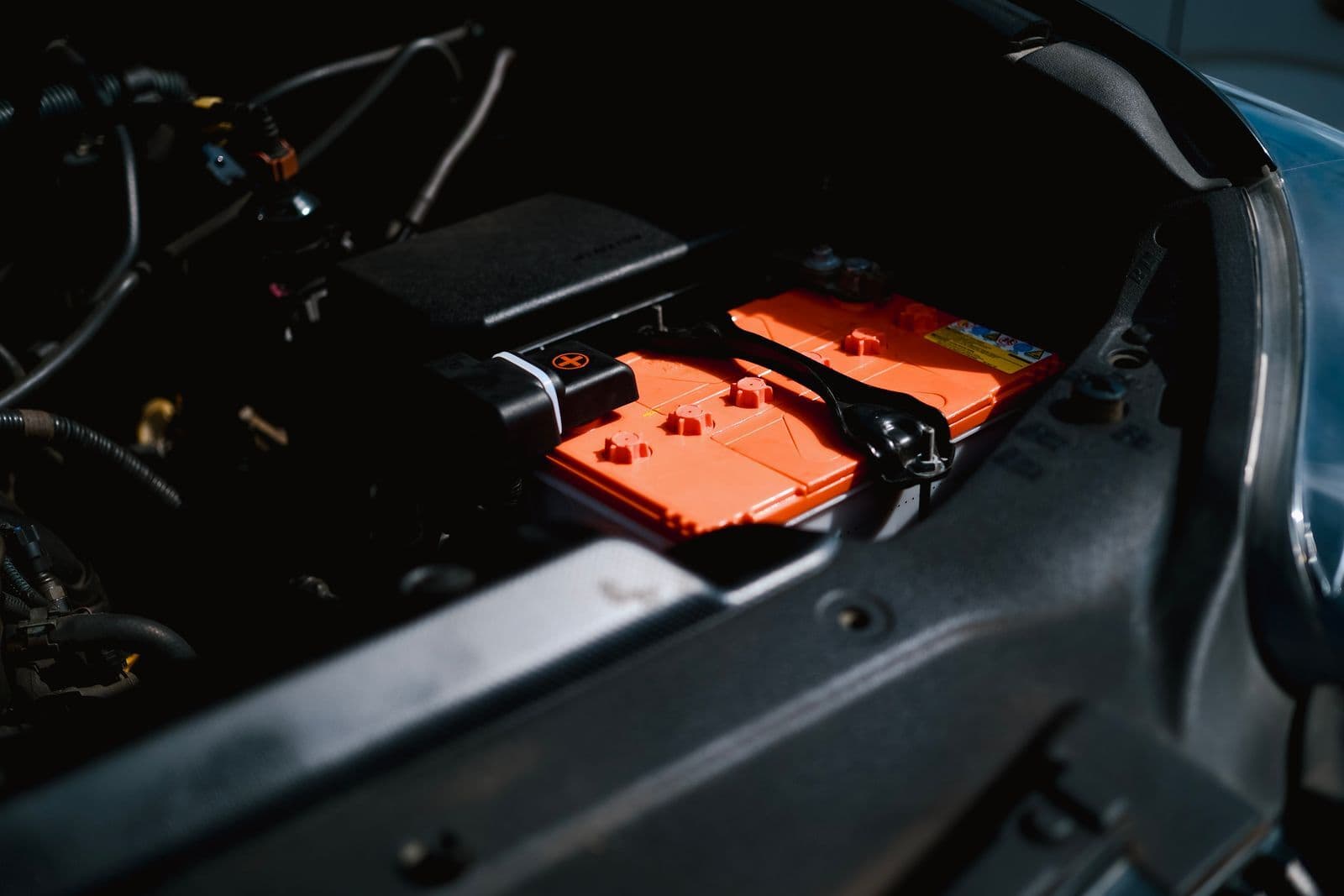
If you've read any EV coverage in the last decade you've met the promise: solid-state batteries will double range, charge in ten minutes, never catch fire, and arrive in about five years. The promise is not vapour — the chemistry is real, the prototypes exist, and the companies chasing it include the biggest names in the industry. But "about five years" has now been the forecast for well over a decade, and understanding why tells you a lot about how battery progress actually happens — and whether waiting for the breakthrough should influence a car purchase today. (Spoiler: it shouldn't.)
A solid-state battery swaps the flammable liquid inside today's cells for a solid layer. Everything attractive about it — density, speed, safety — flows from that one substitution. So does everything hard.
What "solid-state" actually means
A lithium-ion cell has three essentials: two electrodes and, between them, an electrolyte through which lithium ions shuttle as the cell charges and discharges. In every EV on sale today that electrolyte is a liquid — effective, mature, and flammable, which is why packs need cooling systems and crash protection engineered around thermal runaway.
A solid-state cell replaces the liquid with a solid — ceramic, sulphide or polymer. That enables three genuine advances:
- Energy density. A solid electrolyte can safely partner a lithium-metal anode, storing considerably more energy in the same weight — prototype cells have demonstrated on the order of half again more density than today's best, which translates to more range or less weight.
- Charging speed. Less risk of the internal damage that fast charging inflicts on liquid cells, so much faster charging becomes tolerable.
- Safety. No flammable solvent to boil and burn. Not "fireproof" — but a fundamentally smaller hazard.
Why it keeps not arriving
The lab has been convinced for years; the factory is the problem. Solid electrolytes are brittle where liquids are forgiving — maintaining perfect contact between solid layers as they swell and shrink with every charge cycle is brutally hard, and tiny lithium filaments ("dendrites") that a liquid tolerates can crack a ceramic and short the cell. Manufacturing at automotive scale multiplies every one of those difficulties by millions of cells at automotive cost targets.
Hence the timeline shuffle. Toyota — the loudest promiser — has signalled solid-state EVs at various points from the Tokyo Olympics onward, with its current public target sitting around 2027–28 for initial models. Nissan, Samsung SDI, CATL, and well-funded startups like QuantumScape (partnered with Volkswagen) and Solid Power (Ford, BMW) all run serious programs with pilot lines and staged targets in the late 2020s. Meanwhile the halfway house has already reached customers: semi-solid-state packs — gel-like electrolytes — have shipped in limited Chinese models, most famously NIO's 150 kWh pack, showing the direction is real even as full solid-state remains pre-commercial.
The quiet story: ordinary batteries got great
Here's what the breakthrough narrative obscures: while solid-state stayed five years away, conventional lithium-ion improved so much that the goalposts moved. Pack costs have fallen by roughly an order of magnitude since 2010; LFP (lithium iron phosphate) chemistry made cheaper, cobalt-free, long-lived packs mainstream; and real-world degradation proved far better than early fears — themes we've covered in our guide to EV battery life, warranties and replacement costs (opens in a new tab). Solid-state doesn't have to beat 2015's batteries; it has to beat 2030's, on cost, at scale. That's a much taller order, and it's why sober forecasts put mass-market solid-state EVs in the 2030s even if flagship models appear sooner.
What it means for buyers now
- Don't wait. There is always a better battery some years out; that's been true every year since the Leaf launched and will be true the year solid-state ships. A car bought today is judged against today's alternatives.
- Don't fear obsolescence panic either. When solid-state arrives it will debut in expensive flagships and coexist with liquid and LFP cells for many years — today's EVs won't become unusable any more than port-injected petrol cars did when direct injection arrived.
- Do read used-EV listings with chemistry in mind. "Semi-solid-state" badging is already appearing in import discussions; treat unfamiliar battery claims the way you'd treat any spec claim — verify against the manufacturer's documentation.
What this means if you're selling on MotorLoop
If you're selling an EV, state the battery's chemistry if you know it (LFP vs NMC matters to informed buyers), the warranty position, and any battery health report you can obtain — it's the used-EV equivalent of a service book. Listing is free, and buyers can browse used cars including electric models.
Related
- EV battery life, warranties and what a replacement really costs (opens in a new tab)
- What's really in an EV battery? The mining behind zero emissions (opens in a new tab)
- Mild hybrids explained: what a 48-volt system actually does for you (opens in a new tab)
FAQs
What is a solid-state battery in simple terms?
A lithium battery whose internal electrolyte — the layer ions travel through — is a solid ceramic, sulphide or polymer instead of a flammable liquid. That allows denser, faster-charging, safer cells in principle; making them reliably and cheaply at car scale is what the industry hasn't yet cracked.
When will solid-state EVs actually go on sale?
Limited semi-solid-state packs have already shipped in a few Chinese models, and several manufacturers target first full solid-state models in the late 2020s — Toyota has pointed to around 2027–28. Mass-market availability is more realistically a 2030s story, and timelines in this field have slipped repeatedly before.
Should I delay buying an EV until solid-state arrives?
No. Early solid-state cars will be expensive flagships, conventional batteries keep improving in the meantime, and a purchase is always judged against what's available now. Today's packs already routinely outlast the cars around them — battery anxiety is better addressed by checking warranty and health than by waiting for a technology generation.