
Every time you roll up to a red light, a stop-start car kills its engine. Every time you lift off the brake, it fires it up again. In city traffic that means switching the car off and on every few hundred metres to every few kilometres, dozens of times a trip and thousands of times a year. We think that is hard on an engine, and we switch it off. Here is the evidence that made up our minds.
The short version
- Our view
- Turn stop-start off every drive
- Why
- Every stop is a restart, with the oil pump stopped
- What engineers changed
- Bearings, starters and batteries were all redesigned for it
- Where it bites first
- The battery and the starter circuit
- The engines that last
- Warm, steady, long-distance ones
Every stop is a start
An engine's crankshaft does not sit on metal. It floats on a film of oil that it builds for itself by spinning, and the faster it turns the stronger that film gets. At rest there is no film to speak of. Every start has to climb back through the range where the oil film is too thin to carry the load and the surfaces touch: once the film falls below a critical thickness the surface asperities begin to touch.
The oil pump is driven by the engine, so when stop-start switches the engine off, the pump stops too. The oil is warm, but it is not moving. Engine makers are candid about what that moment is like. A Cummins patent on managing stop-start frequency says that at initial cranking "bearing and camshaft lubrication as well as piston-ring/cylinder-wall contact are minimal or non-existent", and that starting "can be one of the most detrimental operating modes" for an engine.
That is the whole argument in one sentence from an engine company: starting is the hard part. Stop-start's job is to make you start more.
Starting can be one of the most detrimental operating modes.
The industry rebuilt the engine to cope
If restarts were harmless, nobody would have had to redesign anything. They did, and in three places.
The bearings. Traditional crank bearings carry a soft lead or tin overlay that relies on an oil film for most of its life. Stop-start-era engines moved to polymer overlays loaded with solid lubricants, MoS2 and graphite at up to 60 per cent by weight, so the bearing has something slippery to lean on when the oil film is not there. The test that shows why is blunt. On a rig running real-scale bearing shells through 18,000 stop-start ramps, a standard lead-based trimetal bearing showed "3-4 times more wear" than the polymer-coated ones, with nearly the whole overlay worn away.
Read that again with a used car in mind. The bearing design most engines carried before stop-start lost almost its entire running surface in a test built around repeated restarts. Nothing on a used-car listing tells you which bearing your engine has.
The starter. Ford's own patent says building a starter robust enough for stop-start duty increases system costs substantially, and describes estimating the "percentage of useful engine starter life consumed" and restricting auto-stop as it accumulates. The car is literally rationing its restarts because the starter wears out.
The battery. A conventional battery is not built for this. GS Yuasa rates conventional batteries at up to 20,000, 30,000 and 50,000 starts, against 270,000 for its start-stop EFB range and 360,000 for AGM. That gap is the size of the extra work stop-start adds.
When the restart does not come
The largest documented stop-start failure is not a worn bearing. It is a car that will not start again. In March 2025 the US regulator's Office of Defects Investigation opened Engineering Analysis EA25004, "No Restart After Auto Start/Stop Engages", into an estimated 2,209,466 Honda and Acura vehicles, recording 1,348 complaints. Honda's remedy runs from a software update to replacing the starter assembly and relays, with warranty cover extended to 10 years for cars that need the second stage.
That is a US investigation into US-market cars, and it is about restarting rather than engine wear. But it is exactly the kind of problem you would expect from a system that asks a starter to do many times the work it used to, and it lands on the driver at the worst possible moment: stationary, in traffic, at a green light.
The engines that go past 300,000 km
Look at the high-kilometre cars that come up for sale and a pattern shows itself. The ones still running sweetly past 300,000 km are usually highway cars: country cars, sales reps' cars, people who drive between cities for work. Those engines spend their lives warm, at steady revs, with a thick oil film that never has a reason to collapse.
The science backs the pattern. The same physics that makes a start hard makes steady running easy, because an oil film gets stronger with speed. And the research on repeated start-stop cycles points the same way: a 2025 study found that stacking consecutive cycles leaves the contact less time to cool and increases predicted wear, while a longer engine-off phase reduces it. Stop-go city crawling, the exact situation stop-start was built for, is the demanding case.
A controlled wear study on a modern turbo engine found that cold-start cycles "showed the highest wear rates of any of the engine test cycles". A stop-start restart is a warm start, not a cold one, but the lesson for longevity is the same: the engine is happiest when it is running, not when it is starting.
What the other side says
Stop-start does save fuel. Bosch, which developed and sells the system, puts it at "around 8%" lower fuel consumption, rising to "as much as 15%" where urban stopping times are long. The polymer bearings in newer engines were designed for this duty and wore only a few micrometres in testing. And most systems will not auto-stop until the engine is warm.
We accept all of that. Our problem is the trade. A few per cent of fuel in town is a small saving next to a starter, a battery rated for hundreds of thousands of starts, and the unknown of which bearing an older engine was built with. Given the choice, we would rather the engine just kept running at the lights.
If you keep stop-start on, never replace the battery with a cheaper conventional one. You would be swapping a battery rated for hundreds of thousands of starts for one rated in the tens of thousands, and the system will start misbehaving long before the battery dies.
How to live with it
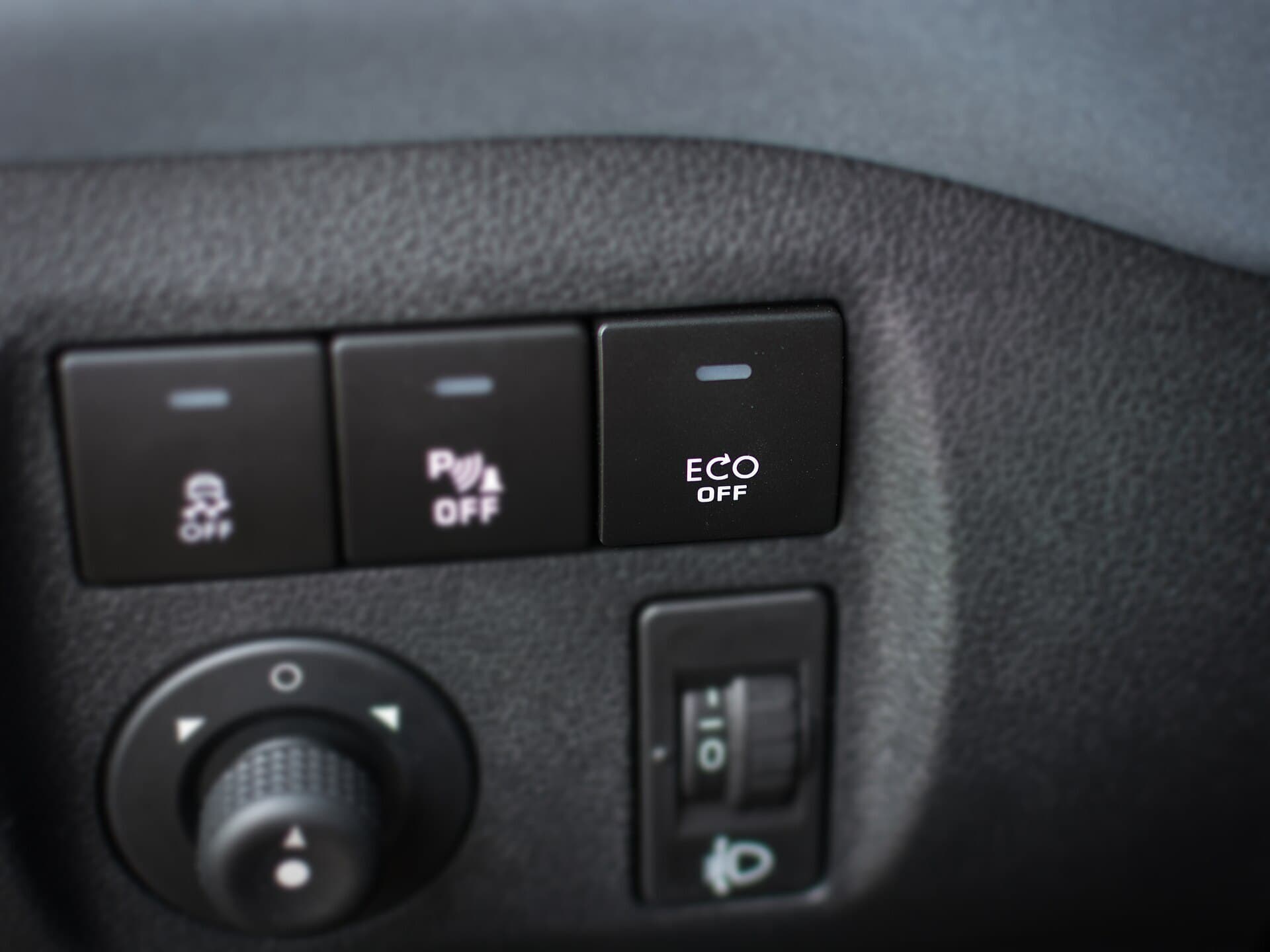
- Press the button. On most cars stop-start switches itself back on every time you start the car, so turning it off is a habit, not a setting.
- Check the battery at inspection. A used stop-start car should carry an EFB or AGM battery. A conventional one means the next owner is about to pay for a proper one.
- Listen at the lights. A slow or hesitant restart is the starter or battery telling you something. Do not ignore it.
- Drive it properly. Give the car regular longer runs at steady speed. It is what the long-lived engines have in common.
Header photo: Sardaka, CC BY 3.0, via Wikimedia Commons.
Related reading
- Is stop-start ruining your engine? What the evidence supports
Bench tests on real bearing shells, three patents and a US regulator investigation suggest stop-start shifted the load onto a bearing coating, the starter and the battery rather than wearing engines out.
- Does thin engine oil wear engines out faster? What the data shows
A controlled wear study found a 0W-16 wore more than a 5W-30 across about two thirds of the conditions tested, less across the rest, and cold starting moved wear more than the grade did.
- Used car inspection checklist: what to look for
What to check when inspecting a used car in Australia — body and panels, engine, interior and electronics, tyres and brakes, the test drive and the paperwork — plus the red flags that mean walk away.