Most used cars look fine in a photo and fine in a driveway. The difference between a good buy and an expensive one usually comes down to half an hour of looking in the right places, a test drive that covers more than a lap of the block, and knowing when to hand the job to a mechanic.
This page answers the questions buyers ask most often about inspecting a car and driving it before they commit.
If a seller won't let you view the car in daylight, start it from cold, or take it to an independent mechanic, treat that as the inspection result. A seller with nothing to hide rarely refuses, and walking away costs far less than the repair bill you would be buying.
FAQs
What should I look at first when inspecting a used car?
Start before the engine has been touched: ask the seller not to warm the car up, because a cold start is when hard starting, a rattly timing chain, blue or white exhaust smoke and low oil pressure tend to show themselves. View it in daylight and when it is dry, since rain flatters paint and fills gaps, then walk the body from a low angle looking down each side for ripples, mismatched paint and uneven panel gaps. Check that the VIN on the car matches the registration papers and that the seller is the person named on them — the VIN is usually stamped at the base of the windscreen and repeated in a door opening or the engine bay, though cars supplied new since 2021 may carry no compliance plate, because those details now sit on the federal Register of Approved Vehicles. The used car inspection checklist sets out the full order to work through.
How long should a proper used car inspection take?
Give yourself around 30 to 45 minutes for your own look before you drive it, and treat anything much shorter as a first impression rather than an inspection. A professional pre-purchase inspection generally runs longer again, since it adds a road test and, at a workshop, time underneath on a hoist. If a seller is rushing you, or has queued three other buyers behind you for the same fifteen-minute window, that pressure is working for them rather than for you. Time pressure is a common feature of used car scams, so slow down rather than speed up.
Should I pay for a pre-purchase inspection?
For any car you are seriously considering, it is money well spent. Expect a few hundred dollars as at mid-2026, varying by provider, location and vehicle, so confirm the price when you book. Most state and territory motoring clubs offer inspections, directly or through approved inspection centres, and independent mobile mechanics will come to the car; some packages fold in a history check and a recall check as well. Set against the cost of a transmission or a timing belt job it is cheap insurance, and even a clean report gives you a documented list of upcoming maintenance to use in the price conversation.
What does a mechanic pick up that I would miss?
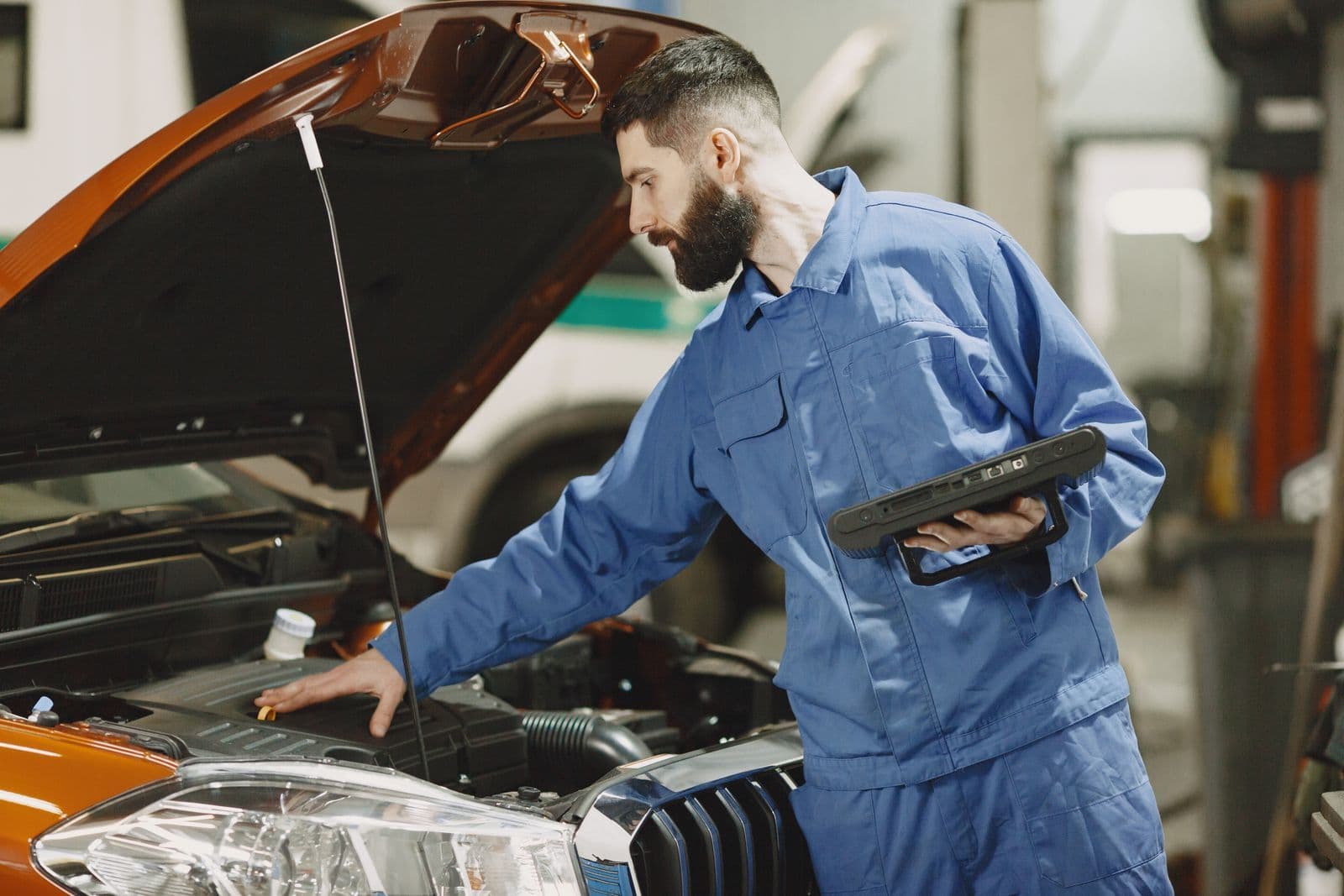
The biggest gap is underneath. With the car raised on a hoist a mechanic can see chassis rail repairs, crash damage that has been panel-beaten and painted over, oil and coolant leaks, worn bushes and steering play, and corrosion in places you cannot reach standing in a driveway. They also plug in a scanner, which reads stored fault codes and can show that codes were cleared recently — useful when a warning light has been made to disappear the morning of your inspection. Brake pad and disc wear gets measured rather than guessed at, and suspension gets checked under load. Very little of that is available to a careful buyer with a torch, and a mobile inspection without a hoist sits somewhere in between.
What should a test drive actually cover?
Twenty minutes and a mix of conditions, not a lap of the suburb. Start the car from cold with the radio off so you can hear it, then get it up to highway speed, because vibration, wheel balance problems and gearbox issues often do not show up below about 80 kilometres per hour. In a quiet car park, turn the wheel to full lock in both directions listening for clicking, reverse a short distance, and brake firmly in a straight line to feel for pulling or pulsing through the pedal. Drive over a rough section to hear the suspension. Cycle the air conditioning, the heater, the windows, the lights and the wipers, and check that any screen or camera actually works rather than assuming it does.
How do I check the tyres and brakes myself?
The minimum tread depth allowed in Australia is 1.5 millimetres across the central three-quarters of the tyre, and a tyre sitting at that limit is a cost you are inheriting, so budget for it. Uneven wear matters more than depth: wear on one shoulder points to alignment or suspension problems rather than to the tyre itself. Check the four-digit date code on the sidewall too, which gives the week and year of manufacture, because tyres age out even with tread left on them. For brakes, look for deep scoring or a pronounced lip on the discs, and on the drive listen for grinding and feel for a pedal that pulses or a car that pulls to one side. Test the park brake by holding the car on a slope.
What should I look for in the service history?
Consistency is worth more than volume. Stamped logbooks are ideal, but a folder of dated invoices from the same workshop tells much the same story, and the useful test is whether the odometer readings on those records climb sensibly against the dates. Look for the expensive scheduled items in particular: timing belt replacement where the engine has a belt rather than a chain, transmission fluid services, and on diesels any history around the particulate filter. A gap of several years in the middle of the history is not automatically fatal, but it is a fair question to ask, and a car with no records at all should be priced as though the major services are still due.
How can I spot rust, flood or hail damage?
For rust, check the bottoms of the doors, the sills, the wheel arch lips, the boot floor under the spare and the base of the windscreen surround, and lift the carpets in the footwells. Flood damage announces itself with a musty smell, silt in the seat rails or spare wheel well, corroded electrical connectors, moisture inside the light housings, and carpet that looks newer than the rest of an older car — the guide to spotting a flood-damaged car covers what to check and why it matters later. Hail damage shows as dimpling on the roof, bonnet and boot when you sight along the panel at a low angle. Some hail and flood cars are repaired and sold legitimately, so pair what you find with a history check at ppsr.gov.au (opens in a new tab) before you decide.
Do I need my own insurance to test drive a private seller's car?
Check before you drive, because this catches people out. Some comprehensive policies exclude damage to a car while it is being demonstrated for a private sale unless the owner or a listed driver is in the vehicle, and a buyer's own "driving other cars" cover is often third party only, which would not pay for damage to the seller's car. Wordings differ between insurers, so read the actual policy documents rather than relying on what either party assumes. In practice the simplest arrangement is for the seller to come along, and it is worth agreeing beforehand who wears the excess if something goes wrong.
What if the seller won't let me inspect the car or take it to a mechanic?
Walk away. A refusal to allow an independent inspection is one of the clearest signals you will get, and a seller with a sound car has little reason to say no. Related warning signs include a seller who wants to meet somewhere other than the address on the registration papers, who cannot produce those papers, or who pushes for a deposit before you have seen the car — these are common patterns in used car scams. While you are checking, it is worth looking the car up in the government recall database at vehiclerecalls.gov.au (opens in a new tab) to see whether any outstanding safety recall work is still owing.
Where to next
- The used car inspection checklist — what to check, in the order to check it
- How to spot a flood-damaged car before you buy it
- ANCAP vs used car safety ratings — how to judge whether an older car is genuinely safe
- Avoiding used car scams — the patterns worth recognising before you hand over money