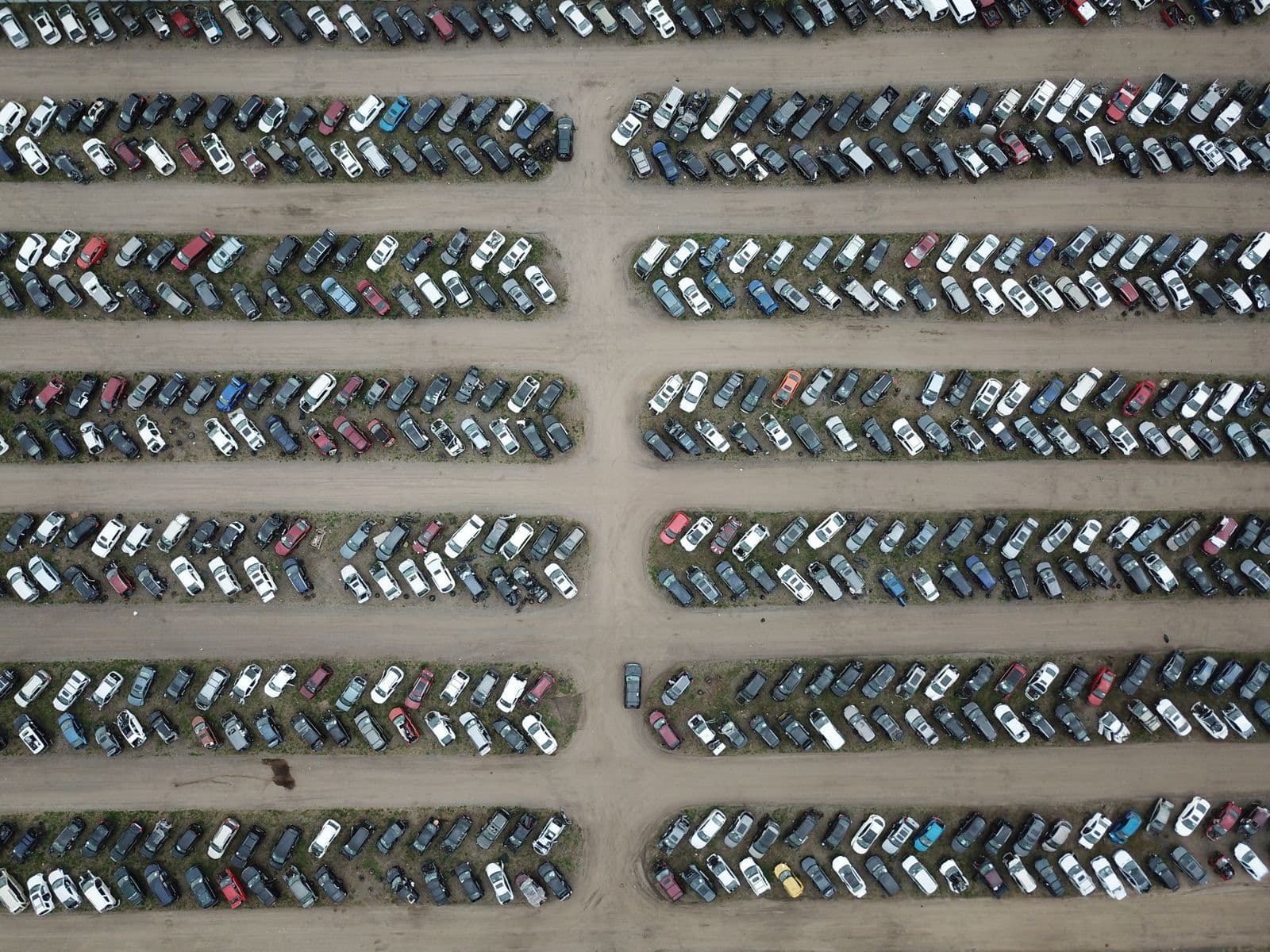
Auctions can put you in a three-year-old fleet Corolla for well under retail — and they can just as easily sell you a written-off car with no comeback at all. The whole proposition rests on one fact: most of the protections that shape the rest of this site, including statutory warranties and cooling-off rights, generally stop at the auction gate.
At auction you buy on inspection, not on promise. If you can't inspect it yourself and you can't pay someone to, the saving isn't worth the ticket.
Who can actually bid
Two circuits exist. Wholesale auctions run by the big commercial houses feed the dealer network — private buyers usually get in only through a licensed buyer's agent. Public auctions are open to anyone: government fleet disposals, insurer salvage, repossession sales and some dealer de-stocking. Check the sale catalogue before you go; it tells you whether vehicles are sold with registration, what the buyer's premium is, and whether the car is listed as repairable write-off or statutory write-off.
The rights you leave at the gate
Consumer Affairs Victoria is blunt about the trade-off when buying from its licensed traders instead: a licensed motor car trader must give clear title, a cooling-off period and a statutory warranty where eligible — none of which an auction house owes you. South Australia's consumer regulator lists auction sales among the exclusions from its cooling-off scheme outright, and Queensland's statutory warranty scheme applies to licensed dealers and chattel auctioneers — but the auctioneer's obligation is narrower than a dealer's, and in several states there is no fixed statutory warranty on auction cars at all. The Australian Consumer Law still applies to the auctioneer as a business, but "acceptable quality" guarantees are hard to enforce against an intermediary that never owned or drove the car.
Practically: assume no warranty, no return window, and title risk managed entirely by you.
Reading the grade without being burned
Fleet disposals carry condition grades and logged service history, and these are the sweet spot: ex-fleet Camrys and HiLuxes are typically serviced on schedule, thrashed less than their odometers suggest, and sold with books. Salvage auctions are the opposite pole — insurance write-offs sold for parts or professional rebuild, where a bargain becomes a project the moment you add genuine panels and an inspection to re-register it. Between them sit repossessions and trade-ins, where the history gap is widest: you will rarely know why the bank took it back.
Three checks translate across every lot:
- Run the PPSR search before you bid — money owing follows the car, not the seller, and a repo can still carry finance.
- Decode the write-off status. A "repairable write-off" needs the state's inspection before re-registration; a "statutory write-off" can never be registered again.
- Set your ceiling including costs — buyer's premium, GST where it applies, transfer, any re-registration work. Auction fever is why bargains stop being bargains.
When an auction makes sense
You want something specific and common enough to be cheap to fix (fleet Commodores and Rangers, city Camrys), you're comfortable assessing condition, and the numbers still work after premium and re-registration. You're patient — the next disposal sale is always weeks away. What doesn't make sense: buying your one and only family car sight-unseen online because the photo looked clean, or bidding on anything exotic where a pre-purchase inspection is impossible. For everything else on your shortlist, our step-by-step guide to buying a used car covers the conventional path with all its protections intact.
And if the goal was never the chase but simply a cheap, honest runabout — you can browse used cars (opens in a new tab) with prices, photos and seller contact in one place, then list your own free (opens in a new tab) when it's time to move it on.