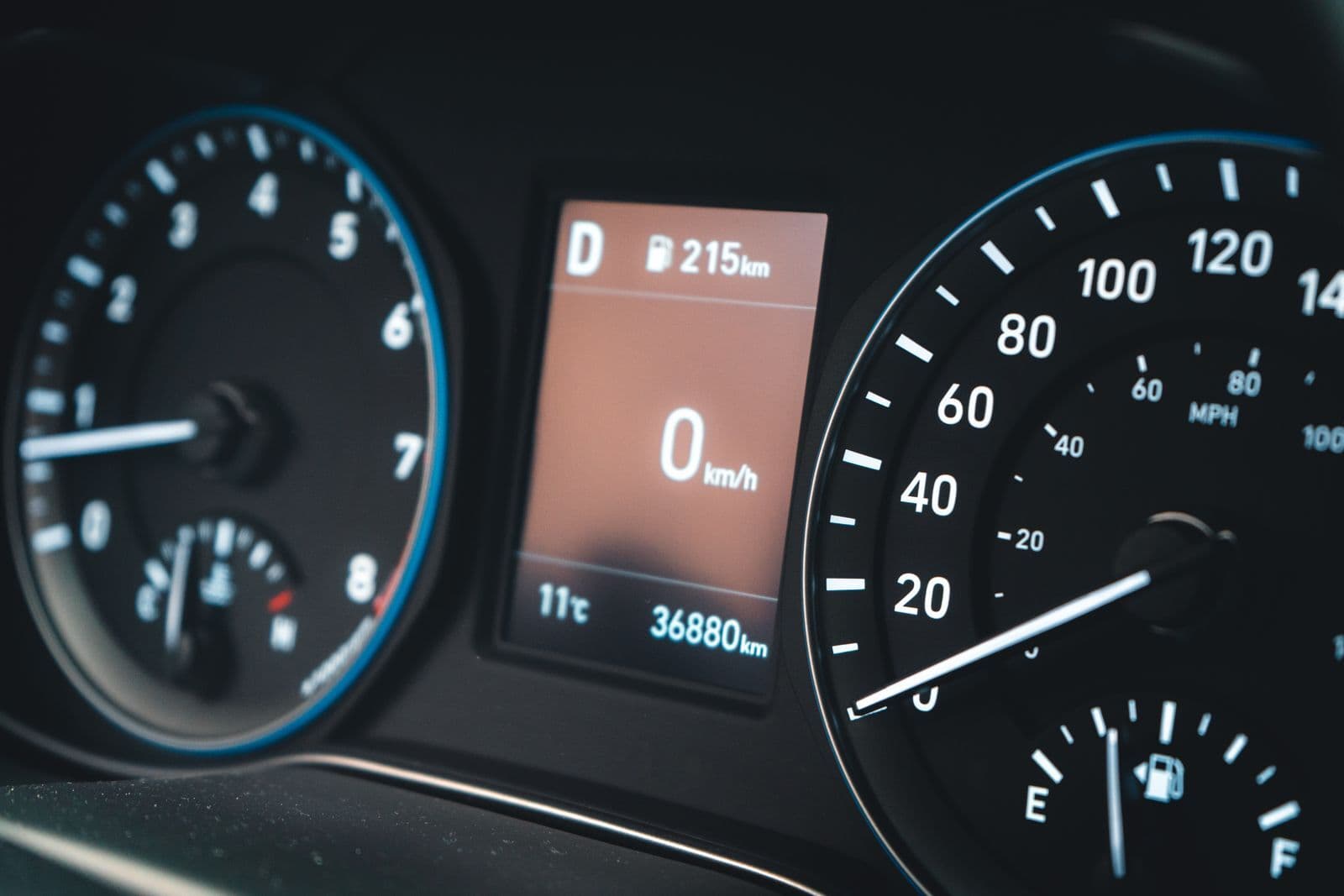
How many kms is good for a used car? There is no single magic number — but there is a useful baseline. Australian passenger vehicles travelled an average of about 11,100 km a year in the last national survey, so a typical car adds roughly 11,000 kays annually. What matters more than the reading itself is the evidence behind it: the logbook, the kind of driving the car did, and how it was maintained along the way.
The Australian baseline
The most recent Survey of Motor Vehicle Use (opens in a new tab) from the Australian Bureau of Statistics — which covered the 12 months ended 30 June 2020 and was its final release — found passenger vehicles averaged 11.1 thousand kilometres for the year, or about 11,100 km. Across every vehicle type combined, the average was 12.1 thousand kilometres.
Two honest caveats belong next to that figure. First, it is now some years old: the ABS has ceased the survey, so no newer official average exists. Second, the reference period overlapped the early months of COVID-19 disruptions — the ABS produced special sub-annual estimates precisely to understand the impacts of the 2019–20 bushfires and the pandemic's first months — so if anything it likely understates a normal year of driving.
The arithmetic from here is simple enough to do in your head. On average usage, a five-year-old car shows somewhere in the mid-50,000s, a ten-year-old sits near 110,000, and a fifteen-year-old approaches 165,000. Real cars scatter widely around any average — a tradie's ute and a grandparent's second car of the same age can sit tens of thousands of kilometres apart — and the spread shows up geographically too, with state averages ranging from 10.9 thousand kilometres in Tasmania to 12.5 thousand in the Northern Territory (opens in a new tab). That variety is exactly why the number alone settles so little.
What the odometer can't tell you
An odometer measures distance. It does not record how the car covered that distance, or what happened between services.
The document that gets closest is the service logbook, because reputable servicing records entries against both date and distance. When you flick through one, you are looking for regular intervals in both directions: services spaced sensibly in months and in kilometres. Long gaps on either axis are worth a polite question, even on a car whose reading looks low.
This is also where a pre-purchase mechanical inspection earns its fee. The PPSR (opens in a new tab) — the national register most buyers know from finance and write-off checks — recommends asking an inspector to confirm that the records of odometer readings in the car's service manual are correct and consistent, alongside checking that the serial number hasn't been altered. That second point matters: the register itself contains no odometer information at all, so paper trails and physical checks carry the load.
An odometer counts distance. It doesn't count cold starts, skipped services, years of towing, or traffic-crawling commutes — two cars with identical readings can have lived very different lives.
The same blind spot applies to the kind of distance. Ask any enthusiast and you will hear that highway kilometres are gentler than city ones, and the reasoning behind that view is straightforward even though no official statistic grades one type of distance above another. Steady running means fewer cold starts, longer stretches at operating temperature, and less of the constant braking-and-accelerating cycle that wears clutches, brakes and stop-start hardware. Short urban trips do the opposite.
Treat this as a lens rather than a law. A seller who says the car "did Sydney to Melbourne runs" is offering genuinely relevant context — just as a seller who cannot describe how the car was used at all is telling you something too. Where the use story and the logbook agree, you are on firmer ground than any reading can put you.
When low kilometres hide problems
Low reading, older badge: it sounds like the best of both worlds, and sometimes it is. But time ages parts that distance doesn't touch. Rubber seals and hoses harden, fluids absorb moisture and lose their protective properties over the calendar, and batteries dislike long periods of inactivity — none of which registers on the clock. A car driven twice a month to the shops has done little to circulate and refresh the things that keep it healthy.
None of this makes a low-kilometre older car a bad buy. It makes it a car to inspect on its own merits: look for logbook entries that arrive on schedule in years as well as in kilometres, ask whether the car sat unused for long spells, and lean on a professional inspection before committing. Our used car inspection checklist (opens in a new tab) walks through the points worth putting in front of an inspector.
Electric cars and hybrids change the maths a little
If you are cross-shopping electrified options, the odometer carries even less of the story. Regenerative braking means the conventional friction brakes generally see less work, and a battery-electric car has fewer of the consumables a petrol engine accumulates. Conversely, the component buyers worry most about — the traction battery — is best judged by a battery-health report rather than by inferring wear from distance travelled.
The trade-offs between powertrains deserve their own conversation, so we wrote one: see electric vs hybrid vs petrol (opens in a new tab) for how they compare on running costs and ownership.
So when is high mileage actually a problem?
It depends almost entirely on what you plan to do with the car. Framed by use case:
- A daily commuter you expect to keep adding serious kilometres rewards documented care over a low reading — you will double whatever is on the clock soon enough.
- A weekend second car tolerates a higher reading comfortably, because the odometer will barely move under your ownership.
- A car you plan to resell in a few years shifts attention toward how the market prices remaining usable life — our guide to car depreciation in Australia (opens in a new tab) covers how value falls with age and use.
And the specific number people ask about — is 200,000 km a lot? — is arithmetic, not verdict. At the ABS average of about 11,100 km a year, reaching 200,000 takes roughly eighteen years of ordinary driving. For a fifteen-year-old country car that has lived on highways with a stamped book, it may read as a rounded, well-documented life. For a six-year-old ride-share reject, the same figure tells a harder story. Same number, different conclusions — which is the entire argument of this article.
As rough conventions only — not official figures and not rules — buyers commonly treat readings near or below the age-implied average as unremarkable, and start asking sharper questions when a car sits far above its age-implied average without a matching maintenance and use story. Those questions, not the raw number, are what disqualify a car: a high-reading vehicle with a complete stamped book and receipts often beats a low-reading one with gaps, because the book is the part you cannot rebuild after purchase.
The number that can lie
Every rule above assumes the odometer is honest. Mostly it is, but wind-back fraud exists, and it is worth knowing what your safety nets do and don't catch.
A $2 PPSR search (opens in a new tab) will show whether a security interest (money owing) is recorded against the car and may also reveal written-off or stolen status drawn from state and police data — but it does not include odometer readings. Catching tampering falls to consistency checks: the PPSR's own advice is to have an inspector confirm the odometer records through the service manual line up sensibly, and gaps, missing pages or replacement books deserve scrutiny. Run the search on the day or the day before you buy, and keep the certificate. For the fuller picture of these protections — including roadworthies and scam patterns — see our Australian used-car buyer's guide (opens in a new tab).
Start with a shortlist, not a number
Chase evidence, not a target figure: pick cars with complete logbooks, an honest use story and a clean inspection, then haggle over the rest. You can browse used cars for sale (opens in a new tab) on MotorLoop, filter by the odometer ranges that suit your plans, and list your own car free when it is time to move it on. Our step-by-step guide to buying a used car (opens in a new tab) picks up where this article leaves off.