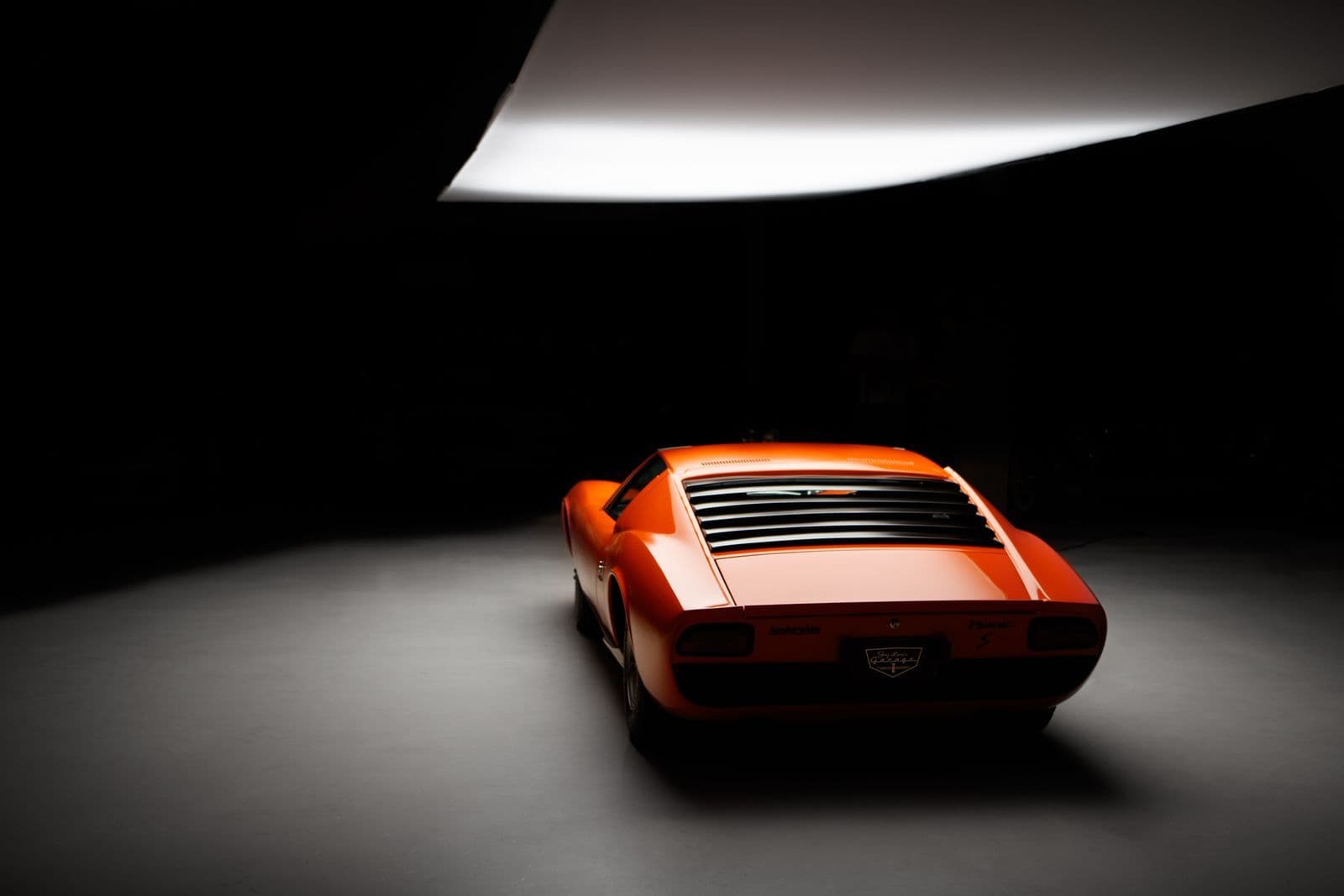
Every supercar on sale today — engine behind the seats, cabin pushed forward, body like a held breath — is following a template set by one car. In March 1966, at the Geneva motor show, Lamborghini pulled the covers off the Miura, and the reaction has echoed for sixty years: nobody had put a big V12 in the middle of a low, gorgeous road car before and dared ordinary customers to buy it. The word "supercar" existed earlier, and rival claims to the title get argued in every pub where enthusiasts gather — but the Miura is the car most historians credit with defining the breed, because it established the shape everything since has copied.
The Miura's real invention wasn't speed. It was the idea that a road car could adopt racing architecture — engine amidships — purely for glory, and that people would pay dearly for it.
A skunkworks in a tractor town
Lamborghini in the mid-1960s was barely two years into building cars, funded by Ferruccio Lamborghini's industrial fortune and staffed by conspicuously young engineers — Gian Paolo Dallara and Paolo Stanzani were in their twenties when the Miura took shape, reportedly developing the chassis partly in their own time while the company's official focus stayed on its sedate GT cars. Their trick was packaging: the 4-litre V12 mounted transversely behind the seats, sharing its casing with the gearbox, which is what let the car sit so impossibly low. The rolling chassis alone drew orders at the 1965 Turin show — before a body existed.
The Gandini moment
The body, when it came, may be the most celebrated in automotive history: penned at Bertone by a young Marcello Gandini, all one sweeping gesture, with headlights that lay flat in the nose and famous "eyelashes" around them. The combination — racing layout, scandalous beauty, a claimed top speed in the vicinity of 280 km/h that made it among the fastest road cars of its day — turned the Miura into an event. Miles Davis owned one. The opening sequence of The Italian Job immortalised one. Ferruccio, the tractor magnate who supposedly started the company out of pique at Enzo Ferrari, suddenly owned the most glamorous car company on Earth.
Flawed, fast and formative
The Miura was also, by all period accounts, a handful: front-end lift at speed, heat and noise in the cabin, early cars with unsynchronised quirks — refinement came gradually through the S and the prized SV of 1971. None of it mattered. The flaws became part of the mythology, establishing another supercar tradition: the car forgives nothing, and the owner forgives the car everything. Roughly 750–770 were built across all variants (figures vary by source), and the model's aura has carried surviving examples into eight-figure auction territory at the top of the market.
The rival claims, fairly stated
Was it truly first? The Mercedes 300SL of the 1950s was exotic, fast and gullwinged; the Ford GT40-derived road cars were mid-engined earlier; some point further back still. The honest formulation is the one historians generally settle on: earlier cars had supercar ingredients, but the Miura assembled the full recipe — mid-engine, low-slung beauty, scandalous price, usable-if-demanding road manners — and made it a product category. Within five years Ferrari, Maserati and De Tomaso had all answered with mid-engined flagships of their own. Templates don't get stronger endorsements than imitation by Ferrari.
Why it still matters to a buyer in 2026
Nobody reading this needs Miura buying advice — the survivors trade through auction houses and specialists at prices with many digits. But the Miura's legacy prices everything beneath it: the mid-engine layout it legitimised defines what the market considers a "real" supercar, which is a large part of why mid-engined cars from the same era and marque out-value front-engined stablemates of similar rarity. Understanding where the template came from is understanding why the labels (opens in a new tab) fall where they do — and why the theatrical Lamborghini brand DNA this car created still sells cars today, a story this series picks up soon.
What this means if you're buying or selling on MotorLoop
Provenance is the whole game with historic exotics — and it's good discipline at every price point. Records, originality and story move value more than kilometres do. If you own something with a story, MotorLoop's showcase listings (opens in a new tab) let you tell it without selling; listing is free, and the daydream aisle of used cars is always open.
Related
- Supercar, hypercar, exotic: what the labels actually mean (opens in a new tab)
- Showcase your car online: share the car without the hard sell (opens in a new tab)
- Insuring a classic: agreed value, laid-up cover and the questions to ask (opens in a new tab)
FAQs
Why is the Miura called the first supercar?
Because it assembled the full recipe in one car: racing-style mid-engine layout, dramatic low-slung styling, extreme price and headline speed, sold to the public as a road car. Earlier cars had ingredients — the 300SL's glamour, the GT40's layout — but the 1966 Miura made the combination a product category that rivals immediately copied.
What made the Miura's engineering special?
Its transverse mid-mounted 4-litre V12, sharing a casing with the gearbox — a packaging solution that let the car sit dramatically low while carrying twelve cylinders behind the seats. The layout was developed by a famously young engineering team and shown as a bare chassis before the body existed.
How many Lamborghini Miuras were built?
Around 750–770 across the original P400, the S and the final SV of 1971 — published figures vary slightly by source. Scarcity, the model's place in history and its Gandini styling have carried the best examples into eight-figure prices at the top of the auction market.