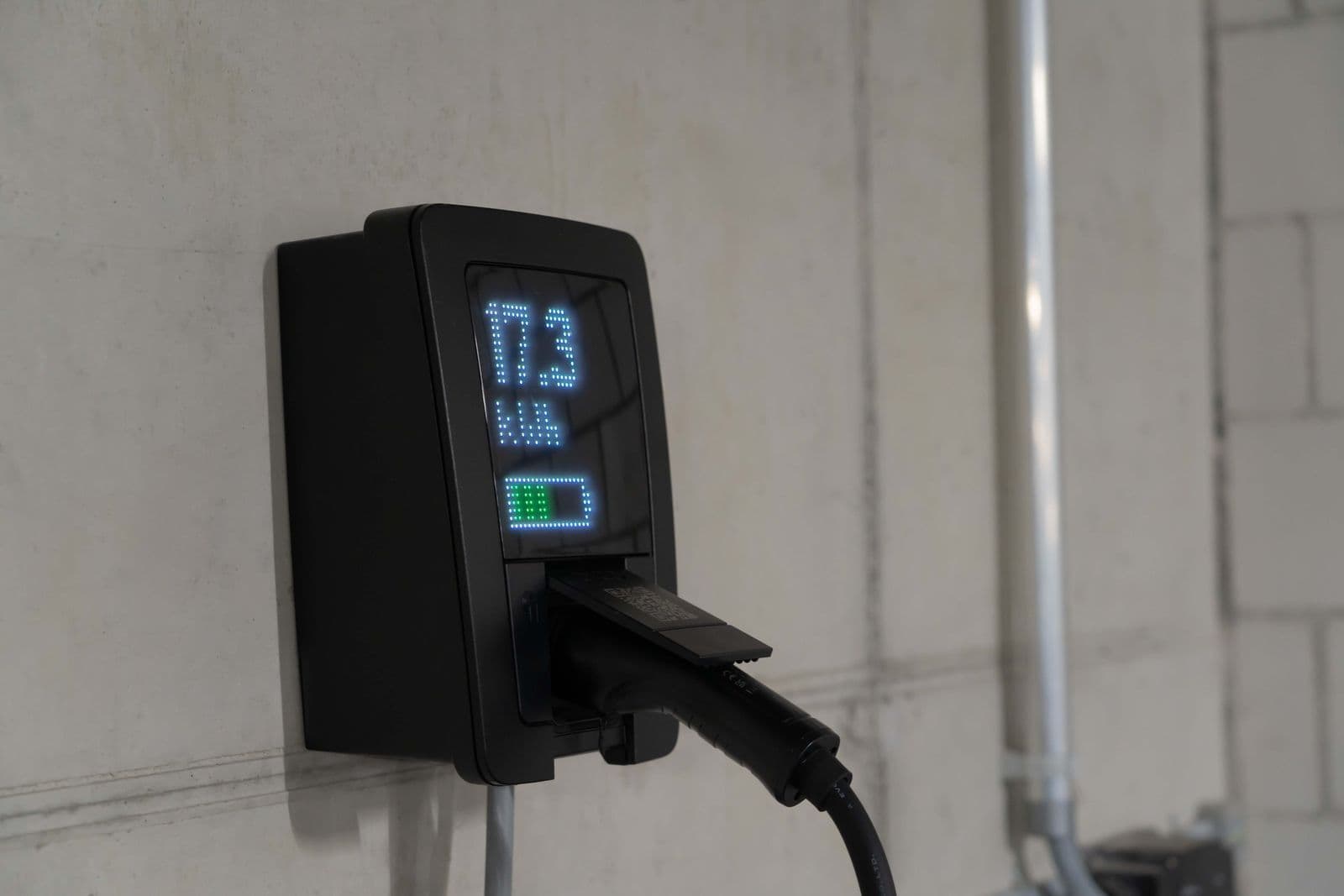
Running-cost claims for electric cars range from the honest to the fanciful, mostly because they quietly assume home charging. Here is what the published Australian figures actually say, and what changes them.
The headline comparison
The Electric Vehicle Council's figures, for an average Australian driving about 12,000 km a year:
Annual energy cost, 12,000 km
- Petrol
- ~$2,500 (20c/km)
- EV, home charging
- ~$500 (4c/km)
- EV, solar or off-peak
- as little as $200
The Australian Government frames the same thing as savings: EV drivers can expect to save up to 70% on fuel and 40% on servicing. For a car travelling around 13,400 km a year that is roughly $1,000 a year, or $1,200 charging on an off-peak rate. CSIRO's projection, cited by the Government, is that households fully switching to EVs by 2030 save up to $30,000 over 20 years.
The assumption that carries all of it
Those figures assume you charge at home. Around 80% of EV charging in Australia does happen at home, so it is a reasonable default — but it is not universal, and if it is not true for you, the numbers change substantially.
Public DC fast charging is priced very differently. The NRMA's own network listed per-kWh prices of $0.69 to $0.79 at the time of writing, with location-based variable pricing and a member discount. At typical consumption that lands somewhere in the low-to-mid teens of cents per kilometre — still below petrol's ~20c/km, but nothing like 4c.
So the honest version is: an EV charged at home is dramatically cheaper to run than petrol; an EV charged mostly in public is moderately cheaper. If you cannot charge at home, weigh that before you buy, and read electric, hybrid or petrol.
Typical consumption
Most EVs use in the region of 14 to 20 kWh per 100 km, or roughly 6 km per kWh. That is the number to multiply your own electricity tariff by, and it is why an off-peak or solar-soaked tariff matters so much more than the car's efficiency rating.
Solar changes the arithmetic again
A rooftop system produces roughly 4 kWh a day per 1 kW installed, averaged across a year. A 6.6 kW system therefore makes something like 25–30 kWh a day.
Against the Australian average of 33–38 km driven a day, an EV needs about 5 to 7 kWh a day. That sits comfortably inside the surplus of a typical household system, which is why the Electric Vehicle Council puts drivers with home solar — or an off-peak tariff — at the bottom of its published range, as little as $200 a year.
To capture it automatically rather than by remembering to plug in at midday, you need a charger that can modulate to real-time surplus — one with a current sensor, inverter integration or smart control. An ordinary timed charger can be scheduled for daylight hours but cannot follow the sun.
Servicing
An EV has no oil to change, no spark plugs, no timing belt, no exhaust and no conventional gearbox. That is where the ~40% servicing saving comes from.
It does still need brake fluid, coolant, cabin filters, tyres, wipers and inspections, and the Government notes that brake calipers need cleaning and lubricating and that battery cooling systems need periodic inspection. Electric car maintenance costs covers what remains in detail.
What else moves the number
- Tyres. EVs are heavier and deliver torque instantly, placing extra strain on tyres, and may specify EV-specific ones. Budget for tyres more often than you would on an equivalent petrol car.
- Registration and stamp duty. These vary by state and several EV concessions have closed — see EV stamp duty and registration concessions.
- A novated lease. If you can access one, the FBT exemption on eligible battery electric cars changes the whole calculation, though the reportable fringe benefit has consequences of its own.
- Depreciation. Usually the largest single cost of owning any car, and used EV values have fallen hard — bad news for a first owner, good news for a second.
Work it out with your own numbers
The Green Vehicle Guide (opens in a new tab) has a free home charging calculator that takes your battery size, charge rate and electricity plan, plus a fuel cost and CO2 calculator. Your tariff and your distance are what decide this, and both are things only you know.