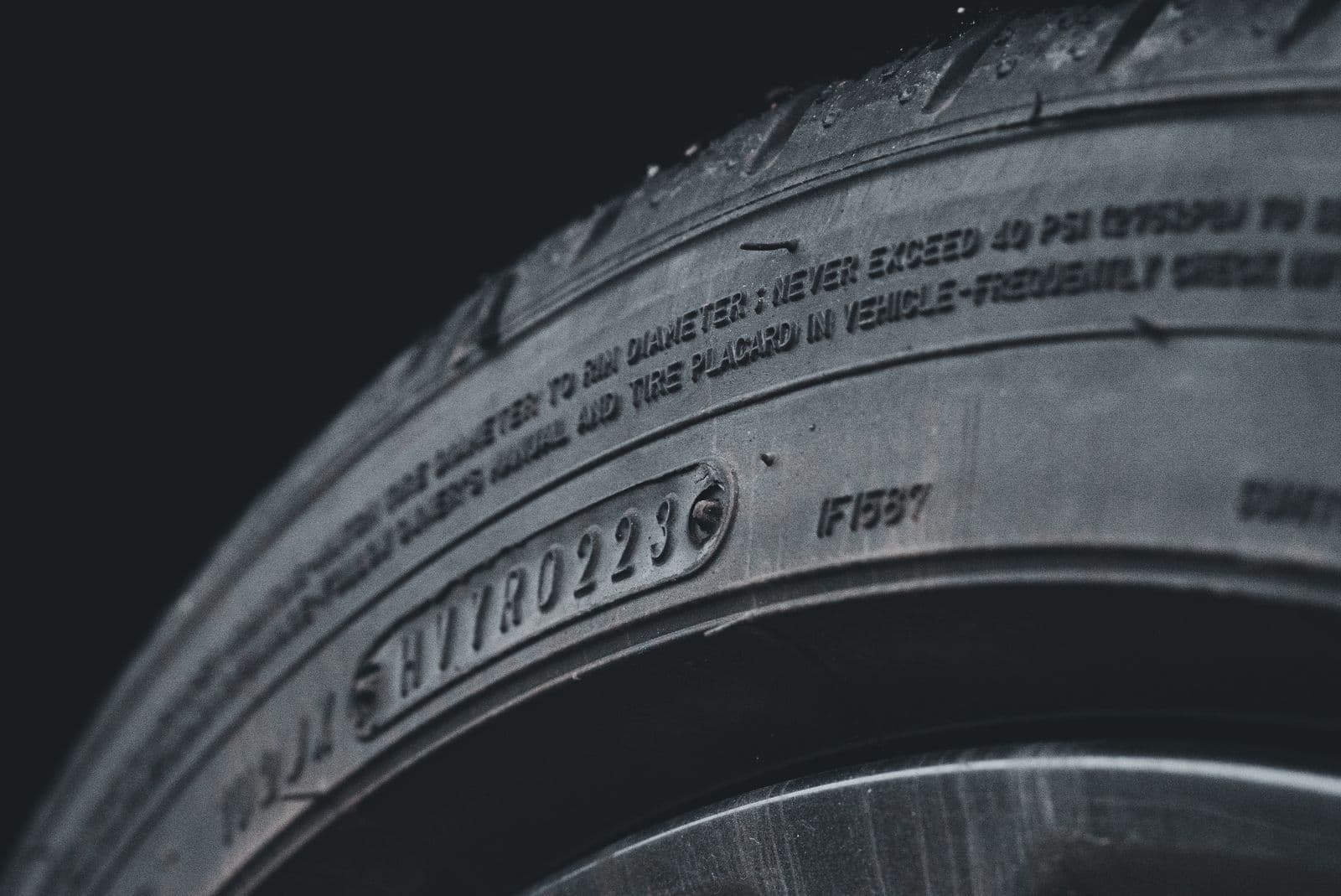
Tyres are the four palm-sized contact patches doing every piece of work your car does — steering, braking, cornering, aquaplaning resistance — and they're also one of the few parts where a cheap choice is measurable in metres of stopping distance on wet roads. Reading a sidewall takes two minutes and changes how you shop for them forever.
Tyres age whether they drive or not. A never-used tyre fitted six years after manufacture is not a new tyre — check the date code before you pay anyone to fit "new" rubber.
Reading the sidewall
That string like 225/45R17 94W decodes as: 225 mm section width; 45 aspect ratio (sidewall height as a percentage of width); R radial construction; 17 inch rim diameter; 94 load index (each point maps to kilograms); W speed rating. Two matter most when substituting: load index must meet or exceed the car maker's specification, and speed rating should too — downgrading either is both illegal in effect and exactly the kind of thing an insurer can seize on after a claim.
The other code worth knowing is four digits at the end of a DOT serial: week and year of manufacture. 2324 means week 23 of 2024.
When to replace: the two clocks
Tread depth. The legal minimum tread depth across Australia is 1.5 mm — below that the tyre is unroadworthy, and it's one of the standard items checked at every state's periodic or change-of-ownership inspection. Practical guidance sits well above the law: grip in standing water falls away long before the legal floor, so most safety-minded advice replaces tyres around 3 mm rather than riding to 1.6 mm.
Age. Rubber hardens and cracks with time regardless of tread. There is no single legislated retirement age for passenger tyres in Australia, but manufacturer and industry guidance has long pointed owners of more-than-a-few-years-old tyres toward professional assessment, and many tyre fitters recommend replacement around the six-to-ten-year mark depending on storage and use. A caravan or trailer that lives under a cover ages fastest per kilometre driven.
Between inspections, learn the wear bars: moulded ridges across the grooves that sit flush with the surface at minimum tread. Uneven wear — inside edge, outside edge, centre-only — isn't a tyre problem but a wheel alignment, pressure or suspension problem, and new tyres fitted without fixing the cause will wear the same way again.
Comparing prices honestly
Tyre pricing spans enormous ranges because the products genuinely differ: compound, wet-grip design, noise, longevity. Comparing them fairly:
- Compare total fitted cost — tyre plus fitting, balancing, valves and old-tyre disposal — not the sticker.
- Match size and load/speed rating first, then read independent test results for wet braking rather than trusting marketing tiers.
- A mid-tier tyre from a major manufacturer frequently beats a no-name premium-priced pattern on tested wet performance; the brand on the sidewall of a budget tyre often tells you less than the test results behind it.
- Buying online and fitting locally is common and usually cheaper than drive-in pricing — just confirm the fitting appointment includes balance and alignment check.
At sale time
Buyers notice tyres, even if they don't know why. Evenly worn, recent, matched-set tyres photograph well and answer a question before it's asked; mismatched brands or a bald rear axle reads as deferred maintenance everywhere else too. If yours are near the wear bars, replacing them before listing usually costs less than the discount buyers mentally apply.
What this means if you're selling on MotorLoop
Photograph the tread, note the date codes, mention recent replacement with receipts — tyre condition is one of those details that makes a free listing (opens in a new tab) feel professionally prepared. And if you're shopping for your next car instead, our used car inspection checklist (opens in a new tab) includes the tyre checks above in context.