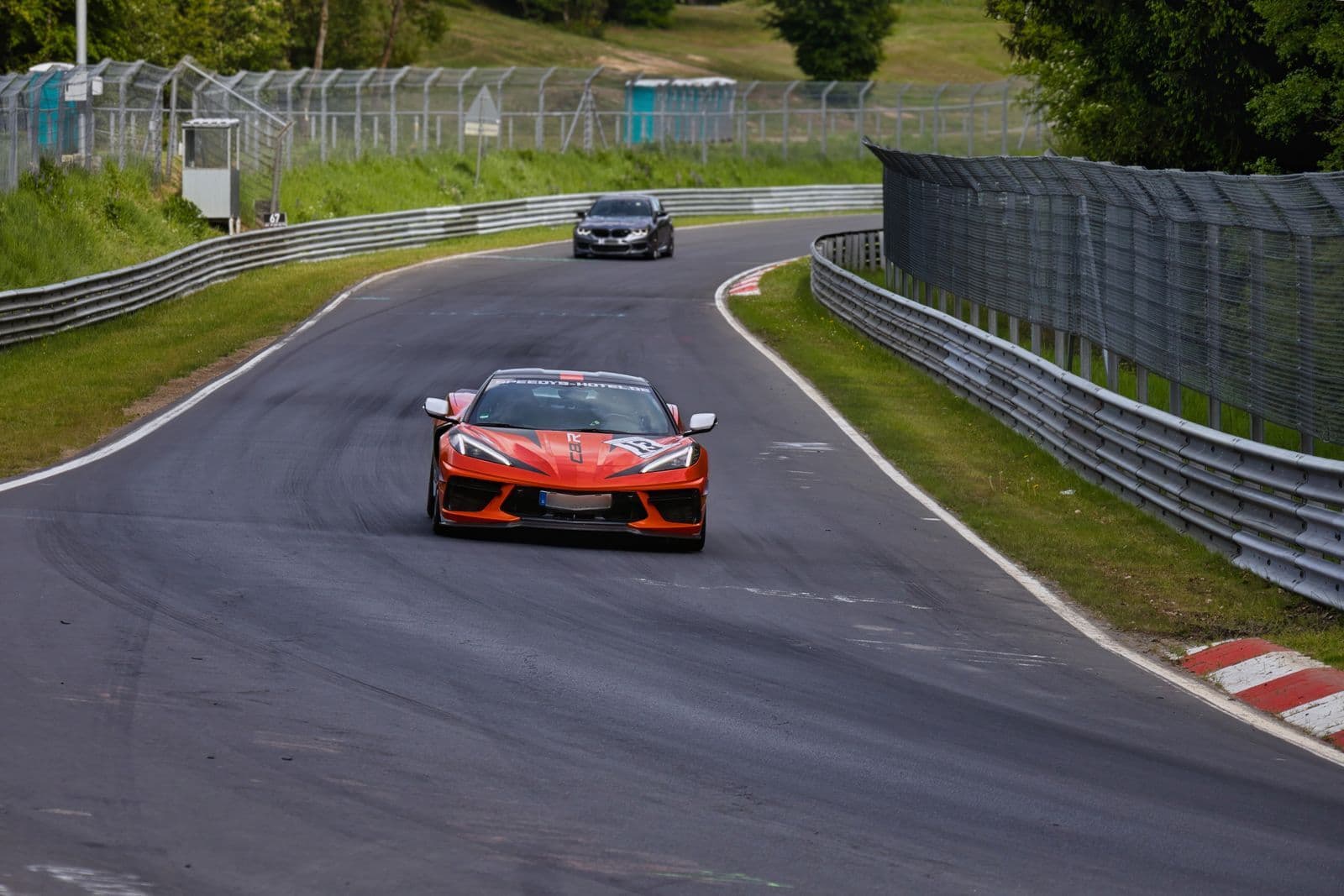
There's an uncomfortable truth at the heart of supercar ownership: on Australian roads, at Australian speed limits, you will use a fraction of what you paid for. The engineering above the legal limit — the aero, the brakes, the chassis composure at speeds that lose licences — only exists for you on a racetrack. Which is why the track day is the natural completion of ownership, why every Australian capital has circuits running them regularly, and why this series ends here. The good news: track days are accessible, well-organised and far less intimidating than newcomers fear. The catch: they have real costs and one genuinely important piece of fine print, and both belong in your planning before the booking, not after.
A track day is not racing. It's open lapping, untimed, in speed-grouped sessions with strict passing rules — closer to a spirited drive with the risk managed than to motorsport. The insurance industry, however, may not read it that way: check your policy before you check the calendar.
What an Australian track day actually looks like
Circuits and clubs around the country run open track days year-round — permanent circuits near most capitals, club days, marque-club events and professionally-run programs, many with instructors available. The standard format: a driver's briefing (flags, passing rules, session etiquette), sessions grouped by experience or speed, and passing typically restricted to straights with a point-by. Requirements are modest — commonly a road-registered car in sound condition, a helmet (often hireable), covered arms and legs, and a basic scrutineering check; some venues add noise limits that occasionally catch loud exotics, so check your venue's rules when booking. First-timers routinely report the same discovery: the environment is more disciplined and welcoming than the internet suggested, and an instructor in the passenger seat for your first sessions is the single best money of the day.
Preparing the car (and yourself)
The mechanical checklist is mostly diligence: fresh brake fluid (the first thing track heat exposes), pad and tyre life honestly assessed, correct pressures (tyres gain pressure hot — experienced hands set them low cold and adjust between sessions), fluids and torque checks, and everything loose out of the cabin. Modern supercars are engineered to tolerate track work, but consumables are priced at supercar scale: a hard day can consume meaningful fractions of tyre and pad life, and carbon-ceramic brake components, while superbly fade-resistant, are famously expensive when eventually replaced. Budget the day as entry fee plus consumables, not entry fee alone. Drive home insurance for your ego too: arrive to learn, not to set the internet's lap record — the fastest drivers at any track day are conspicuously the calmest.
The fine print that matters most
Here is the paragraph to read twice, because our supercar insurance guide flagged it and it decides real outcomes: most Australian road policies exclude damage sustained on a racetrack, with wording that typically catches casual, untimed track days — not just competition. Some specialist insurers offer optional track-day cover for non-competitive events, per-event or as a policy feature, with conditions (approved venues, untimed formats, sometimes instruction requirements); wording varies widely between products. The disciplined sequence: read your PDS's motorsport/racetrack exclusion, ask your insurer the direct question in writing, and price optional cover into the day if you want it — because the alternative, self-insuring the session, is a decision to make consciously with your agreed value in view, not to discover at the tyre wall. Circuit operators' own terms add another layer (indemnities, and sometimes venue-damage liability), so read the booking conditions too.
The alternatives if the sums say no
If tracking your own exotic doesn't add up, the itch has other scratches: professionally-run supercar experience programs put you in their cars with their risk envelope; marque driving academies (several manufacturers run them, some internationally) bundle instruction with factory cars; and motorsport-adjacent days — skidpans, driver training — build the skills at a fraction of the consumables. There's no shame in the arithmetic: plenty of owners conclude their car's track career should happen in someone else's car, and their depreciation-conscious future selves agree.
What this means if you're buying or selling on MotorLoop
Track history cuts both ways in a listing, so handle it with documentation rather than silence: a car tracked and maintained accordingly — fluids, pads, inspections on record — is demonstrably cared for, while an undocumented "never tracked" claim on a car wearing harness marks convinces nobody. Buyers: ask, and check per the first-exotic playbook. Listing is free, the used-car aisle includes plenty of weekend weapons — and the series you've just finished lives on under the supercars tag, one story deeper every day it ran.
Related
- Insuring a supercar in Australia: agreed value, track cover and the questions to expect
- What it really costs to run a supercar in Australia
- Buying your first exotic car in Australia: the realistic path
- Supercar, hypercar, exotic: what the labels actually mean
FAQs
Do I need a special licence for a track day in Australia?
For typical open track days, no — a standard driver's licence is the usual requirement, with helmets, basic clothing rules and a car in sound condition. Timed or competitive events are different territory, generally requiring motorsport licensing. Always confirm the specific event's requirements when booking.
Will my car insurance cover a track day?
Check before assuming anything: most Australian road policies exclude racetrack use with wording that catches untimed track days, not just racing. Optional track-day cover exists through some specialist insurers under specific conditions. Read your PDS's exclusion, ask in writing, and decide consciously — the middle of a spin is the wrong moment to learn the answer.
How much does a track day cost with a supercar?
Entry fees are the small line; the real cost is consumables — tyre and brake-pad life consumed at track intensity, plus fuel and fluids — which on supercar-grade components can multiply the day's cost several times over. Budget entry plus consumables, and the day stops producing financial surprises.