
Every question about EV charging comes down to two numbers: how much energy the battery holds, measured in kilowatt-hours (kWh), and how fast a source can deliver it, measured in kilowatts (kW). Get those two straight and the whole landscape — from a single solar cell to a 350 kW highway charger — becomes simple arithmetic. Here is what each source actually delivers, in kilometres of range per hour and in time to charge.
The two numbers that decide everything
A kilowatt-hour is the size of the tank. A kilowatt is the speed of the pump.
A typical EV battery holds 50–80 kWh, and a typical EV uses about 16 kWh per 100 km. That gives the one conversion worth memorising: 1 kWh is roughly 6 km of range. Charging time is then just division — kWh needed ÷ kW delivered — plus about 10% for charging losses on AC.
The worked example used throughout
- Battery (usable)
- 60 kWh
- Consumption
- 16 kWh/100 km
- Everyday window (20–80%)
- 36 kWh ≈ 225 km
- Rule of thumb
- 1 kWh ≈ 6 km
One more rule governs everything below: the slowest link wins. Charging speed is limited by whichever is weakest of the source, the cable and charger unit, the car's onboard AC charger, and — on DC — the battery's own acceptance curve. A 22 kW wallbox feeds a car limited to 7.4 kW at 7.4 kW. A 350 kW stall feeds a car limited to 100 kW at 100 kW.
What each source can actually deliver
Sorted from the smallest trickle to the fastest flood. The last column is the time to add 36 kWh — the 20–80% everyday window on a 60 kWh battery:
| Source | Typical power | Range per hour | Time to add 36 kWh |
|---|---|---|---|
| One 400 W solar panel | ~0.3–0.4 kW in good sun | ~2 km | about 3 weeks of good sun |
| 6.6 kW rooftop solar system | 3–5 kW through the day | 20–30 km | a day or two of good sun |
| 2 kVA portable generator | ~1.6 kW | ~10 km | ~22 hours of runtime |
| 10A household power point | 2.3 kW | ~14 km | ~16 hours |
| 15A socket (caravan style) | 3.5 kW | ~22 km | ~10 hours |
| Single-phase wallbox (32A) | 7.4 kW | ~45 km | ~5 hours |
| Three-phase wallbox (16A × 3) | 11 kW | ~65 km | ~3.5 hours |
| Three-phase wallbox (32A × 3) | 22 kW | ~130 km | ~1.7 hours |
| DC fast charger | 50 kW | ~300 km | ~45 minutes |
| DC rapid charger | 150 kW | ~900 km | ~15 minutes |
| DC ultra-rapid | 350 kW | limited by the car | as little as ~18 minutes |
A single solar panel: the honest maths
A modern 400 W panel in good Australian sun produces roughly 1.5–2 kWh across a day — about 10 km of range. Adding 36 kWh takes around three weeks of good weather. It is a genuinely possible way to charge a car and a genuinely impractical one: as an answer to "can solar charge an EV?" it proves the physics, not the practicality. What a single panel can do is cover a very small daily commute for a car that barely moves — 5 km a day is within reach.
A rooftop solar system: the real answer
A typical Australian home system of 6.6 kW produces on the order of 25 kWh across a decent day — roughly 150 km of range — and a larger 10 kW system proportionally more. That makes solar a legitimate primary fuel source, with two catches. The energy arrives between about 9 am and 3 pm, so the car has to be home in daylight (or you store it in a home battery, or use a smart charger that diverts surplus solar as it is generated). And output swings with season and cloud, so winter weeks will dip well below the average.
A generator: possible, with strings attached
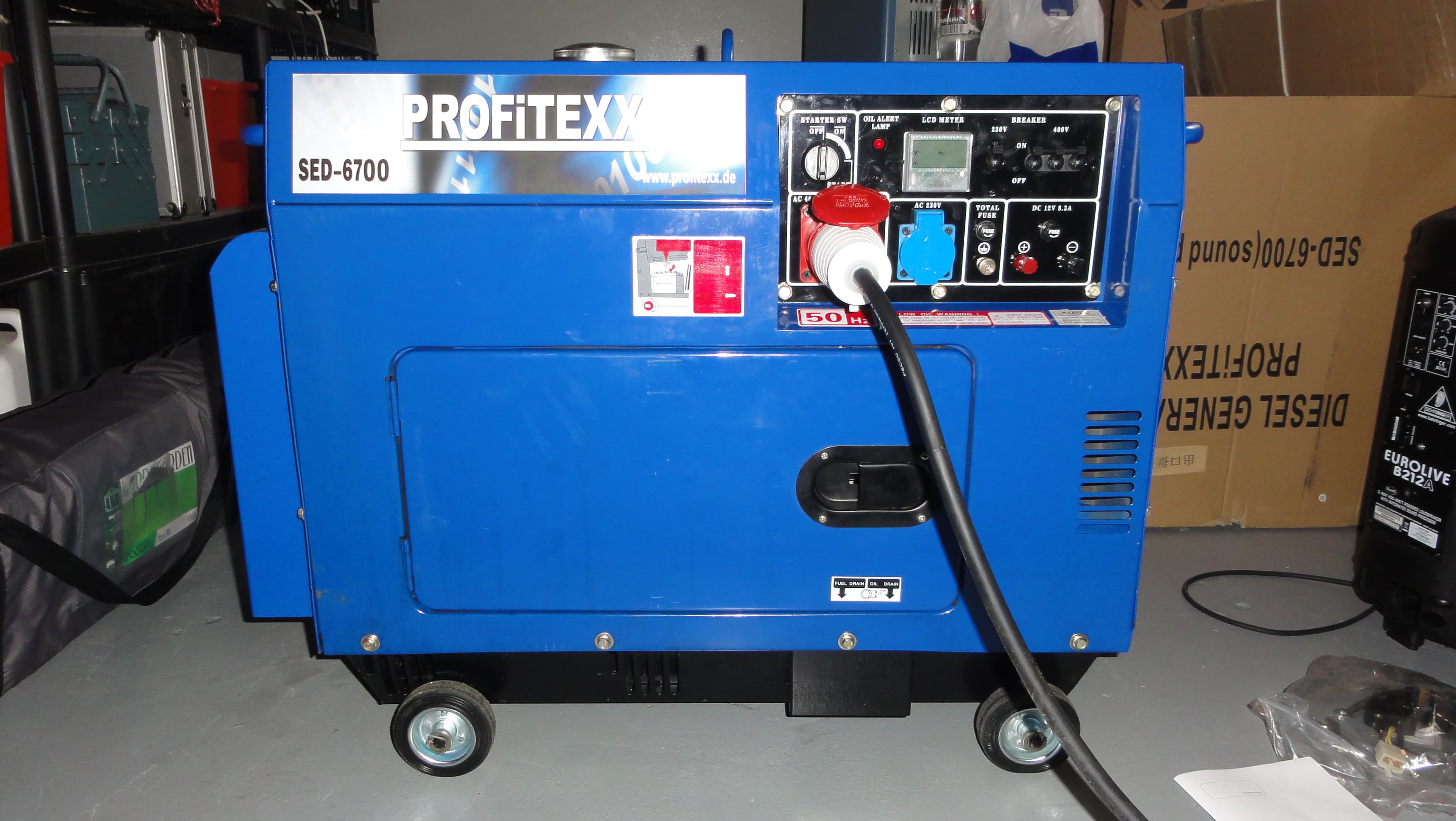
Any generator that produces clean, stable inverter-grade power can charge an EV — the car's charging gear is intolerant of dirty power, and some EVs refuse a weak or unstable supply outright. Speed is unimpressive: a 2 kVA camping generator sustains about 1.6 kW, which is below power-point pace, so a meaningful charge means most of a day of runtime and most of a tank of fuel. A worksite 8–10 kVA unit is closer to wallbox speed.
It is also the least elegant way to make a kilometre — the electric car irony looks at where generator-charged EVs fit in the emissions picture, including Australia's remote highway chargers, which pair solar and batteries with diesel backup precisely because a generator is the reliability insurance of last resort. Generators are for emergencies, blackouts and the bush — not for Tuesday nights.
A household power point: the quiet baseline
A standard Australian 10A socket delivers 2.3 kW — about 14 km of range per hour. That sounds trivial and is quietly sufficient for most people: plugged in overnight, it replaces 100–150 km by breakfast. The Australian Government's guidance puts a standard outlet at 1.4–3.7 kW and about 10–20 km of range per hour. A 15A socket (the caravan-style outlet with the wider earth pin) lifts that to 3.5 kW where one is installed. The caveats: use a good-quality portable charger, avoid extension leads, and have the circuit checked if it is old or heavily loaded.
A single-phase wallbox: the sweet spot
A dedicated 32A single-phase wallbox delivers 7.4 kW — about 45 km per hour, or the everyday 36 kWh window in around five hours. This is the point where "charge overnight" becomes "charge while you cook dinner and watch television", and it is what most Australian EV owners end up installing. Costs and the install decisions are in home EV charging explained.
Three-phase power: headroom, if the car accepts it
A three-phase wallbox delivers 11 kW at 16A per phase or 22 kW at 32A per phase — 65 to 130 km per hour. The catch is the car's onboard AC charger: many models cap at 11 kW AC, some at 7.4 kW, and only a handful accept the full 22 kW. So three-phase at home buys 11 kW in practice for most cars, and its real value is headroom for two EVs or a big daily commute rather than raw speed. Charging an electric car at home covers the wiring side.
DC fast charging: a different league
Everything above is AC, converted inside the car. DC chargers do the conversion in a fridge-sized cabinet beside the road and feed the battery directly, at 25 to 350 kW depending on the site. That is why the figures jump by an order of magnitude: 50 kW adds about 300 km an hour, 150 kW about 900 km an hour, and the fastest cars on 350 kW ultra-rapid stalls go from 10% to 80% in around 18 minutes.
Three honest footnotes, all covered properly in EV charging speeds explained: the advertised figure is a brief peak, not an average; the rate tapers hard past 80%, which is why everyone quotes 10–80%; and the car's own limit decides — a car capped at 100 kW sees 100 kW on any stall. A 350 kW charger also draws more power than a suburban street, which is why nothing like it connects to a house. Finding them is the job of our public charging guide.
The unconventional corner
Beyond the grid, three other sources genuinely work:
- Another EV. Models with vehicle-to-load (V2L) output up to about 2.3–3.6 kW through an adapter — power-point speed, from a friend's car or your second one. Genuinely useful in a blackout or to rescue a stranded EV. What works today is in vehicle-to-grid and V2L in Australia.
- A single solar panel, as above — weeks per charge, but real.
- A generator, as above — emergency speed at best.
None of them belongs in a weekly routine; all three are good answers to the question "can it be done?"
What it means for your week
Most Australian cars travel under 50 km a day on average — at 16 kWh/100 km, under 8 kWh. Replace that overnight and the source almost doesn't matter: a power point does it in about 3.5 hours, a wallbox in about one, and the car is parked for the other 20 either way. That is why the honest advice is to size charging to your driving rather than to the brochure: a power point suffices for most commuters, a wallbox removes the doubt, and three-phase or DC is for big daily distances, two-car households and road trips.
The cost side of that arithmetic is in what an electric car actually costs to run, and the running costs calculator does it with your tariff and kilometres.
Work out your own charging time
How to calculate charging time for any source
Find the source's real power in kW
Check the nameplate, or multiply amps by 230 volts: 10A × 230 V = 2.3 kW, 32A × 230 V = 7.4 kW, 3 × 16A × 230 V = 11 kW.
Find the car's limit
Look up the onboard AC charger's maximum — 7.4, 11 or 22 kW — and take the LOWER of the two numbers. On DC, the car's acceptance limit rules instead.
Divide energy by power
Hours = kWh needed ÷ kW delivered. For the everyday 20–80% window on a 60 kWh battery, that is 36 ÷ kW.
Add the real-world margins
Add about 10% for AC charging losses, expect solar to deliver only in daylight, and on DC ignore the slow final 20% — unplug at 80% and drive.
Related reading
- EV charging speeds explained: battery types, fast vs slow, and how to read the 10–80% claim
How EV batteries and charge rates really work: LFP vs NMC packs, AC vs DC charging, why the rate collapses past 80%, fast vs slow trade-offs, and how to read peak-kW and 10–80% claims before you buy.
- Home EV charging explained: wallboxes, installation costs and charging while you sleep
Charging an EV at home: the three levels of charger, what installation really costs, single vs three-phase power, tariff tricks that halve running costs, and apartment answers.
- Public EV charging in Australia
How big the network is, what plugs are used here, what really determines fast-charging speed, and an honest account of where the remaining gaps are for long-distance travel.
FAQs
How much electricity does it take to charge an EV?
A full charge takes roughly the battery's usable capacity: about 40 kWh for a small pack, 60–80 kWh for most family EVs, plus around 10% on top for charging losses. At 16 kWh per 100 km, 60 kWh is about 360 km of range — so a full charge is usually several days of driving, not one.
Can I charge an EV from a normal power point?
Yes. A standard 10A Australian socket delivers 2.3 kW, adding about 14 km of range per hour — enough to replace a typical day's driving in three to four hours, or fill most of a battery overnight. Use a quality portable charger, avoid extension leads, and have an old or heavily loaded circuit checked.
Can I charge an EV with solar panels?
Yes, meaningfully with a rooftop system: a typical 6.6 kW home system produces on the order of 25 kWh across a decent day — around 150 km of range — provided the car is home in daylight, or you have a home battery or a solar-diverting charger. A single 400 W panel also works, but at 1.5–2 kWh a day it is a trickle measured in weeks per charge.
Can I charge an EV with a generator?
Yes, provided it is an inverter unit producing clean, stable power — many EVs refuse dirty or unstable supplies. A 2 kVA portable generator delivers about 1.6 kW, slower than a power point, so a useful charge takes most of a day; larger worksite units approach wallbox speed. Generators suit emergencies and remote areas, not routine charging.
Is three-phase worth it for home EV charging?
Only sometimes. Three-phase lifts a home wallbox from 7.4 kW to 11 kW (or 22 kW on paper), but most cars cap AC charging at 11 kW and many at 7.4 kW, so the real-world gain is modest for a single car. It earns its keep with two EVs, very high daily kilometres, or if you want the headroom for the future.
How much will an EV add to my home's electricity use?
A typical Australian household uses on the order of 15–20 kWh a day, and an EV driven 40 km adds about 6–7 kWh — an increase of roughly a third, noticeable but manageable. Time-of-use tariffs and smart charging can push most of it into the cheapest, off-peak hours.