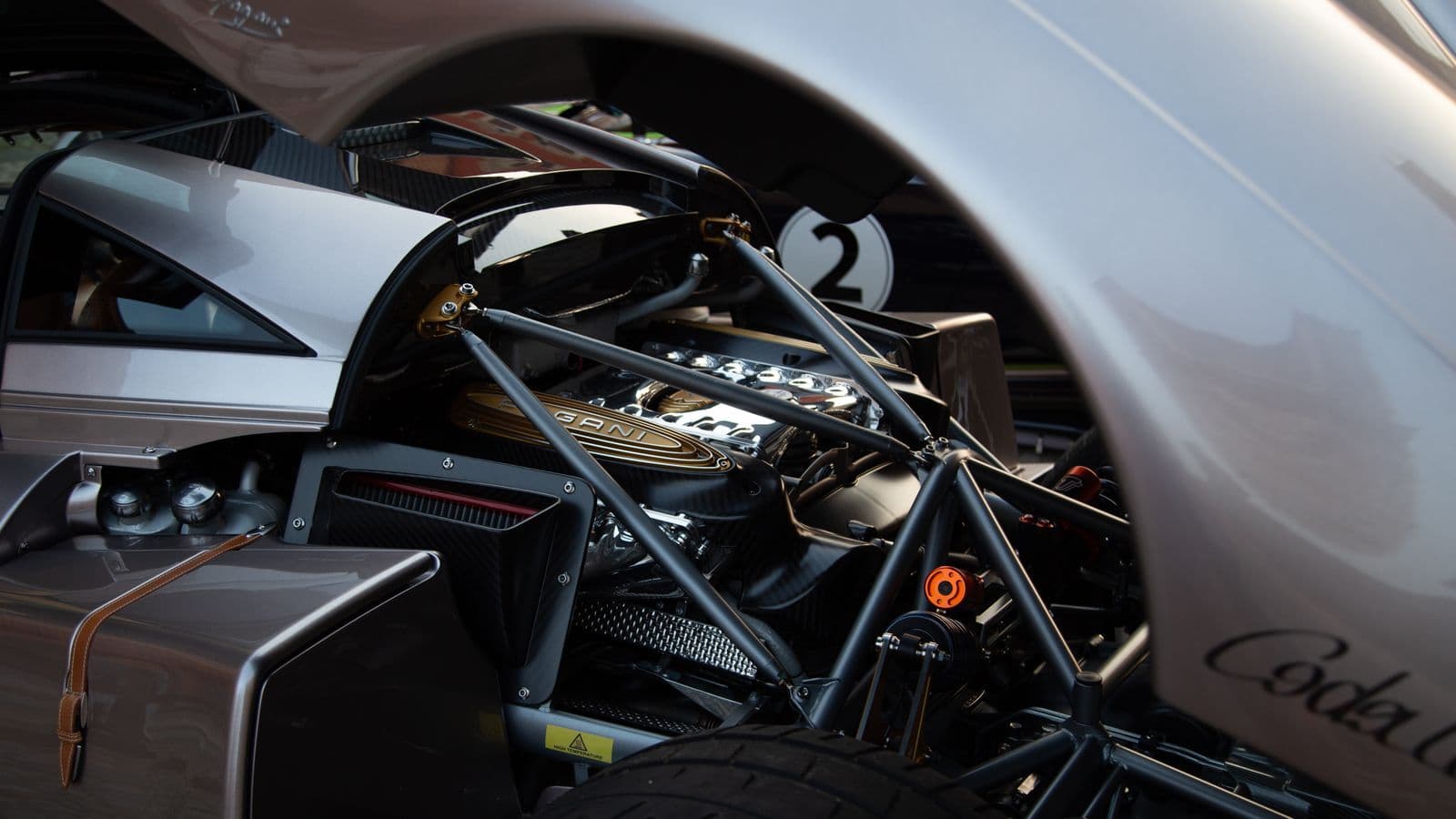
By every rational measure, the V12 should be extinct. Turbocharged engines of half the size match its power; hybrids and EVs beat its efficiency by miles; emissions fleets are averaged in grams and twelve cylinders are a rounding catastrophe. Ordinary luxury cars abandoned the configuration years ago. And yet, at the very top of the market, the V12 not only survives — it headlines. Ferrari launched a new front-engined V12 flagship in the mid-2020s and named it, with zero subtlety, the 12Cilindri. Lamborghini rebuilt its V12 from scratch for the hybrid era rather than retire it. Aston Martin kept twelve cylinders in its flagships; Gordon Murray's T.50 built a bespoke one revving toward 12,000 rpm. The V12's survival is not nostalgia inertia — it's a deliberate, customer-funded resistance movement, and the reasons repay understanding.
The V12 survives because it's the one engine configuration customers will pay a fortune to keep. At the top of the market, emotion is the product — and the V12 is emotion's reference implementation.
The physics case: why twelve was ever the answer
A V12 is two inline-sixes on a shared crank, and the inline-six is the configuration with perfect primary and secondary balance — no inherent shaking forces to cancel. The result is turbine-smoothness no V8 matches, plus small, light pistons that tolerate stratospheric revs, plus even firing intervals producing the harmonic wail that made Ferrari's identity — a V12 was in the very first car Enzo built in 1947, and the Miura's twelve was the heart of the first supercar. Smoothness, revs and sound: the three sensory channels a supercar sells, all maximised by one layout. The costs — weight, length, thirst, complexity — are precisely the things the top of the market is paid to ignore.
The economics case: who can still afford to build one
Emissions regulation kills engines through fleet arithmetic, and here the supercar marques hold two quiet advantages. Low-volume manufacturers have historically accessed derogations and niche provisions in major markets' CO₂ regimes — the rules acknowledge that a few thousand cars a year are a rounding error — and the customer base will absorb whatever compliance genuinely costs. Meanwhile hybridisation became the survival technology rather than the replacement: Lamborghini's Revuelto pairs its new V12 with electric motors, Ferrari's twelve persists alongside hybrid stablemates, and the pattern the trinity established — electricity in service of the engine, not instead of it — turns out to have been the V12's lifeboat. The engine survives because electrons pay its emissions tax.
The purist wing
At the movement's extreme sits Gordon Murray — designer of the McLaren F1 — whose T.50 commissioned a bespoke Cosworth V12 explicitly chasing the sensations modernity abandoned: naturally aspirated, extraordinarily light, redlining around 12,000 rpm, paired with a manual gearbox. Its immediate sell-out, at a seven-figure price, is the market's clearest data point: when someone builds the uncompromised thing, the cheques arrive instantly. The same signal shows up downstream in the depreciation record — naturally-aspirated and manual variants trading at premiums over objectively faster successors. The market is voting on sensation, not stopwatch.
How the last stand probably ends
Honestly: as a niche within a niche. Regulatory tightening continues, hybridisation gets heavier, and each new V12 generation is announced with language about being "possibly the last" — language the marques have now deployed for a decade while continuing to build them, because demand keeps justifying another round. The plausible trajectory is the mechanical-watch path: the configuration retreats from engineering necessity into cultural artefact, produced in small numbers at enormous prices for customers buying continuity itself. For enthusiasts of ordinary means, the actionable version of this story is in the used market, where twelve-cylinder grand tourers of the recent past — built in volumes their makers now regret — remain some of the most engine per dollar in existence, running-cost caveats very much applying.
What this means if you're buying or selling on MotorLoop
Cylinder count is a search term — buyers hunting the endangered configurations filter for them, so sellers should name the engine plainly in the listing (configuration, aspiration, gearbox). A cared-for twelve with full history is exactly the car this market rewards. Listing is free; the engine-per-dollar aisle of used cars is open, and the keeper V12 that isn't for sale belongs on a showcase page.
Related
- Ferrari's road to icon status: the models that made the marque
- The Lamborghini Miura and the birth of the supercar
- The hybrid holy trinity: P1, LaFerrari, 918 and what they started
- The McLaren F1 and the road cars it inspired
FAQs
Why do supercars still use V12 engines?
Because the configuration maximises the three sensations the top of the market sells — turbine smoothness (perfect inherent balance), high-rev capability and a signature sound — and because customers demonstrably pay to keep it. Hybrid assistance now covers the efficiency gap, letting the engine survive regulation that killed it in ordinary luxury cars.
Which manufacturers still make V12s?
At the time of writing: Ferrari (the 12Cilindri continuing its unbroken line since 1947), Lamborghini (the hybrid Revuelto's all-new V12), Aston Martin in its flagships, and boutique builders — most famously Gordon Murray Automotive's Cosworth-built T.50 engine. The roster shrinks slowly, which is exactly the last-stand dynamic.
Are V12 cars a good used buy?
The recent-past V12 grand tourers offer more engine per dollar than almost anything, having depreciated like the complex luxury goods they are — with running costs to match, so the standing rules apply: specialist inspection, complete history, honest budgeting. The endangered-configuration premium has so far favoured naturally-aspirated and manual examples.