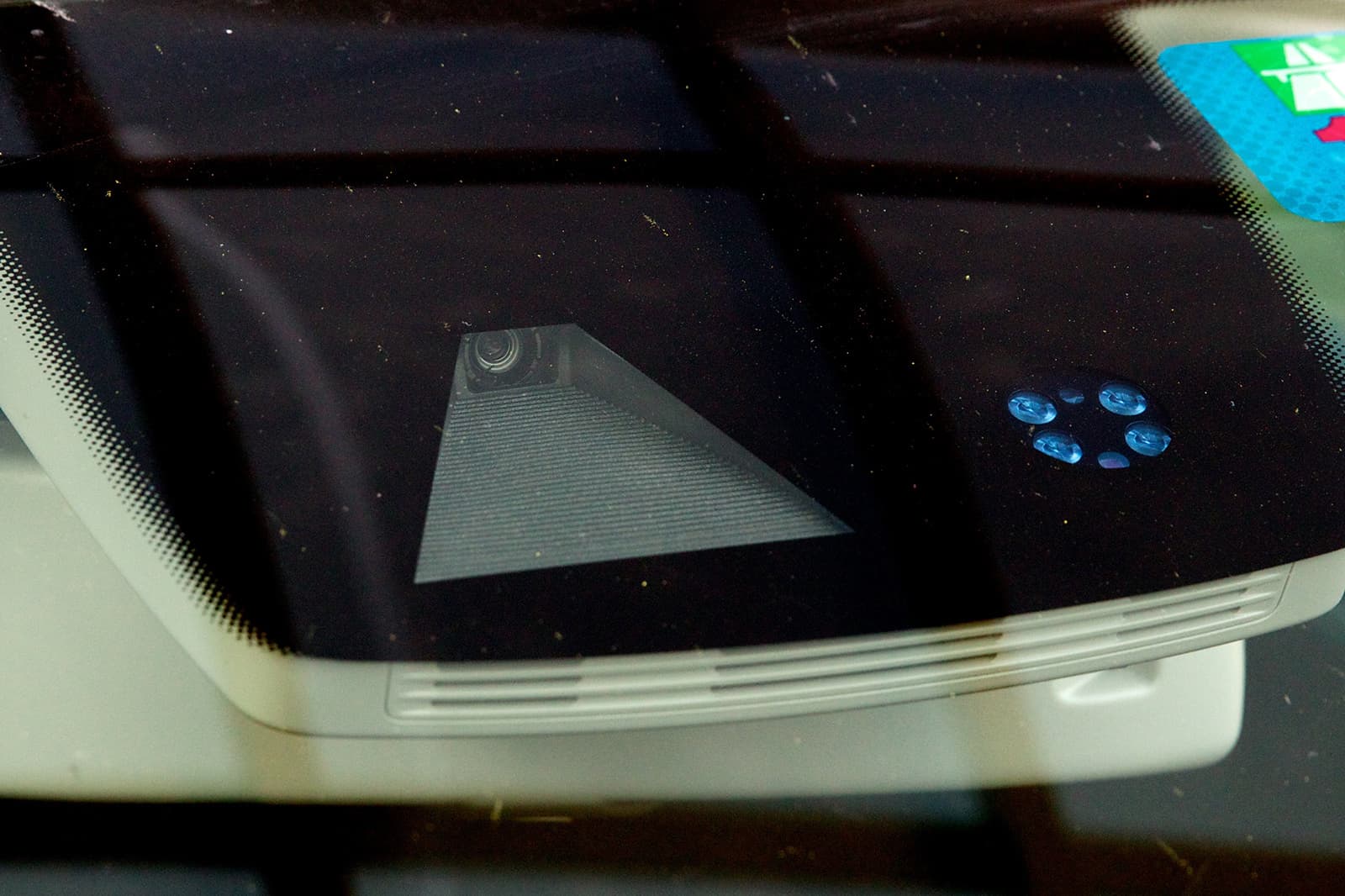
Anyone who has driven a new car lately knows the soundtrack. A chime because the camera thinks the limit changed. A tug on the wheel because you moved towards a line to give a cyclist room. A warning because a camera decided you looked away from the road. We think a safety system that annoys people gets switched off, and a switched-off system helps nobody. The evidence, and now Australia's crash-test body, back that up.
This isn't about the touchscreens we have already argued against in bring back the buttons (opens in a new tab). It's about the beeping, the nudging and the camera watching your face.
- 51%
- US vehicles with lane systems switched on, IIHS check eight years before 2024
- 87%
- Switched on in IIHS's 2024 dealership check
- 6 sec
- Inattention before France says the EU distraction warning sounds
Australia: ANCAP says it doesn't want the beeping either
The most useful thing said on this subject this year came from ANCAP's chief executive. Asked about cars that chime constantly, Carla Hoorweg told CarExpert in August: "By the way, beeping – we don't require beeping." (opens in a new tab) She said carmakers can use visual prompts or haptic feedback through the steering wheel, which she described as a much more comfortable experience than constant beeping.
The same report says ANCAP's updated approach checks how accurately cars recognise speed signs, and whether systems are intrusive enough that drivers "end up switching them off". ANCAP's guidance is that driver monitoring should support drivers rather than irritate them, adapting to whether the driver seems attentive, distracted or tired.
We welcome that. For years carmakers have chased star ratings, and in our view some of them did it by adding warnings rather than by making the warnings good. If ANCAP now marks down a system that drivers can't stand, the incentive finally points the right way.
The evidence: annoying alerts get turned off
The best data comes from the US Insurance Institute for Highway Safety, which sends researchers to look at the settings in real cars at dealerships. In its October 2024 study of nearly 2,400 vehicles in the Washington DC area, lane departure warning and prevention systems were switched on in 87 per cent (opens in a new tab). Eight years earlier, the figure was 51 per cent.
The detail is what matters. IIHS found systems that alert with seat or steering-wheel vibration were more likely to stay on, while those using visual and audible alerts had "substantially lower" activation rates. Its earlier research, it says, found that "many drivers found lane departure alerts annoying and switched them off."
So the problem is not that drivers hate safety. It's that they hate noise. Make the warning quieter and better targeted and people leave it on. Make it shriek at every white line and they go into the menu and turn it off for good.
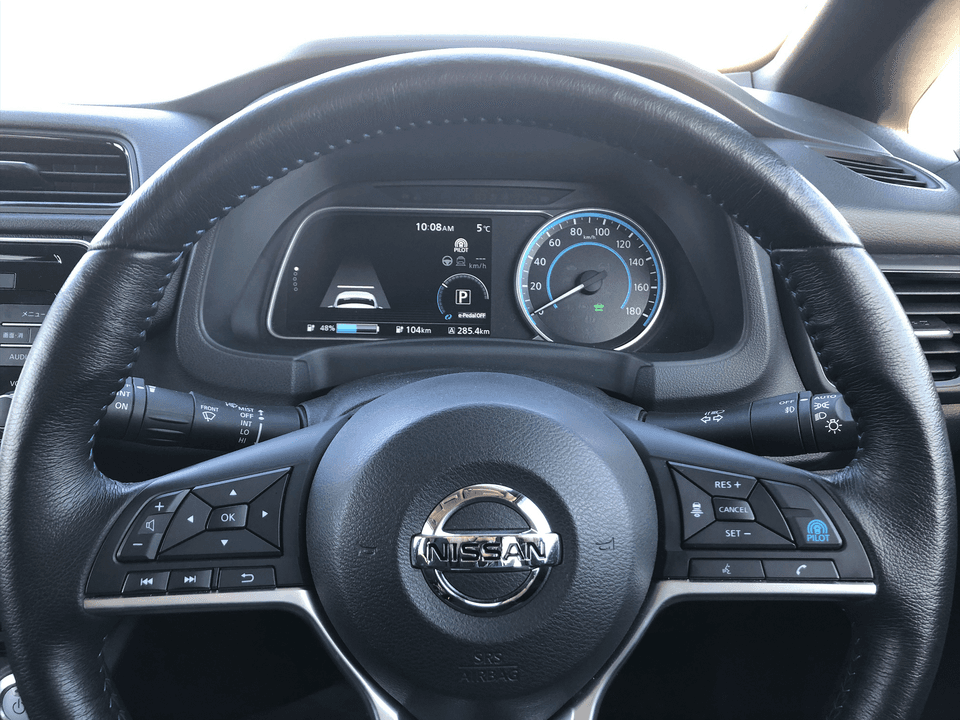
Europe, done properly: a camera that watches you, and an off switch
Europe has gone furthest in law. The French government's public information service says that under the EU's General Safety Regulation, a further set of systems is required on newly registered cars and vans from July 2026, and it explains one of them, the advanced driver distraction warning, in plain terms: a camera behind the steering wheel monitors the driver's attention (opens in a new tab), and the system sounds an alert for inattention of more than six seconds between 20 and 50 km/h.
Two details in that French explainer are worth Australians noticing. First, it says the technology respects European privacy law and "does not store any personal or biometric data". Second, it says the driver "retains the freedom to deactivate it manually during his journey", although it switches back on at each start-up.
In our view Europe has, almost by accident, written down the right principle. The system is there, it defaults to on, and the driver can still decide. That is a better bargain than a car that nags without limit, and better than one that can't be turned off at all.
Assistance that annoys gets switched off. Then it protects nobody.
The world view: from helping to supervising
The bigger shift is philosophical. Early driver aids helped when something went wrong: anti-lock brakes, stability control, automatic emergency braking. The newer systems supervise all the time. They read the signs for you, hold you in the lane, and watch your eyes.
Some of that is genuinely useful, and our ADAS explainer (opens in a new tab) covers which systems have the strongest evidence. But a system that misreads a speed sign, or a camera that mistakes a glance at the mirror for distraction, teaches drivers to ignore warnings. We think that is the opposite of safety. A warning is only worth something if the driver believes it.
There is a second cost. Every camera and radar is another part to calibrate and repair, which is one reason we found insurance keeps climbing with the sensors in your bumper (opens in a new tab). And none of it has yet turned Australia's road toll around, as our look at safer cars and a stubborn road toll (opens in a new tab) found.
What it means if you're buying or selling
- Test the nagging, not just the features. On a test drive, drive on a road with roadworks or temporary limits and see how the car handles speed signs. Move towards a lane line on a quiet road. If it already annoys you in 20 minutes, think about living with it for five years.
- Find the settings before you sign. Ask the salesperson to show you how each warning is adjusted or switched off, and whether it stays off or resets every start.
- Prefer vibration to volume. On the IIHS evidence, haptic alerts are the ones people leave on.
- Selling a car with these systems? Say clearly what it has and that it all works, and note any windscreen or bumper recalibration. Our ADAS explainer has the wording buyers look for.
If you switch a warning off, you are choosing to drive without it. That is your call as the driver, but do it knowingly, and remember that some systems switch back on at every start.
You can buy, sell & show cars on MotorLoop, and it's free.
Our take
We are not against safety technology. Automatic emergency braking saves people, and a good blind-spot light is a gift on a busy motorway. What we are against is technology that treats every driver as a suspect and every white line as an emergency.
Our view is simple. Let the driver drive. Build aids that stay quiet until they are needed, speak up clearly when they are, and can be adjusted by the person who is actually responsible for the car. ANCAP has now said it doesn't require beeping, and the IIHS data shows quieter systems stay switched on. Carmakers should take the hint. A car that respects the driver will get its safety systems used. A car that nags will get them switched off.
Header photo: Nozilla (opens in a new tab) via Wikimedia Commons, CC BY-SA 3.0 (opens in a new tab).
Related
- ADAS decoded: what AEB, lane keeping and adaptive cruise actually do (opens in a new tab)
- Bring back the buttons: touchscreens are a step backwards (opens in a new tab)
- Real buttons are a guarantee, screen buttons are a hope (opens in a new tab)
- Safer cars, stubborn road toll: why Australia's road deaths aren't falling (opens in a new tab)